The 7 Habits That Quietly Make Your Feet Rougher Every Week
Habits that make feet rougher
Rough feet usually build slowly from everyday habits, not one dramatic mistake. These are the seven patterns that most often keep the problem coming back.
Most rough feet do not come from one dramatic mistake.
They come from ordinary habits that keep adding friction, dryness, and pressure week after week until the skin starts looking thicker, rougher, and harder to manage.
That is why some people feel like their feet are always "getting bad again" even though they are not doing anything extreme.
They are just repeating the same small triggers often enough for the skin to keep reacting.
Quick Answer
The habits that most often make feet rougher over time include:
- walking barefoot on hard floors
- wearing shoes that let the heel slide
- skipping moisturizer after bathing
- over-scrubbing when the skin already feels dry
- staying in damp socks too long
- ignoring friction hot spots
- treating foot care like an occasional rescue instead of maintenance
Each one sounds small. Together, they create a very predictable rough-foot pattern.
Why Roughness Keeps Coming Back
Foot skin toughens up for a reason.
When the skin experiences pressure, rubbing, dryness, or repeated stress, it often responds by getting thicker. That protective response can be helpful at first, but over time it can turn into buildup that feels uncomfortable, looks dull, and becomes more likely to crack.
So the question is not only how to smooth rough feet after they appear.
It is also what keeps telling the skin to build roughness again.
1. Walking Barefoot on Hard Floors
People do not always think of indoor surfaces as a foot-care issue.
They should.
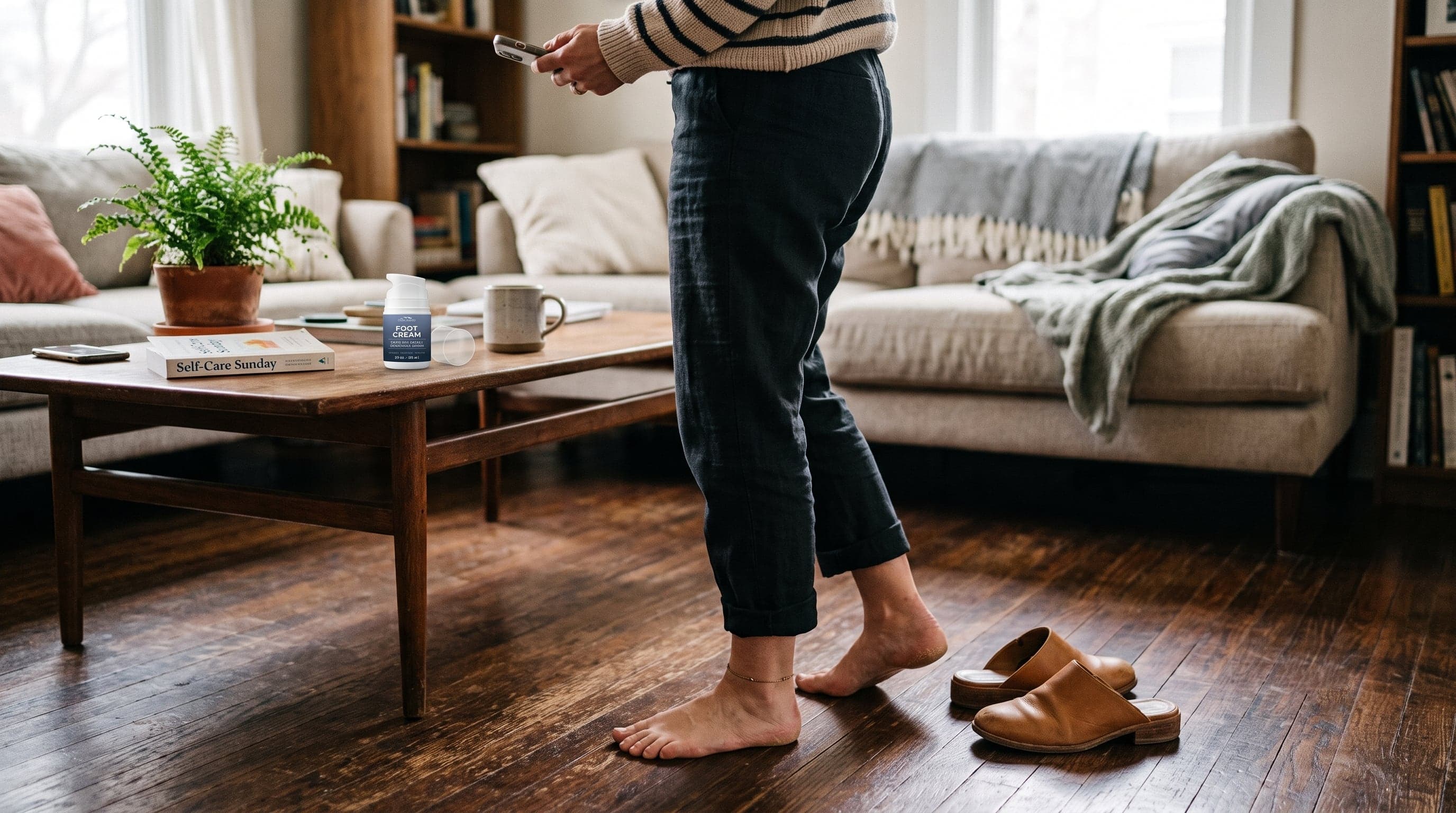
Walking barefoot on hard floors can increase repeated pressure and dryness, especially on the heels. Over time, that can make the heel rim feel thicker and more rigid.
If your heels get rough easily, even simple changes like wearing supportive indoor sandals or soft house shoes can reduce that constant low-level stress.
2. Wearing Shoes That Let the Heel Slide
Shoes do not need to hurt to create friction.
If the foot moves around inside the shoe or the heel lifts slightly with every step, the skin often pays for it slowly.
Common culprits include:
- loose sandals
- worn-out flats
- open-back shoes
- shoes with stiff heel counters
This kind of friction rarely feels dramatic in the moment. It just keeps happening until the skin gets thicker in self-defense.
3. Skipping Moisturizer After Bathing
This is one of the easiest habits to underestimate.
After bathing, the skin is in one of the best positions to hold onto moisture. If you wait too long or skip cream entirely, the heels often dry back out before they get any real support.
That does not mean every foot needs a complicated routine.
It means the most effective time to moisturize is also the most commonly missed one.
4. Over-Scrubbing Whenever the Feet Feel Rough
People often panic when roughness becomes noticeable and try to fix it in one session.
That usually turns a manageable problem into irritated skin.
Aggressive scraping can leave feet:
- tender
- inflamed
- uneven
- more prone to dryness afterward
Gentle exfoliation helps.
Trying to erase weeks of buildup in one sitting usually does not.
5. Staying in Damp Socks or Sweaty Shoes Too Long
Moisture is not always helpful just because it is moisture.
Damp socks and sweaty shoes can soften the wrong parts of the foot, increase irritation, and create a less stable environment for the skin overall. Even if your main complaint is rough heels, foot health gets harder to manage when your shoes stay wet and hot for too long.
If your feet sweat a lot, changing socks and letting shoes dry properly can make more difference than people expect.
6. Ignoring Small Friction Hot Spots
Blisters and rubbing rarely appear without warning.
Usually there is a hot spot first.
That might look like:
- a sandal strap rubbing one point
- the back of the shoe catching the heel
- the side of the foot getting irritated on longer walks
If you wait until the skin is already damaged, recovery takes longer and the area often becomes rougher afterward.
Small adjustments early are usually smarter than treating the damage later.
7. Treating Foot Care Like an Occasional Rescue
This is the biggest pattern behind recurring roughness.
Many people ignore their feet until they look bad, then do one intense session, then ignore them again.
That rhythm almost guarantees that roughness will return.
Feet usually respond better to:
- light regular moisture
- gentle repeated maintenance
- less friction
- faster response to early dryness
Consistency is less exciting than a rescue routine, but it works better.
What to Do Instead
If you want smoother feet, the better strategy is not to become more aggressive.
It is to remove the habits that keep rebuilding the problem.
Start with this:
Daily
- moisturize dry heel areas after bathing or before bed
- get out of damp socks sooner
- pay attention to shoes that rub
Weekly
- use gentle exfoliation on softened skin when needed
- check for early thickening before it becomes severe
Ongoing
- reduce barefoot time on hard surfaces
- replace shoes that are creating the same pressure pattern every week
Why This Matters More Than the Perfect Product
People often keep searching for the one cream or one tool that will finally solve rough feet.
Sometimes the product matters.
But recurring roughness is often more about exposure than product quality. If the same habits are constantly drying, stressing, and irritating the feet, even a good product has to fight uphill.
That is why habit changes tend to make routines work better so quickly.
Final Verdict
Rough feet usually do not come from one bad decision.
They come from ordinary patterns repeated often enough for the skin to respond.
The seven habits that most often make feet rougher are:
- barefoot time on hard floors
- shoes that let the heel slide
- skipping post-bath moisturizer
- over-scrubbing
- staying in damp socks too long
- ignoring friction hot spots
- relying on rescue care instead of maintenance
If you reduce those triggers, smoother feet usually become much easier to maintain.
FAQ
What causes feet to get rough so quickly?^
Repeated friction, pressure, dryness, and inconsistent maintenance are the most common reasons feet get rough again.
Does walking barefoot make heels rougher?^
It can. Hard floors increase repeated pressure and can contribute to thicker, drier heel skin over time.
Are sandals bad for rough heels?^
Some sandals can increase friction or let the heel slide, which may make roughness worse if the fit is poor.
Is scrubbing rough feet every day a good idea?^
Usually not. Frequent aggressive scrubbing can irritate the skin and make the routine backfire.
What is the easiest habit to fix first?^
Daily moisturizing after bathing is one of the simplest and most effective changes for many people.