How to Use a Floor Pumice Stone in the Shower: A Hands-Free Foot-Care Routine
淋浴磨脚石
Learn how to use a floor pumice stone in the shower without confusing it with a porcelain cleaning stone. Follow a safer hands-free routine for balance, pressure, wet skin, hygiene, drying, and aftercare.
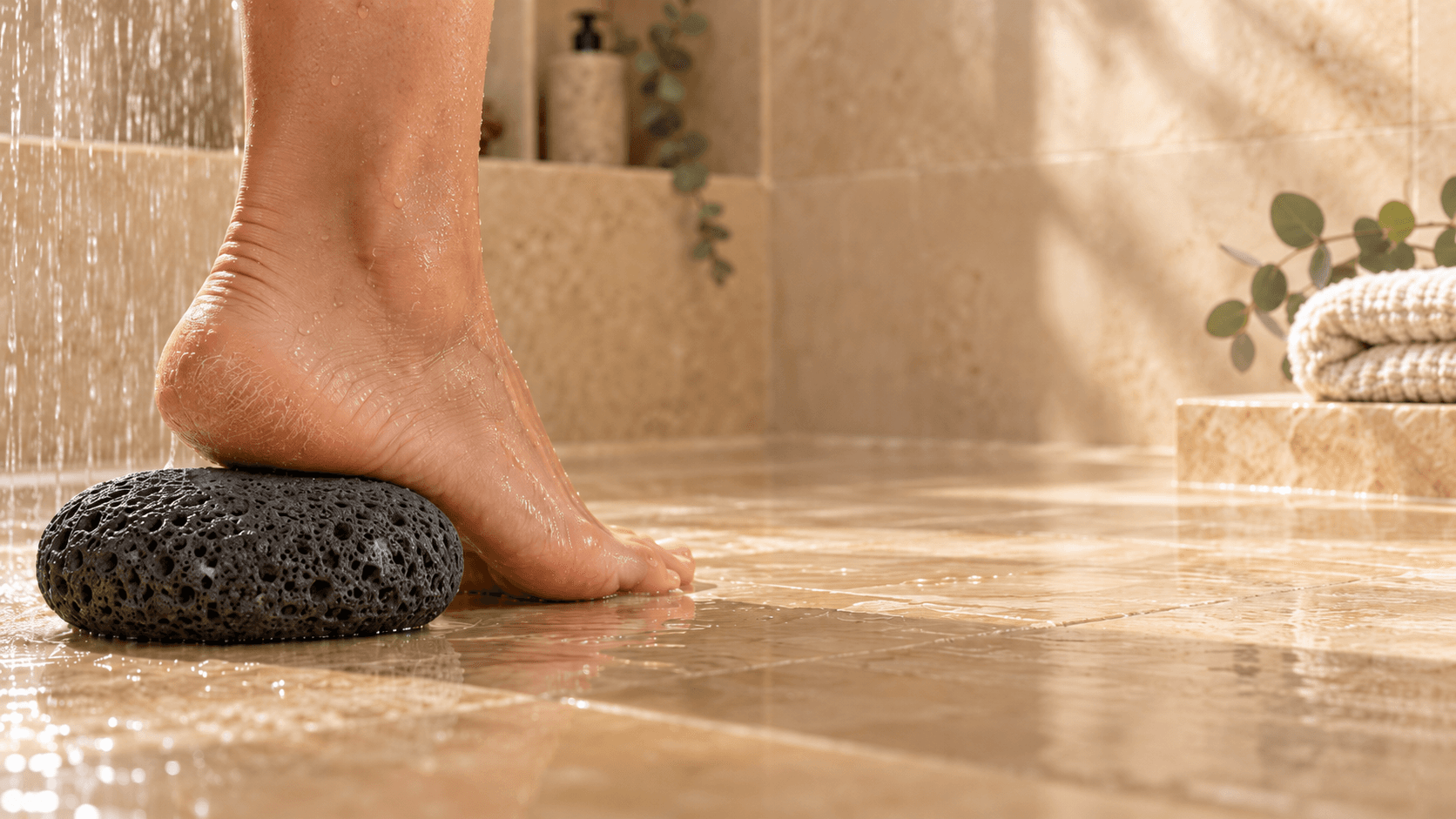
A floor pumice stone lets you smooth rough feet without holding a small stone in your hand. You place it securely on the shower floor, wet your feet and the stone, then move one foot over its textured surface with light, controlled pressure.
This type of pumice is made for exfoliating feet while you stand. It is not the hard pumice cleaning stone sold for removing rings or mineral deposits from toilets, porcelain, tile, or other bathroom surfaces. Never use a household cleaning stone on your skin, and do not use your foot-care pumice to scrub the shower.
Used carefully, a floor pumice can make a shower routine easier for people who dislike bending down or gripping a handheld tool. The key is to protect your balance, keep the pressure gentle, and let wet skin soften before you begin.
What a floor pumice stone is designed to do
A floor pumice has a broad abrasive surface that stays underfoot. Instead of moving the tool across your heel, you move your heel or sole across the tool. It can help lift softened surface buildup from rough heels, the balls of the feet, and other broad areas of dry skin.
It is best for gradual maintenance—not for removing a thick callus in one shower. Trying to force a dramatic result with extra pressure or repeated rubbing can leave skin sore and over-exfoliated.
If you are deciding between tools, read our guide to pumice stones versus foot files. A floor pumice suits people who want a simple, hands-free option, while a handheld tool offers more precise control over small areas.
Before you step into the shower
Set up the shower while the floor is still easy to see and reach. Place the floor pumice on a flat, stable area where it will not rock, cover the drain, or force you into an awkward stance. Follow the product's placement instructions, especially if it has suction cups or another anti-slip base.
You should have a reliable support point nearby, such as a properly installed grab bar. A towel rail, shower door, faucet, or movable shower caddy is not designed to support body weight. If you cannot stand comfortably on one foot while holding a secure support, use a seated foot-care method instead.
Keep soap, shampoo, oil, and foot cream away from the pumice and the area where your supporting foot will stand. These products can make the floor and stone slippery. Foot cream belongs at the end of the routine, after you are out of the shower and your feet are dry.
Consider skipping pumice completely if you have:
- An open cut, blister, bleeding crack, rash, wart, or signs of infection
- Sunburned, inflamed, unusually tender, or recently shaved skin
- Reduced sensation in your feet, neuropathy, poor circulation, or a condition that affects healing
- Diabetes, unless a clinician who knows your foot health has said this type of exfoliation is appropriate
- Trouble balancing safely in the shower
Pain, warmth, swelling, pus, spreading redness, or a wound that is not healing calls for professional care, not more exfoliation.
How to use a floor pumice stone safely
1. Wet the stone and soften your feet
Run water over the pumice until the entire textured surface is wet. Let your feet remain in warm—not hot—water for several minutes so the outer layer of dry skin softens. Do not use the stone dry. Dry abrasion is harder to control and more likely to irritate skin.
For more detail on why moisture matters, see Should You Use a Pumice Stone Wet or Dry?.
2. Establish a stable position
Face the direction that gives you the strongest support. Keep one foot fully planted on a non-slip part of the shower floor and maintain a light hold on a properly installed grab bar. Move slowly; this is not an exercise or a balance test.
Do not place both feet on the pumice at once. Do not close your eyes, twist suddenly, or reach for products while one foot is moving over the stone.
3. Start with the heel
Place only the rough part of one heel on the wet texture. Make short, slow forward-and-back or side-to-side movements. Use the weight of the foot lightly rather than leaning your whole body onto the stone.
The sensation should be textured but comfortable. Sharpness, burning, stinging, or tenderness means you should stop immediately. Skin does not need to look raw or intensely pink for the pumice to have worked.
4. Move to other broad rough areas only if needed
If the heel feels comfortable, repeat the same gentle motion under another broad area of rough skin, such as the ball of the foot. Avoid the arch, tops of the toes, sides of the feet, and any normal soft skin. A floor pumice is not precise enough for delicate or difficult-to-see areas.
Keep the session brief. Rinse the foot and check the skin rather than continuing until every rough patch disappears. Remaining thickness can be addressed gradually in future sessions.
5. Switch feet carefully
Return the working foot to a secure, non-slip area before changing sides. Recheck the pumice position and your support point. Then repeat the same light technique with the other foot. One foot may need less exfoliation than the other.
6. Rinse and dry your feet
Rinse away loosened skin and any soap residue. After stepping out safely, pat your feet dry, including between the toes. Inspect the treated areas for redness, tenderness, or small abrasions.
Apply a modest amount of moisturizer to dry heels and soles once you are on stable ground. Avoid leaving heavy cream between the toes, and put on footwear carefully because freshly moisturized feet can be slippery. Our guide to using a pumice stone with foot cream explains the correct order.
How much pressure should you use?
Light pressure is enough. The wet texture and repeated movement should do the work. Pressing harder does not make the routine more effective; it makes the depth of exfoliation less predictable.
Think in terms of smoothing the surface rather than removing the entire callus. Stop while the skin still feels comfortable. If a thick area does not respond to gentle use, do not compensate by grinding longer. Our guide to pumice stones for thick calluses explains when another tool—or professional advice—may be more appropriate.
How often can you use it?
There is no benefit to using a floor pumice every time you shower simply because it is there. Start conservatively and wait to see how your skin responds. If your feet remain tender, pink, tight, or more sensitive the next day, allow them to recover and reduce the pressure or frequency.
Maintenance should be based on your skin, not a fixed daily habit. Read How Often Should You Exfoliate Your Feet? before adding the stone to a regular routine.
Cleaning, drying, and storage
A floor pumice collects loosened skin, soap residue, and moisture. Rinse it thoroughly after every use. Use clean running water and, when the product instructions allow it, a small dedicated brush to clear material from the texture. Do not share the stone with another person.
Shake off excess water and let the pumice air-dry completely in a well-ventilated place. Do not leave it sitting in pooled shower water or sealed inside a damp container. Keeping it permanently on a wet floor makes it harder to maintain and inspect.
Before the next use, check for trapped debris, persistent odor, damaged texture, cracks, loose parts, or a base that no longer stays secure. Replace the product if it cannot be cleaned and dried properly or if wear affects its stability. See How to Clean a Pumice Stone and How Often Should You Replace a Pumice Stone? for the full care routine.
Common mistakes to avoid
- Using the wrong kind of pumice: A porcelain or toilet-cleaning stone is a household cleaning tool, not a foot-care product.
- Standing with both feet on the stone: Keep one foot on a stable, non-slip surface.
- Starting after applying soap or oil: Slippery products make controlled movement and balance harder.
- Scrubbing dry skin: Wet both the foot and stone first.
- Using full body weight: Keep pressure light and movements slow.
- Chasing perfectly smooth skin: Over-exfoliation can make feet tender and may worsen the rough-feeling cycle.
- Leaving the stone wet between showers: Rinse it, dry it, and inspect it before reuse.
- Using it on damaged or high-risk skin: Choose professional guidance when sensation, circulation, healing, or infection is a concern.
Choosing a floor pumice for a hands-free routine
Look for a product specifically labeled for foot exfoliation in the shower. A broad usable surface, a stable base, clear care instructions, and a texture you can tolerate are more important than maximum roughness. The product should sit flat and remain predictable during light use.
The Pumice Valley Floor Pumice Stone for Shower, 2-Pack is designed for this underfoot routine. Use it only as directed for feet; keep it separate from all bathroom-cleaning tools.
The simplest safe routine
Place the floor pumice securely, wet it completely, soften your feet in warm water, and keep one foot planted while the other moves gently over the texture. Stop before the skin feels tender. Then rinse and dry your feet, moisturize on stable ground, and clean and air-dry the pumice.
The convenience comes from not having to hold a small tool. It should never come at the expense of balance, gentle pressure, or good hygiene.
FAQ
Is a floor pumice stone for feet the same as a pumice stone used to clean a toilet or porcelain?^
No. A floor pumice for feet is a personal-care product designed to exfoliate wet foot skin. A toilet or porcelain cleaning stone is a household cleaning tool and should never be used on the body. Keep the foot-care product separate from bathroom-cleaning supplies.
Should a floor pumice stone be used on wet or dry feet?^
Use it wet. Wet both the stone and your feet, then allow the outer layer of dry skin to soften in warm water before applying light pressure. Dry use creates more friction and is harder to control.
How do I avoid slipping while using a floor pumice in the shower?^
Place the pumice flat according to its instructions, keep soap and oil away from the standing area, hold a properly installed grab bar, and keep one foot planted on a non-slip surface. Do not stand with both feet on the pumice. If one-foot balance is unsafe for you, choose a seated method.
How much pressure should I use on a floor pumice stone?^
Use light, controlled pressure and short, slow movements. Stop if you feel pain, burning, stinging, or tenderness. Thick calluses should be reduced gradually rather than ground down in one session.
How should I clean and dry a floor pumice stone?^
Rinse away loosened skin and residue after every use, clear the texture as the product instructions allow, and let the stone air-dry completely in a ventilated place. Do not share it or leave it sitting in pooled shower water. Replace it if it remains dirty, develops an odor, cracks, or no longer stays stable.
