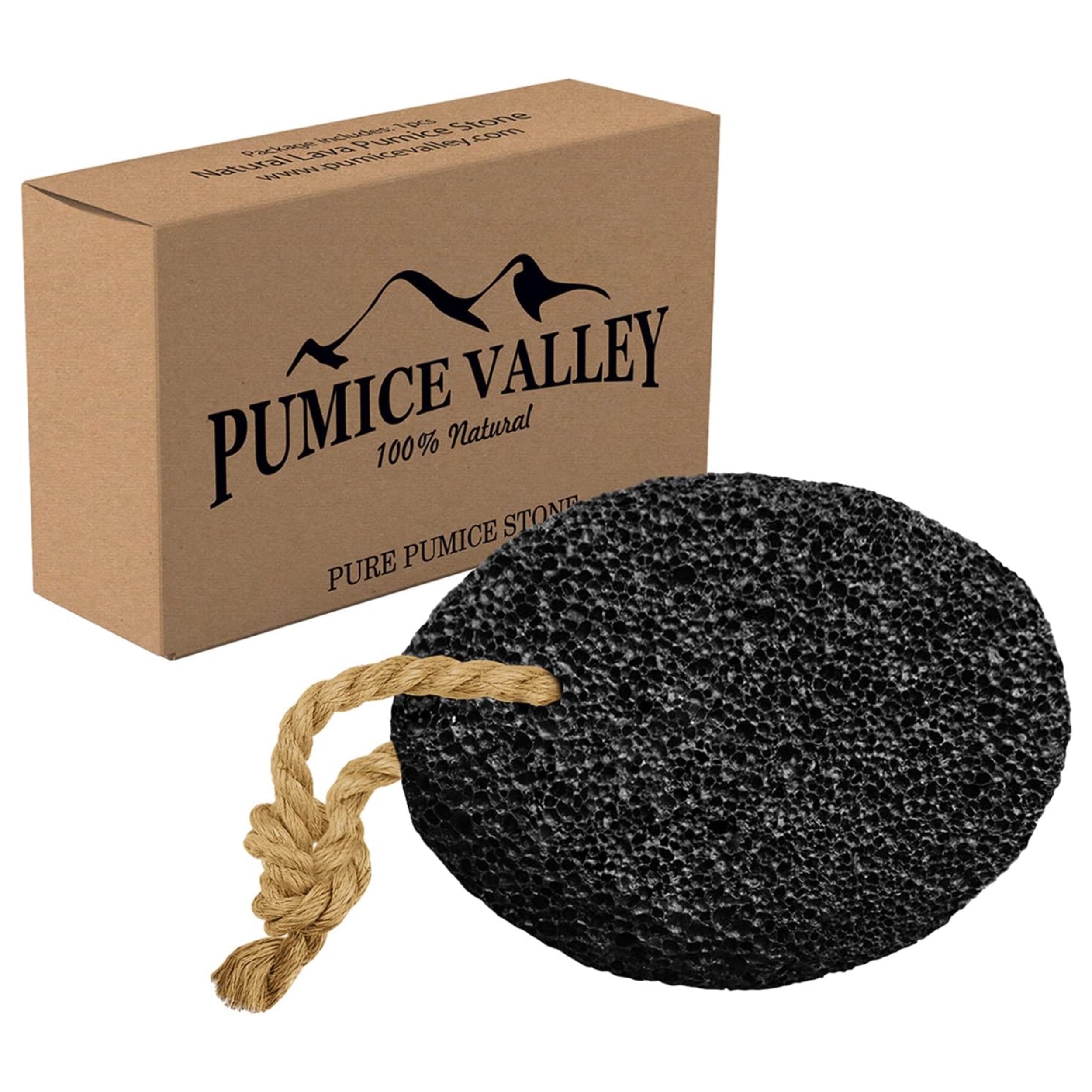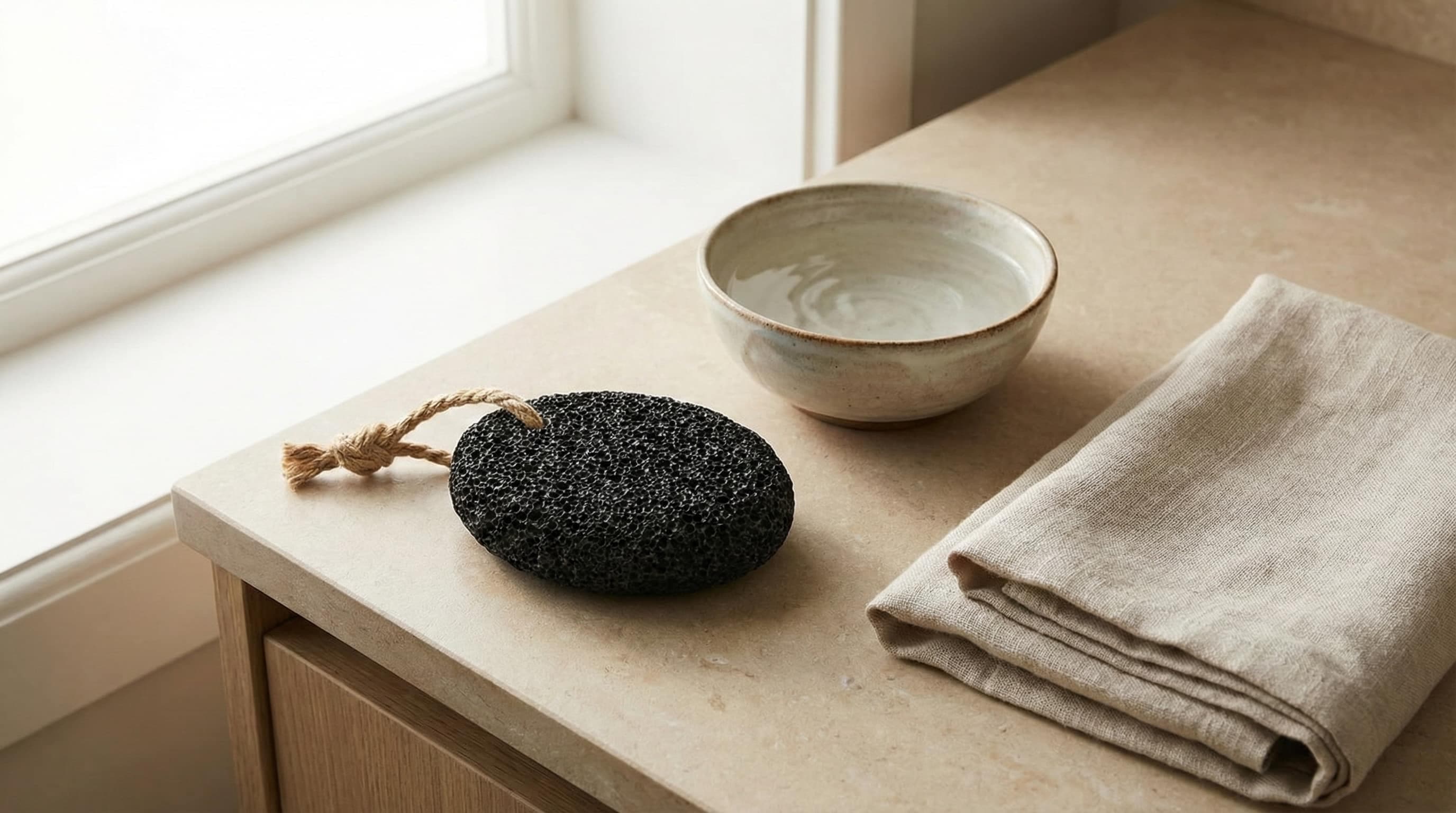
How Often Should You Exfoliate Your Feet? How Often to Use a Pumice Stone
足部去角质的正确频率
How often should you use a pumice stone or file your feet? Start with once weekly, learn when a second session may be reasonable, and follow a safer routine without over-exfoliating.
For most people, gentle foot exfoliation once a week is a sensible starting point, and once or twice a week is usually enough. If your feet are sensitive, dry, or starting to sting after care, wait longer—not less forcefully. A little extra care can help with uncomplicated thick buildup, but daily scrubbing is rarely the answer.
Smooth feet usually come from light exfoliation and regular moisturizing, not from trying to remove everything at once.
Quick Answer
Use a pumice stone or gentle foot file about once weekly for ordinary roughness. A second short session may be reasonable for uncomplicated thick, dry buildup if your skin stays comfortable afterward. Start with once a week if you are unsure, and judge the next session by how your feet feel the following day—not by how smooth they feel immediately after. For the technique itself, follow our step-by-step guide to using a pumice stone on your feet.
Pause if skin becomes pink, tender, shiny, or stinging. Never exfoliate broken, bleeding, infected, or severely painful skin. If you have diabetes, neuropathy, poor circulation, or healing concerns, seek clinical advice first.
Why More Scrubbing Can Make Feet Feel Rougher
Rough heels are often a mix of dry skin, pressure, and friction. Exfoliation removes some outer dead-skin buildup, but it does not solve the pressure from shoes, standing, or walking that helped create it. Nor does it replace moisture. When it becomes too frequent or forceful, skin can feel sore, dry, or rough again quickly.
A gentle session followed by moisturizer usually does more for long-term texture than one aggressive session.
Choose Your Frequency by What Your Skin Is Telling You
There is no single schedule that fits every foot. Use this as a starting point, then adjust based on how your skin responds over the next 24 hours.
| What you notice | A sensible starting point | What to do |
|---|---|---|
| Mild roughness or dryness | Once weekly | Use light pressure and moisturize daily. If skin stays smooth, do not add extra sessions just to maintain a “perfect” feel. |
| Thicker, dry buildup with no pain or cracks | Once weekly at first; up to twice weekly if comfortable | Use short, gentle sessions; do not try to remove it all at once. |
| Sensitive, stinging, pink, or over-exfoliated skin | Pause until skin feels comfortable | Skip tools and focus on bland, regular moisture. |
| Cracked, broken, bleeding, inflamed, or painful skin | Do not exfoliate | Protect the area and seek professional guidance when needed. |
If you use an exfoliating foot cream containing ingredients such as urea, lactic acid, or salicylic acid, be especially cautious with physical exfoliation. You may need less pumice use, not more.
How Often Should You Use a Pumice Stone or File Your Feet?
For most people, once weekly is a good starting point for using a pumice stone or filing the feet, with up to twice weekly only when uncomplicated roughness persists and the skin remains comfortable. A pumice stone is generally best for broad areas of mild to moderate roughness, such as the heel rim or ball of the foot. It should leave skin smoother, never raw. If you are deciding between tools, see our pumice stone vs foot file comparison. For safe use and storage, see our guide to cleaning a pumice stone.
Start at once a week if you are new to it or your skin tends to be dry. If the skin stays comfortable but uncomplicated hard skin returns quickly, a second short session may be reasonable. If the same area feels rough again the next day, read why feet can feel rough again after exfoliating before increasing frequency.
Daily pumice or foot-file use is usually a sign that the routine needs simplifying. Look instead at daily moisturizing, shoe friction, and whether the tool is too coarse or being used too firmly. Before adding another session, read whether a pumice stone should be used wet or dry. Our complete guide to pumice stones for feet explains the technique in more detail.
Signs You Should Pause Exfoliation
Stop using a pumice stone or foot file for now if you notice:
- redness, pinkness, tenderness, or stinging
- a shiny or unusually thin-looking surface
- soreness when walking
- new cracking, peeling, or irritation
- bleeding, open skin, warmth, swelling, drainage, or worsening pain
These are not signs to scrub harder. Give the area a break and support it with gentle moisture. Resume only when the skin feels comfortable and intact; restart with fewer passes, lighter pressure, or a longer interval. If there is an open wound, possible infection, severe pain, or a skin change you cannot explain, seek medical advice rather than continuing home treatment.
A Simple Exfoliation Routine That Does Not Overdo It
The best routine is short enough to repeat and gentle enough that your feet still feel comfortable the next day.
1. Start with softened skin
Use a pumice stone after a shower or brief warm soak. Avoid very hot water, which can leave dry skin feeling drier. Wet the stone as well.
2. Work only on thick, rough areas
Use light circular motions or gentle passes over the heel, ball of the foot, or other dry buildup. Avoid healthy, soft skin. A few controlled passes are enough for one session.
3. Stop before the skin feels tender
You are aiming for a modest improvement in texture, not a perfectly polished result. Thick buildup improves more safely over several sessions.
4. Rinse, pat dry, and moisturize promptly
Apply a cream or ointment to dry areas after drying your feet. Regular moisturizer between sessions helps the smoother result last. Avoid heavy cream between the toes, where trapped moisture can be unhelpful.
5. Reassess next time
If skin feels calm and smoother, keep the same schedule. If it is irritated, wait longer before your next session. If roughness repeatedly returns in one painful spot, consider whether footwear or pressure is the bigger issue.
Pair Exfoliation With Moisture, Not More Force
Exfoliating and moisturizing do different jobs. Gentle exfoliation reduces surface buildup; moisturizer helps the skin stay flexible afterward. Doing one without the other can create the familiar cycle of smooth feet for a day, then roughness again.
On exfoliation days, apply foot cream right afterward. On non-exfoliation days, use it after bathing or before bed. If your heels are dry and crack-prone, a more protective evening routine may be useful; see our simple daily routine for rough, cracked heels. If roughness returns quickly despite gentle care, our article on why feet feel rough again after exfoliating covers moisture, friction, and pressure as possible reasons.
If the skin feels dry, add moisture before adding another exfoliation session. Consistency is more useful than intensity.
Pumice Stone or Foot File: Does the Frequency Change?
The tool matters: a wet pumice stone is often gentler for broad areas, while a foot file can be more targeted but easier to overuse. Start slowly and use light pressure. For help choosing, read our pumice stone vs foot file comparison. Whichever tool you use, clean and dry it between uses; replace a worn or cracked pumice stone using the guidance in how often to replace a pumice stone.
When to Skip At-Home Exfoliation
Do not use a pumice stone or foot file on open skin, bleeding cracks, blisters, signs of infection, or areas that are severely painful or inflamed. Do not cut or shave hard skin yourself.
People with diabetes, reduced feeling in the feet, neuropathy, poor circulation, or healing concerns should get individualized advice before treating calluses at home. A small skin injury can be easier to miss and harder to heal in these situations.
Seek advice if a callus is very painful, keeps returning in the same place, or does not improve with gentle care and footwear changes. The cause may be pressure, not simply a need for more exfoliation.
Final Takeaway
Most feet need less exfoliation than people think: about once or twice a week, with a lighter schedule for sensitive skin. Use a gentle technique, follow immediately with moisturizer, and let comfort—not impatience—set the pace.
The safest results come from gradual care. If your feet are sore, cracked, or irritated, pause the tools and focus on protecting the skin instead.
Frequently Asked Questions
Is it okay to exfoliate your feet every day?
For most people, daily physical exfoliation is unnecessary and can cause dryness or irritation. Gentle use once or twice a week is usually enough, with daily moisturizing in between.
How often should you use a pumice stone or file your feet?
Once weekly is a sensible starting point for uncomplicated rough skin. A second short session may be reasonable if thicker buildup persists and your skin remains comfortable. Start with once a week if your skin is sensitive or you are new to using a pumice stone or foot file.
Should you exfoliate your feet before or after a shower?
After a shower or brief warm soak is often easiest because the skin is softened. Use a wet pumice stone with light pressure, then dry your feet and apply moisturizer.
What should you put on your feet after exfoliating?
Apply a foot cream or ointment to dry areas after exfoliating. Regular moisturizing helps maintain the smoother result and can reduce the urge to scrub again too soon.
When should you not exfoliate your feet?
Avoid exfoliation on broken, bleeding, infected, severely painful, or inflamed skin. If you have diabetes, neuropathy, poor circulation, or a healing concern, ask a clinician or podiatrist before self-treating hard skin.
FAQ
Is it okay to exfoliate your feet every day?^
For most people, daily physical exfoliation is unnecessary and can leave skin dry or irritated. Gentle use once or twice a week is usually enough.
How often should you use a pumice stone or file your feet?^
Once weekly is a sensible starting point for uncomplicated rough skin. A second short session may be reasonable if thicker buildup persists and your skin remains comfortable. Start with once a week if you are sensitive or new to pumice or a foot file.
Should you exfoliate your feet before or after a shower?^
After a shower or short warm soak is often easiest because the skin is softened. Use light pressure, then dry your feet and apply moisturizer.
What should you put on your feet after exfoliating?^
Apply a foot cream or ointment to dry areas after exfoliating. Regular moisturizing helps maintain a smoother, more comfortable result.
When should you not exfoliate your feet?^
Avoid exfoliation on broken, bleeding, infected, severely painful, or inflamed skin. People with diabetes, neuropathy, poor circulation, or healing concerns should get professional guidance first.