Pumice Stone vs Foot File: Which Is Better for Rough Feet?
浮石与足部锉:哪一种更适合粗糙脚跟?
Pumice stone or foot file? Compare the best tool for rough feet, sensitive skin, and thicker calluses—and learn how to use either one safely.
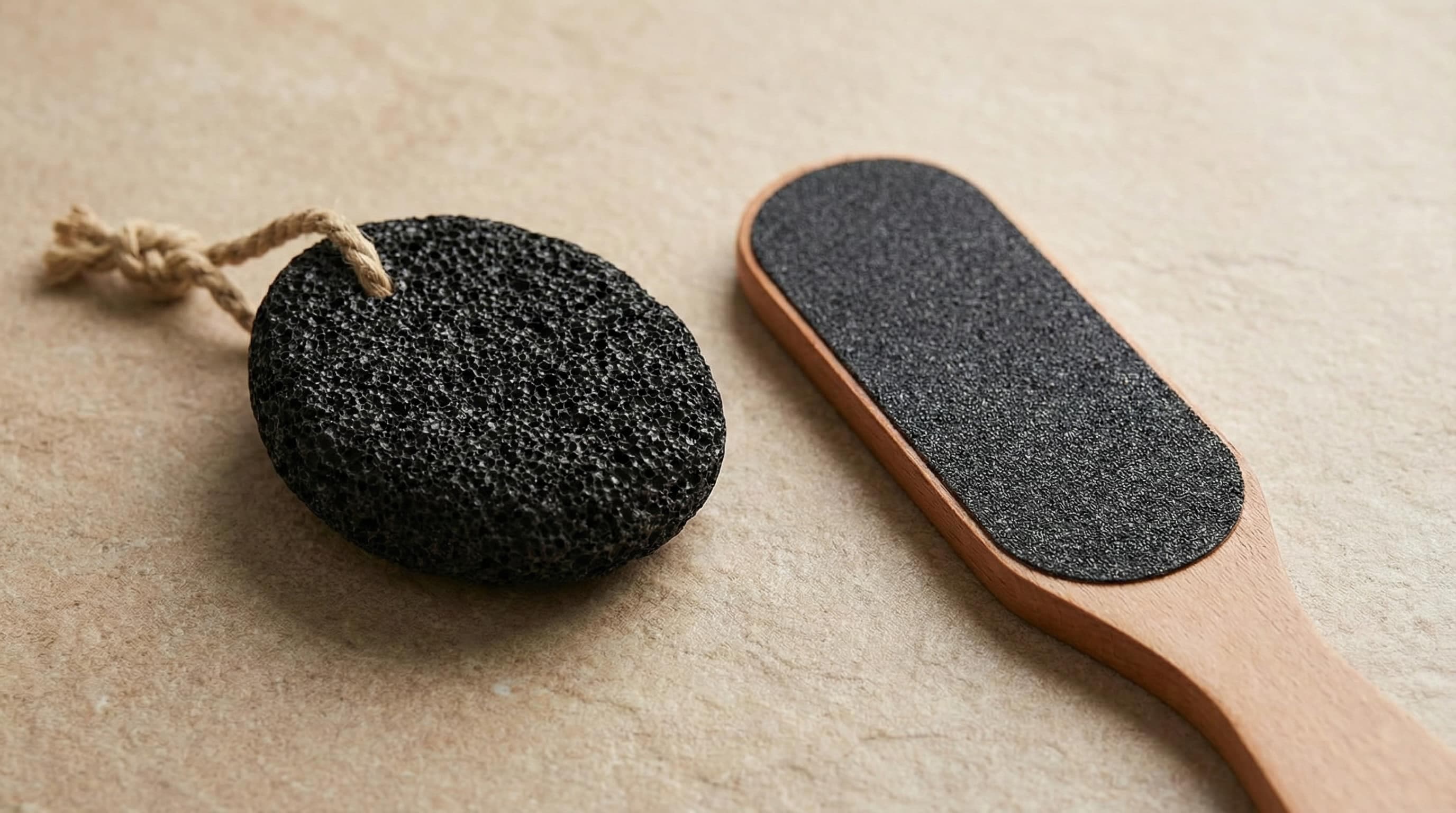
If you are choosing between a pumice stone and a foot file, start with the condition of your skin rather than the promise of the tool. A pumice stone is generally the gentler choice for routine maintenance and mild roughness. A foot file can be more useful for a small area of thicker buildup, provided you use it lightly and stop early. Neither tool is designed to “fix” deep, painful heel cracks in one session.
The best routine is usually the one that keeps roughness from building up—not the most forceful one.
Quick Answer: Pumice Stone or Foot File?
Choose a pumice stone if your feet are mildly rough, your skin is sensitive, or you want a gentler tool for regular care.
Choose a foot file if you have a more concentrated patch of thicker, dry callus and can use a little more precision without pressing hard.
For cracked heels, the goal is to gradually smooth only the loose, thick surface and then moisturize consistently. If a crack is deep, bleeding, painful, red, swollen, or weeping, pause exfoliation and seek professional advice.
Pumice Stone vs Foot File: At a Glance
| Pumice stone | Foot file | |
|---|---|---|
| Best for | Mild roughness, sensitive skin, and regular maintenance | Thicker, localized dry buildup on intact skin |
| How it feels | Softer, broader contact | Firmer, more targeted contact |
| Control | Easy to keep gentle across a wider area | More precise, but easier to overwork one spot |
| Typical schedule | Often once or twice a week, as skin tolerates | Less often; only when a specific area needs attention |
| Main tradeoff | May take longer to smooth dense buildup | Can remove too much skin if used with pressure |
Neither option has to be harsh to be useful. In fact, a little progress followed by moisture is usually more comfortable than trying to make heels perfectly smooth in one go.
The simplest decision
- Choose pumice for general roughness, sensitive skin, or routine maintenance.
- Choose a foot file for one small area of thicker buildup when your skin is intact and not sore.
- Choose neither over an open, bleeding, painful, or infected-looking crack; moisturize around the area and get professional advice when needed.
When a Pumice Stone Is the Better Choice
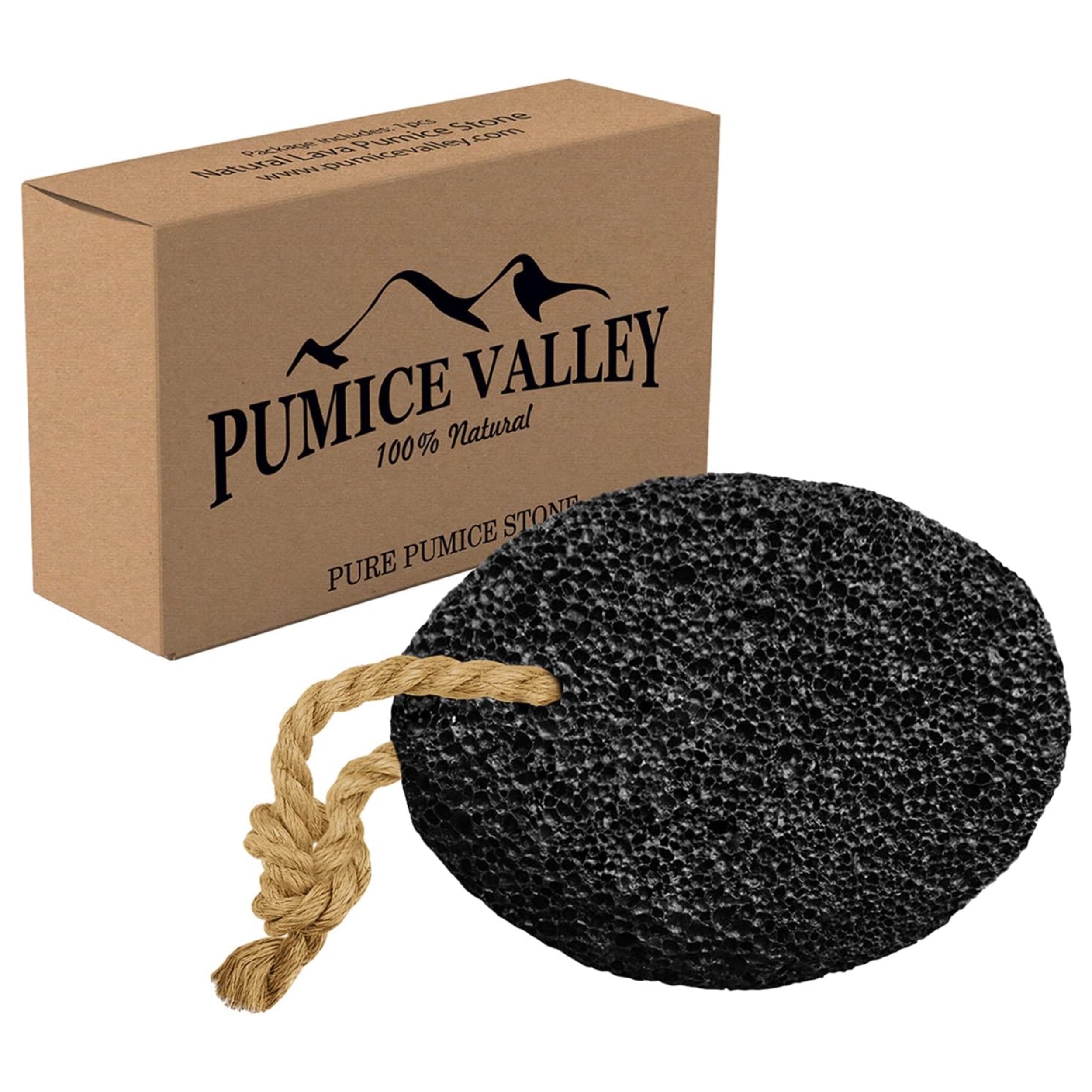
A pumice stone is a naturally porous tool that removes surface roughness through gentle friction. It is often the better starting point because it encourages a slower pace.
Choose pumice when you have:
- mild dryness or a slightly rough heel surface
- skin that becomes tender or irritated easily
- a regular foot-care routine and want to maintain it
- roughness spread across a broader area rather than one dense patch
It is also a sensible choice when you are still learning how your skin responds to exfoliation. Pumice is not risk-free—any abrasive tool can irritate skin when used too hard—but its gentler feel makes it easier to stop before you have gone too far.
For help choosing the right kind of stone and building a basic routine, see our complete guide to pumice stones for feet.
How to use a pumice stone gently
Start with clean skin. Many people find a pumice stone easiest to use after a shower or bath, when the surface skin has softened. Wet the stone, then use light, small circular motions over the rough area. Do not try to erase every trace of texture. A few passes are enough to assess how your skin responds.
Rinse your feet, pat them dry, and apply foot cream. Let comfort guide the routine: if the area begins to sting, feels hot, or looks pink, stop. More pressure is not better care.
When a Foot File Is the Better Choice
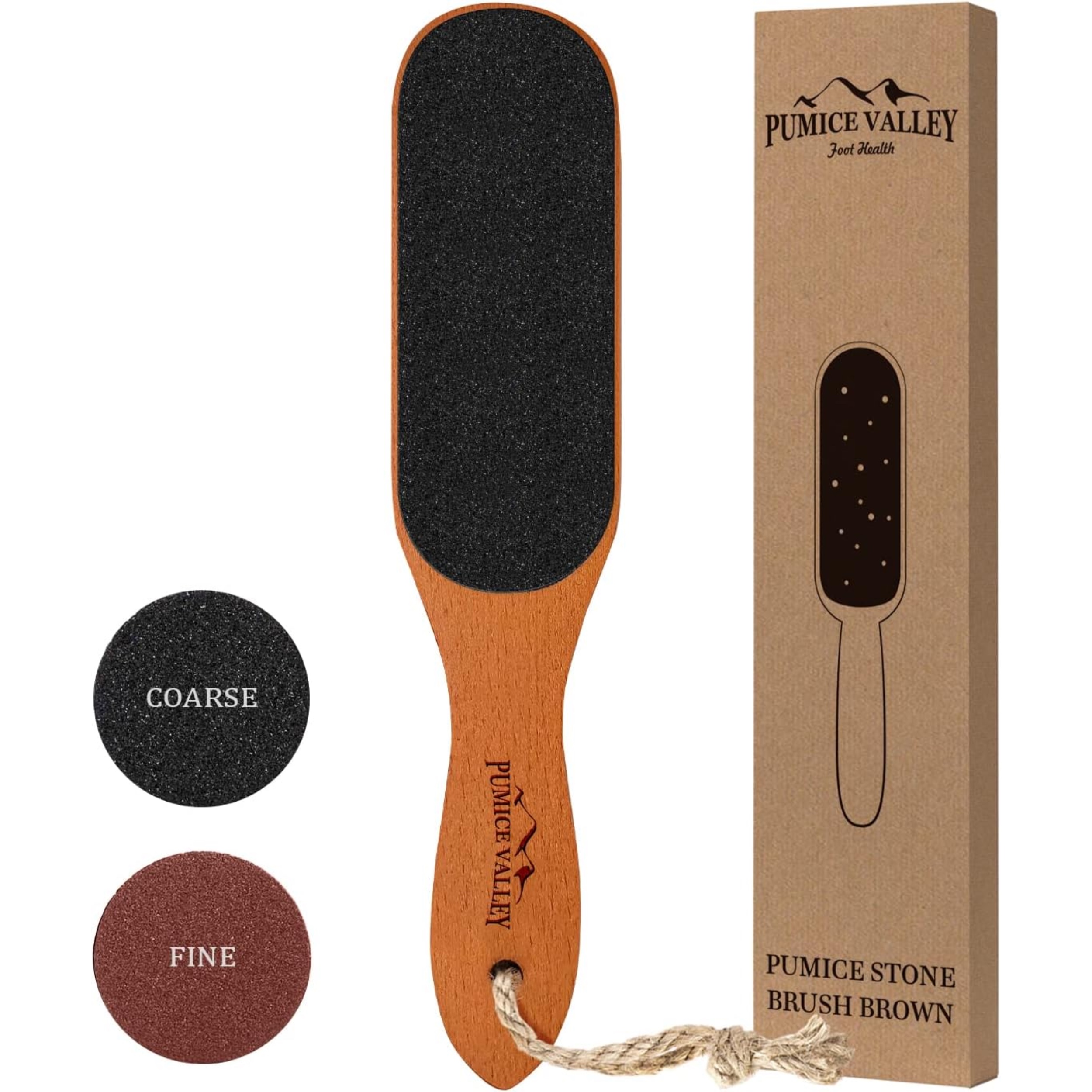
A foot file has a flatter, more even abrasive surface. That shape can be useful when a specific part of the heel or ball of the foot has thicker, dry buildup and a pumice stone feels too broad or too mild.
Choose a foot file when you have:
- a localized patch of thicker callus
- a small area that needs more targeted smoothing
- otherwise healthy, intact skin that is not sore or cracked open
- the patience to work gently and stop after a few light passes
A file should not be treated as a rescue tool. If you find yourself bearing down, filing repeatedly in the same spot, or chasing a perfectly polished finish, it is time to stop. Over-filing can leave skin tender and may make a heel more vulnerable to irritation.
Which Tool Should You Choose for Your Skin?
The simplest answer is to match the tool to the problem in front of you.
If you have sensitive skin
Start with a pumice stone. Use a light touch and keep sessions short. Sensitive skin benefits from a steady routine of gentle smoothing and daily moisture more than from stronger, occasional exfoliation.
If you have mild roughness
Choose pumice. Mild roughness rarely needs a more aggressive tool. A pumice stone once or twice a week, followed by moisturizer, is often enough to keep the surface comfortable.
If you have thicker, localized callus
A foot file may give you more precise control. Use it sparingly and only on intact, non-painful skin. If the area is painful under pressure, has a hard central core, or keeps returning in the same place, it is worth getting professional guidance instead of repeatedly filing it down.
If roughness keeps returning
Neither tool alone will solve the pattern. Use the gentler tool you can maintain, moisturize every day, and consider whether footwear or pressure points are contributing. Our guide to how often to exfoliate your feet can help you find a schedule that does not tip into over-exfoliation.
Can Either Tool Remove Cracked Heels?
Pumice stones and foot files can smooth the dry, thick skin around a heel. They do not treat the cause of deep fissures, and they should never be used directly over a crack that is open, bleeding, or painful.
For ordinary surface dryness, gentle exfoliation can be one part of a cracked-heels routine. The other part is moisture: apply a rich foot cream after smoothing and use it consistently between sessions. Our simple daily routine for rough, cracked heels explains how to make that approach practical.
Think of exfoliation as preparation, not treatment. Smooth a little, moisturize well, and allow the skin time to recover.
Safe Use: When to Stop and When to Get Advice
Stop using either tool if the skin becomes sore, hot, red, raw, or starts to bleed. Do not exfoliate skin that looks infected, has an open wound, or is severely painful. Avoid using sharp blades or trying to cut callus away at home.
People with diabetes, neuropathy, poor circulation, reduced sensation in their feet, or concerns about healing should ask a podiatrist or other qualified clinician before self-treating calluses. The same is true if you are unsure whether a spot is a callus, corn, wart, or another skin concern.
This caution is not about making foot care complicated. It is about knowing when a simple home routine is appropriate and when the skin needs a closer look.
Final Verdict
For routine care, a pumice stone is usually the better all-around choice: it is gentle, simple, and well suited to mild roughness and sensitive skin. A foot file can be the better tool for thicker, localized buildup, but it requires more restraint.
If you are undecided, begin with pumice. If one small patch remains rough, use a foot file carefully on that area rather than increasing pressure everywhere. In both cases, consistent moisturizing and a modest schedule matter more than aggressive exfoliation.
Frequently Asked Questions
Is a pumice stone or foot file better for cracked heels?
A pumice stone is usually the gentler starting point for dry, rough heels. A foot file may help with a small, thicker patch of intact skin, but neither should be used on an open, bleeding, or painful crack.
Can I use a pumice stone and foot file in the same routine?
You can, but using both aggressively in one session is unnecessary. Choose the gentler tool for most care and reserve a file for a small area of thicker buildup if needed.
How often should I use a foot file or pumice stone?
For many people, once or twice a week is plenty for gentle pumice maintenance. A foot file is usually best used less often and only when a localized area needs attention. Adjust based on how your skin feels.
Should I use a pumice stone wet or dry?
Many people prefer a wet pumice stone on softened skin because it feels gentler. Follow the tool’s care instructions, use light pressure, and stop if your skin feels irritated.
When should I avoid using a pumice stone or foot file?
Avoid both on broken, bleeding, infected-looking, severely painful, or deeply cracked skin. If you have diabetes, neuropathy, poor circulation, or healing concerns, get professional advice before filing calluses yourself.
FAQ
Is a pumice stone or foot file better for cracked heels?^
A pumice stone is usually the gentler starting point for dry, rough heels. A foot file may help with a small, thicker patch of intact skin, but neither should be used on an open, bleeding, or painful crack.
Can I use a pumice stone and foot file in the same routine?^
You can, but using both aggressively in one session is unnecessary. Choose the gentler tool for most care and reserve a file for a small area of thicker buildup if needed.
How often should I use a foot file or pumice stone?^
For many people, once or twice a week is plenty for gentle pumice maintenance. A foot file is usually best used less often and only when a localized area needs attention. Adjust based on how your skin feels.
Should I use a pumice stone wet or dry?^
Many people prefer a wet pumice stone on softened skin because it feels gentler. Follow the tool’s care instructions, use light pressure, and stop if your skin feels irritated.
When should I avoid using a pumice stone or foot file?^
Avoid both on broken, bleeding, infected-looking, severely painful, or deeply cracked skin. If you have diabetes, neuropathy, poor circulation, or healing concerns, get professional advice before filing calluses yourself.