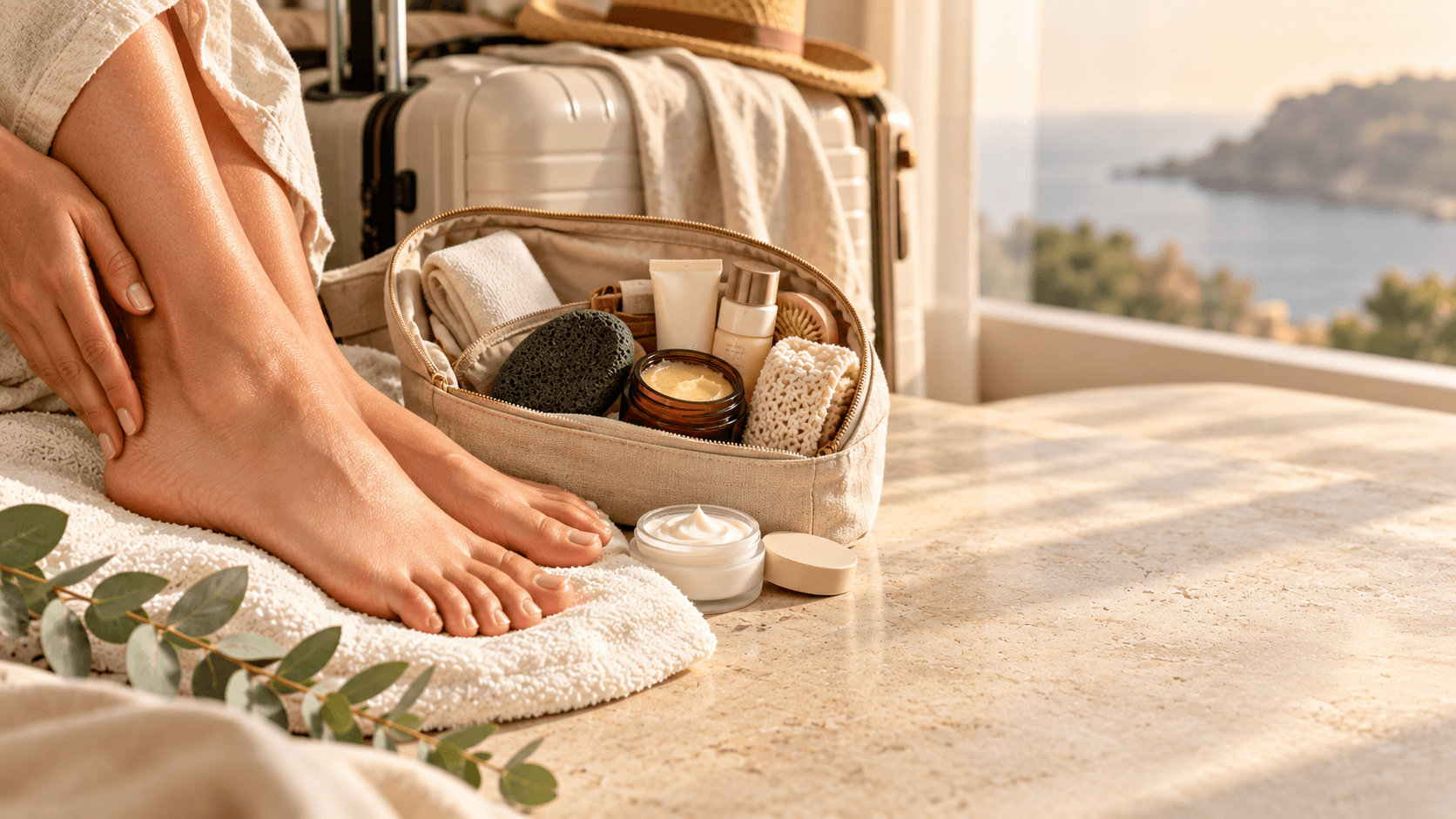
How to Keep Feet Soft While Traveling: A Simple Carry-On Routine
旅途护足
Keep feet comfortable on long travel days with a simple routine built around clean socks, sensible shoes, careful drying, and a small tube of foot cream.
Travel can disrupt even a simple foot-care routine. Long days in unfamiliar shoes, dry hotel air, repeated showers, and more walking than usual can leave heels feeling tight and rough. The answer is not an elaborate portable pedicure kit. It is a short routine you can repeat wherever you stay.
Pack one small foot cream, use it at a predictable time, and pay attention to friction before it becomes uncomfortable. A multipack such as the Pumice Valley Foot Cream Travel Pack – 12 Pcs is useful when you want separate tubes for different trips, gym bags, or travel companions without carrying a full-size container.
Quick Answer
To help keep your feet soft while traveling:
- pack a small foot cream in a sealed toiletry pouch
- wear comfortable shoes and clean, dry socks on long travel days
- wash your feet and dry them carefully at night
- apply cream to dry areas such as the heels and soles
- avoid putting heavy cream between the toes
- repeat the same short routine each evening instead of trying to fix everything on the final day
If you are flying, check the current baggage rules for your airline, airports, and route before packing any cream in hand luggage. Rules can differ and may change, so the product's size alone should not be treated as a guarantee that it can travel in your carry-on.
Why Feet Can Feel Rougher Away From Home
Travel changes several small habits at once. You may walk farther, spend hours in closed shoes, shower at a different time, or skip moisturizer because it is packed at the bottom of a suitcase. None of these changes needs to be dramatic to make dry areas feel more noticeable.
Common travel factors include:
- extra friction from new shoes, sandals, or long walking days
- dry air in cabins, hotels, and air-conditioned rooms
- repeated transitions between closed shoes, pools, beaches, and showers
- damp socks or shoes that do not have time to dry
- a routine that becomes too complicated to repeat
The practical goal is maintenance. You are trying to keep ordinary dryness comfortable and reduce avoidable friction, not perform an intensive treatment while traveling.
What to Pack for a Simple Travel Foot-Care Routine
You only need a few items:
- one small tube of foot cream
- clean socks for each day, plus a spare pair
- a small sealed pouch for the cream
- comfortable shoes you have already worn before
- blister dressings or another basic friction barrier if you expect long walks
Choose a foot cream that you already know feels comfortable on your skin. Ingredients such as urea and shea butter are common in formulas for dry, rough feet, but the best travel product is one you will use consistently. If you want to compare what different moisturizers do, read Urea vs Shea Butter for Feet: Which Works Better?.
The 12-piece travel pack contains individual tubes, so you can place one in a toiletry bag and keep the unopened tubes at home for later trips. You do not need to bring all 12 pieces on one journey.
Before You Leave: Make the Routine Easy to Repeat
Do not introduce several new products the night before a trip. Instead, test the cream at home and make sure the texture, scent, and finish work for you. Pack it somewhere visible rather than burying it beneath clothing.
It also helps to begin with shoes that already fit well. A rich cream cannot compensate for footwear that pinches, rubs, or slides with every step. If the trip involves a lot of walking, alternate shoes when possible so one pair can air out while you wear another.
For a short trip, one tube may be enough. For a longer itinerary, place an additional unopened tube in your main luggage rather than carrying a large collection in your day bag.
A Simple Routine for Travel Days
In the morning: focus on comfort, not a heavy layer
Start with clean, dry feet and socks that do not bunch inside your shoes. If your heels feel dry, apply a small amount of cream and allow it to absorb before putting on socks or footwear.
Avoid leaving a slippery layer on the soles immediately before walking. More product is not automatically more helpful, especially when you need secure footing in sandals, hotel bathrooms, or unfamiliar spaces.
During the day: manage friction and moisture
Notice early signs that your shoes are rubbing. A warm spot at the heel or toe is easier to manage before it becomes a blister. Adjust the shoe, change socks if they are damp, or use the friction barrier you packed.
Foot cream is most useful on genuinely dry areas. It is not the right response to every travel discomfort, and it should not be applied inside an open blister or over broken skin.
If you have been swimming, walking on a beach, or using a shared shower, rinse away residue and dry your feet carefully. Give extra attention to the spaces between the toes, where trapped moisture is more likely to be uncomfortable than helpful.
At night: use the routine you are most likely to remember
The easiest time for most travelers is after the final shower of the day:
- wash your feet gently
- dry them well, including between the toes
- apply a modest amount of cream to the heels, soles, and other dry areas
- let it absorb before walking around
- put on clean, comfortable socks if you prefer to keep the cream off bedding
This takes only a few minutes and avoids the temptation to scrub aggressively after a long walking day. For a related home routine, see How to Get Softer Feet Overnight—Without Scrubbing Them Raw.
How Much Foot Cream Should You Use?
Start with a small amount and spread it across the dry areas. Add more only if needed. The cream should leave the skin conditioned, not coated in a layer that transfers everywhere or makes the floor feel unsafe.
Concentrate on:
- the back and rim of the heels
- dry areas along the sides of the feet
- rough patches on the soles
Be cautious around the spaces between the toes. Those areas often need careful drying rather than a rich layer of moisturizer, particularly after a humid day, swimming, or hours in closed shoes.
Should You Pack a Pumice Stone or Foot File?
For many trips, no. Moisturizer, sensible shoes, dry socks, and consistency cover the essentials. A short holiday is not the ideal time to experiment with aggressive exfoliation or try to remove every callus.
If you already use a pumice stone comfortably and decide to bring one, keep it separate from clean items, allow it to dry fully, and use it only on softened, uncomplicated rough skin. Do not use it on sore, blistered, cracked-open, or irritated areas. The complete technique is covered in How to Use a Pumice Stone on Your Feet.
If you are unsure how exfoliation and moisturizer fit together, follow the sequence in How to Use a Pumice Stone With Foot Cream: exfoliation comes before cream, not after it.
Adjust the Routine to the Trip
City break or work trip
Long periods of walking and formal shoes make friction the main issue. Pack broken-in footwear, spare socks, and one cream tube. Use the cream at night rather than applying a thick layer immediately before a full day on your feet.
Beach or pool trip
Sand, open shoes, sun, and repeated rinsing can leave heels feeling dry, while the spaces between the toes may stay damp. Moisturize the dry zones and keep damp-prone areas clean and dry. The summer foot-care guide explains how to balance dryness, sweat, and friction.
Hiking or active holiday
Socks, shoe fit, and moisture management matter more than adding extra skincare steps. Change damp socks, air out footwear, and stop to address rubbing early. Apply cream after the day's activity when your feet are clean and dry.
Hotel, gym, or shared accommodation
Keep the tube in your own toiletry pouch and do not share it. Let footwear and any reusable tools dry in an airy place. A small personal tube makes it easier to keep the routine contained and consistent.
What Not to Do While Traveling
Avoid turning a few rough areas into a complicated repair project. In particular:
- do not test multiple strong exfoliating products at once
- do not file or pumice a blister, open crack, or painful area
- do not apply a thick cream between damp toes
- do not walk on a smooth floor with freshly creamed soles
- do not assume a travel-size label guarantees acceptance in hand luggage
- do not share opened tubes or foot-care tools
If a product causes persistent stinging, redness, or discomfort, stop using it. Painful, bleeding, swollen, infected-looking, or slow-healing skin needs appropriate professional advice rather than more travel skincare.
One Tube, One Time, One Repeatable Habit
The best travel routine is the one that survives a delayed flight, a late hotel check-in, and a full day of walking. Keep one small tube accessible, apply it to clean, dry heels and soles at night, and deal with friction and dampness during the day.
The Pumice Valley Foot Cream Travel Pack – 12 Pcs supports that practical approach: use one tube for the current trip and save the others for future journeys, gym bags, or family members. Consistency—not an oversized routine—is what makes travel foot care easier to maintain.
FAQ
How do I keep my feet from getting dry while traveling?^
Keep the routine simple: wash and dry your feet at night, apply a small amount of foot cream to the heels and other dry areas, wear clean socks, and address shoe friction early. Repeating this daily is more practical than trying to correct all the dryness at the end of the trip.
Can I pack foot cream in my carry-on bag?^
Baggage rules depend on the airline, airports, route, and current security requirements. Check the official rules for your trip before packing. A small tube may be convenient, but its size or travel label does not guarantee that it will be accepted in hand luggage.
When should I apply foot cream while traveling?^
Evening is often the easiest time. After your final shower, dry your feet carefully and apply cream to the heels, soles, and other dry areas. Let it absorb before walking, or wear clean comfortable socks if you want to protect the bedding.
Should I put foot cream between my toes?^
Usually, rich cream is better focused on dry heels and soles. The spaces between the toes often need careful drying, especially after swimming, showering, sweating, or wearing closed shoes. Avoid trapping extra moisture in areas that already feel damp.
Do I need to bring a pumice stone on vacation?^
Not necessarily. For many trips, comfortable shoes, clean dry socks, friction management, and regular moisturizer are enough. If you already use a pumice stone, keep it clean and dry and never use it on blistered, painful, cracked-open, or irritated skin.
