Urea vs Shea Butter for Feet: Which Works Better?
足部护理:尿素与乳木果油,哪一种更适合干燥双足?
Urea and shea butter both support dry feet, but they do different jobs. Learn which ingredient better suits rough heels, mild dryness, and a simple, consistent foot-care routine.
For rough, thickened heels, urea is usually the more useful choice. For feet that are mainly dry, tight, or in need of richer comfort, shea butter is often a better fit.
The useful question is not which ingredient is “best” in every cream. It is whether your feet need help softening stubborn buildup, holding on to moisture, or both.
Quick Answer
Choose a urea-based foot cream when heel skin is rough, dense, flaky, or thickened. Urea helps the outer layer of skin hold water and can help soften hardened buildup over time.
Choose shea butter when dryness is mild to moderate and comfort, softness, and moisture retention are the priority. It is a rich emollient, but it is not usually enough on its own for pronounced callus-like buildup.
If your feet are both rough and dry, a formula that includes urea and a richer moisturizing ingredient—or a simple routine that uses both—can make sense.
Urea vs Shea Butter at a Glance
| If your main concern is… | Urea | Shea butter |
|---|---|---|
| Rough, thick heel skin | Usually the stronger choice | Helpful for softness, but limited alone |
| Mild dryness or tightness | Helpful | Often a good first choice |
| Dryness with visible buildup | Usually more useful | A supportive second step |
| Overnight comfort | Depends on the formula | Often feels especially rich and comforting |
| Keeping moisture from escaping | Some support | Stronger emollient support |
| Sensitive or freshly over-exfoliated skin | May sting | Often feels gentler, though formulas vary |
Why the Difference Matters
“Dry feet” can describe several different things. Skin may simply feel tight after bathing. It may be flaky at the heel edge. Or it may be dry, thick, and rigid enough that small cracks keep returning.
Those situations do not always need the same ingredient. The soles are built to handle pressure and friction, and they do not have oil glands. When heel skin loses moisture, it can become less flexible. Add repeated pressure from standing or shoes, and surface buildup can become part of the problem too.
What Urea Does for Feet
Urea is a practical ingredient for feet because it supports hydration while also helping soften the outermost, thickened layer of skin. That combination is why it appears so often in foot creams made for stubborn heels.
It is generally most useful when the skin feels dry and dense at the same time, such as:
- rough heel rims
- flaky, hardened dryness
- callus-prone areas on the sole
- buildup that remains after a basic moisturizer
- superficial cracking around thick skin
For a broader look at ingredients that can support dry, rough feet—including glycerin, petrolatum, ceramides, and lactic acid—see our guide to the best ingredients for dry feet and cracked heels.
What Shea Butter Does for Feet
Shea butter is best thought of as a rich emollient. It helps the skin feel softer, eases the dry, tight feeling that can follow bathing or dry weather, and supports a more comfortable moisture barrier.
That makes it a particularly good match for:
- mild to moderate dryness
- daily or overnight comfort care
- feet that feel tight but are not heavily rough
- maintenance once roughness is better under control
- people who prefer a dense, nourishing cream texture
Which Is Better for Rough or Cracked Heels?
When cracks sit alongside thick, dry buildup, urea is usually the better starting point. Rough heel skin often needs more than surface moisture: it needs help becoming softer and more flexible. A urea-based cream is generally better aligned with that goal than shea butter alone.
Shea butter can still be valuable. It may improve comfort, support moisture retention, and make a routine easier to keep up with. The two approaches are complementary rather than opposing.
Not every crack is appropriate for an at-home ingredient experiment. Do not exfoliate or apply potentially stinging products to broken, bleeding, inflamed, infected, or severely painful skin. If you have diabetes, neuropathy, poor circulation, or any concern about healing, get individualized medical advice before treating calluses or cracks yourself.
For mild, uncomplicated dryness and roughness, our simple daily routine for rough, cracked heels shows how gentle smoothing, moisture, and protection can work together.
When Shea Butter May Be the Better Choice
Choose shea butter first when your feet are dry but do not have much thickened skin. For example, it may suit heels that feel a little tight after a shower, feet that become dry seasonally, or skin that has become uncomfortable after too much exfoliation.
It is also a sensible maintenance choice when a more corrective routine has already improved the texture. A cream you enjoy using at night is more likely to become a habit, and regular moisture can help keep dry skin from reaching the same rough state again.
If your skin feels raw, stings, or looks pink after using a tool or exfoliating cream, pause the active steps. A simple, gentle moisturizer may be more appropriate until the skin feels comfortable again.
When Urea Is Usually the Better Choice
Urea is usually the more targeted option when a regular rich cream improves how your heels feel but does not improve how they look or feel to the touch. Consider it if:
- your heel edges are visibly thick or chalky
- the skin stays coarse despite moisturizing
- dryness returns quickly around hardened areas
- mild superficial cracking occurs with rough buildup
- you want gradual texture improvement, not only a richer finish
Can You Use Urea and Shea Butter Together?
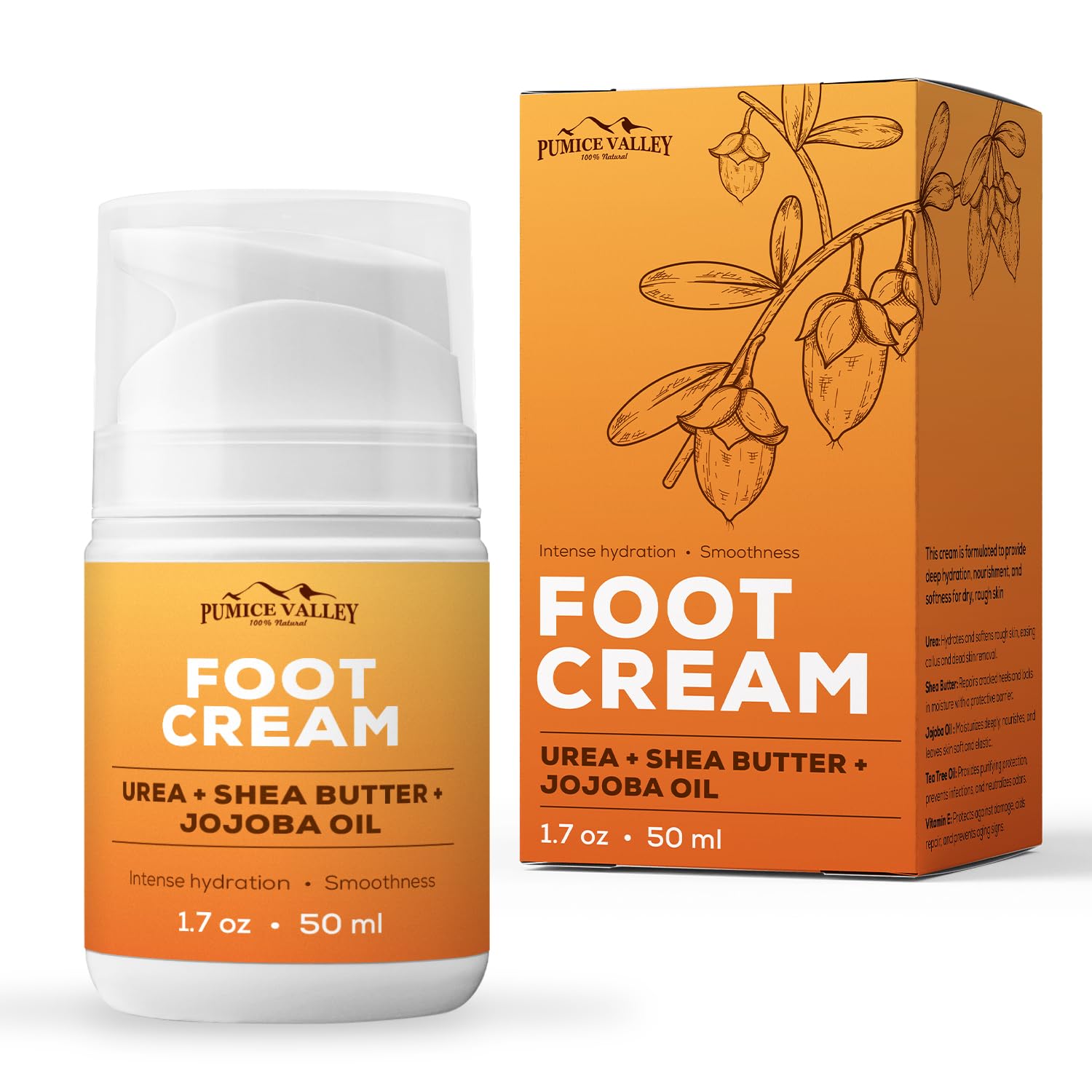
Yes. In fact, this is often the most practical answer for dry, rough feet. Urea can help with the thickened surface, while shea butter supports softness and helps make the routine feel more comfortable.
You may find both ingredients in one foot cream. Or you might use a urea-focused cream when texture is the main concern and a richer shea butter cream for comfort and maintenance. There is no need to layer multiple products if one well-tolerated formula meets your needs.
A Simple Way to Choose
- Mostly dry and tight? Start with shea butter or another rich barrier-supporting cream.
- Dry and rough, with thickened heel edges? A urea-based cream is usually the more relevant choice.
- Both rough and dry? Look for a balanced formula or use a simple, consistent routine that covers both needs.
- Skin stings, is open, or is inflamed? Skip exfoliation and be cautious with active ingredients. Protect the skin and seek advice when appropriate.
If you use a pumice stone or foot file, do not assume more is better because your cream contains urea. Physical exfoliation and exfoliating ingredients can add up. For a sensible starting schedule and signs to pause, read how often you should exfoliate your feet.
A Gentle Routine for Each Ingredient
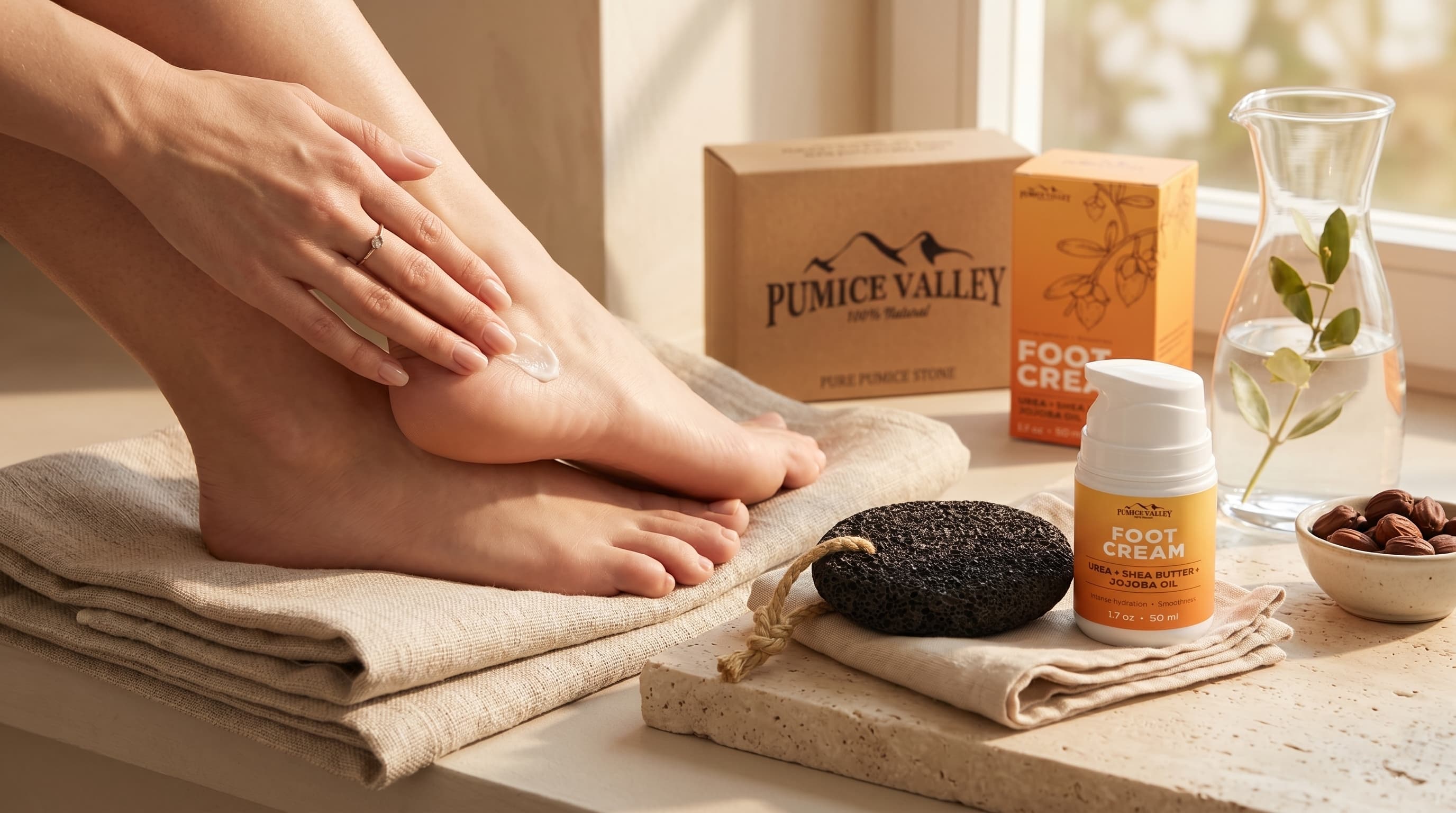
For rough, uncomplicated heels, apply a urea-based cream after bathing and follow the label directions. If there is visible buildup, use gentle physical exfoliation only occasionally on softened, intact skin. Daily moisture between exfoliation sessions is usually more helpful than daily scrubbing.
For mildly dry feet, apply a shea butter-based cream after bathing or before bed. Focus on the heel rim and other dry areas, and wear comfortable socks if you want to keep the cream from transferring overnight.
For feet that are rough and dry, choose a routine you can repeat without irritation. A urea-containing formula may be enough on its own; otherwise, use a richer moisturizer as needed for comfort. Change one thing at a time so you can tell how your skin responds.
Frequently Asked Questions
Is urea better than shea butter for cracked heels?
Often, yes—when the cracks are associated with dry, thickened buildup. Urea is generally more useful for softening rough texture as well as supporting hydration. Deep, bleeding, inflamed, or painful cracks need more caution than a cosmetic routine can provide.
Can shea butter help rough heels?
Yes. Shea butter can improve softness and comfort, especially for mild dryness. For heavily rough or callus-prone heels, it may work better as support alongside an ingredient such as urea rather than as the only step.
Can you use urea and shea butter together?
Yes. They have complementary roles: urea can help with rough, thickened outer skin, while shea butter supports a softer, more comfortable feel and moisture retention. Some foot creams include both.
Does urea sting on cracked skin?
It can, particularly on skin that is open, inflamed, freshly over-exfoliated, or very sensitive. Stop if it stings or irritates, and do not apply it to broken or infected skin without appropriate medical guidance.
What is better for overnight foot care?
Shea butter often feels especially comfortable for an overnight moisture routine. If thick roughness is the main concern, a well-tolerated urea cream may be more useful. The better option is the one that matches your skin and can be used consistently without irritation.
Final Verdict
For rough, thick, or callus-prone heel skin, urea is generally the better ingredient to prioritize. For feet that are mostly dry and need richness, softness, and barrier support, shea butter is an excellent choice.
Neither ingredient needs to do every job. Choose based on what your feet need now, keep exfoliation gentle, and give consistent moisture time to work.
FAQ
Is urea better than shea butter for cracked heels?^
Often, yes, when dry cracks occur alongside thickened buildup. Urea is generally more useful for softening rough texture as well as supporting hydration. Deep, bleeding, inflamed, or painful cracks need more caution than a cosmetic routine can provide.
Can shea butter help rough heels?^
Yes. Shea butter can improve softness and comfort, especially for mild dryness. For heavily rough or callus-prone heels, it may work best as support alongside an ingredient such as urea rather than as the only step.
Can you use urea and shea butter together?^
Yes. Urea can help with rough, thickened outer skin, while shea butter supports moisture retention and a softer, more comfortable feel. Some foot creams include both.
Does urea sting on cracked skin?^
It can, particularly on skin that is open, inflamed, freshly over-exfoliated, or very sensitive. Stop if it stings or irritates, and do not apply it to broken or infected skin without appropriate medical guidance.
What is better for overnight foot care?^
Shea butter often feels especially comfortable for an overnight moisture routine. If thick roughness is the main concern, a well-tolerated urea cream may be more useful.