Pumice Stone vs Electric Callus Remover: Which Is Better for Thick Heels?
美足
Pumice stones and electric callus removers are not interchangeable. Here is how to choose the better tool for thick heels without overdoing it.
When people get frustrated with rough heels, they usually start looking for a stronger tool.
That is where the comparison often begins.
Should you stick with a pumice stone, or switch to an electric callus remover that promises faster visible results?
The honest answer is that each tool solves a slightly different problem, and the better choice depends on how thick the buildup is, how sensitive your skin is, and how aggressively you are likely to use the tool.
Quick Answer
A pumice stone is usually better for:
- gentler maintenance
- people with sensitive skin
- regular use on softened feet
An electric callus remover is often better for:
- thicker buildup
- people who want faster surface reduction
- situations where a manual stone feels too mild
Neither tool should be used aggressively on cracked, painful, or broken skin.
What a Pumice Stone Does Well
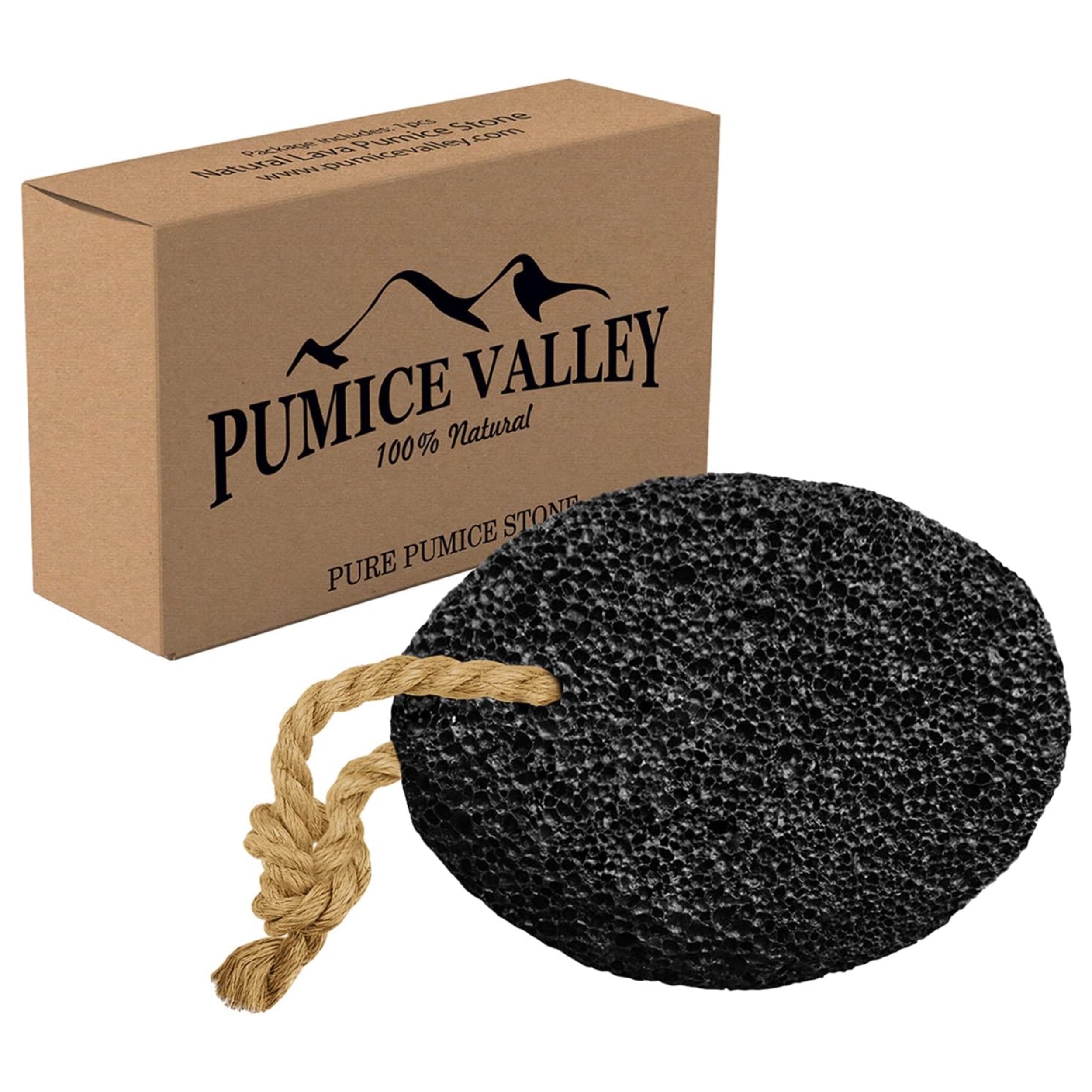
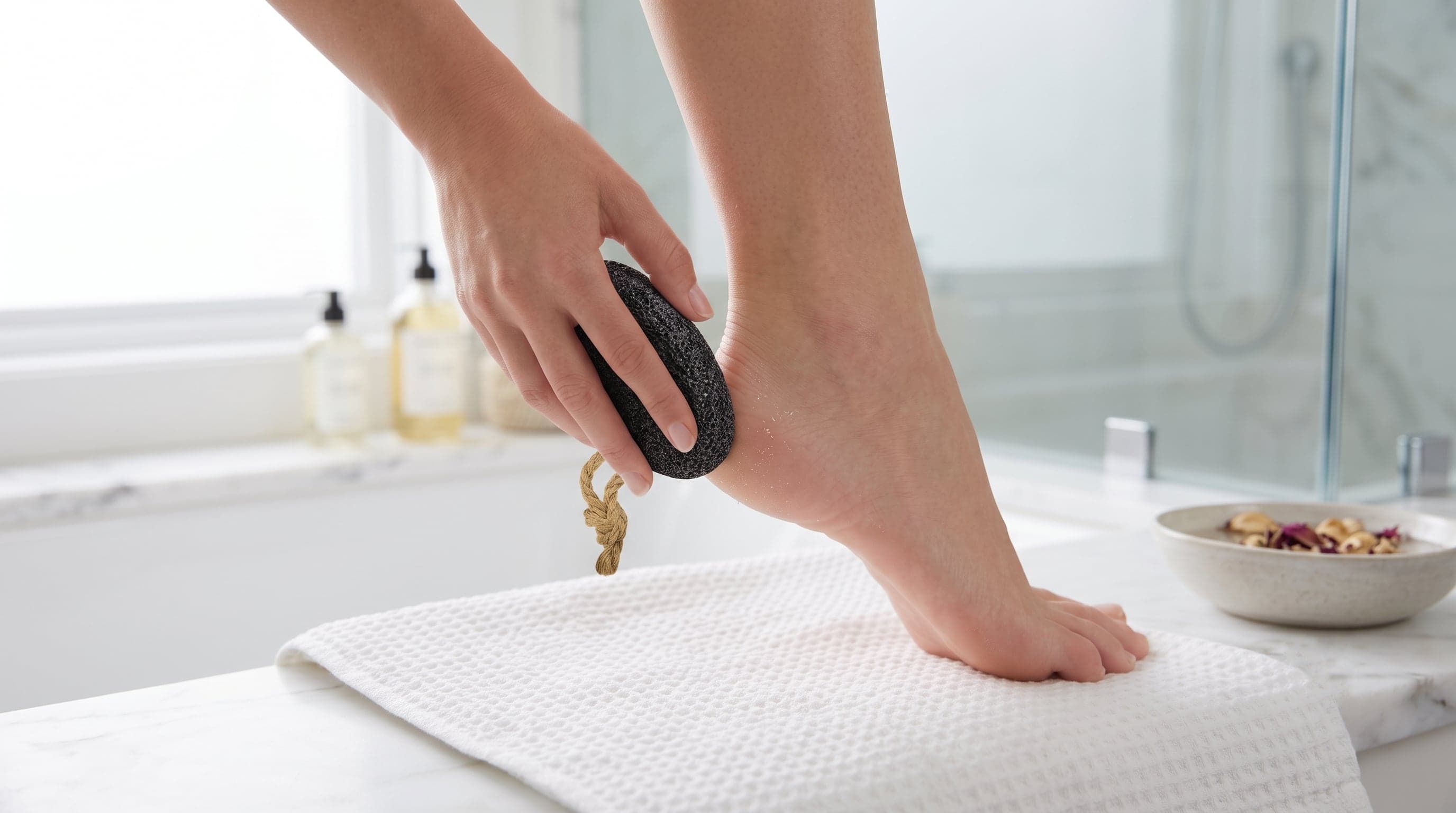
A pumice stone is simple, familiar, and usually less aggressive than powered tools.
It works best when:
- the skin has been softened first
- the buildup is mild to moderate
- the goal is ongoing upkeep rather than rapid removal
Many people do well with pumice because it encourages a slower routine. That can actually be a good thing. Slower tools often reduce the temptation to overdo it in one session.
Pumice is especially useful when you want to maintain smoother heels over time instead of reacting only when the skin is already severe.
Where a Pumice Stone Falls Short
The downside is that some people have buildup that is simply too thick for a stone to feel very effective right away.
If the heel skin is dense, rigid, and heavily callused, a pumice stone may feel like it is barely changing the surface. That can lead people to push harder, which is where the routine starts going wrong.
So while pumice is often safer-feeling, it is not always the most satisfying tool for thicker heels.
What an Electric Callus Remover Does Well
Electric callus removers appeal to people for a reason.
They often produce faster visible change on thickened skin, especially when a manual tool has started to feel too gentle.
That can make them helpful for:
- thicker heel buildup
- more stubborn callused areas
- people who want a tool that does more of the work for them
For some users, the biggest advantage is consistency of motion. Instead of manually pressing and scrubbing, the device handles the repeated abrasion more evenly.
Where Electric Tools Can Go Wrong
The speed and effectiveness are also the main risk.
Because electric removers can make progress faster, they can also strip too much if used carelessly. People who get impatient may keep going just because the tool still seems to be removing material.
That raises the chance of:
- tenderness
- irritation
- over-thinning the skin
- worsening cracks
This matters most when the user treats the tool like a shortcut instead of part of a routine.
Faster is not always better if the skin pays for it later.
Which One Is Better for Thick Heels?
If the question is strictly about thicker buildup, the electric tool often has the edge in raw cutting power.
But that does not automatically make it the better long-term choice for every person.
A better way to think about it is:
- choose the electric tool if the buildup is thicker and you can use restraint
- choose the pumice stone if your skin is more sensitive or you want gentler regular maintenance
Some people even use both, but not in the same aggressive session.
For example:
- an electric tool for occasional heavier reduction
- a pumice stone for maintenance after that
Which Is Safer for Sensitive Skin?
In general, the pumice stone is the safer default for sensitive skin because it is easier to keep the routine gentler.
That does not mean it is impossible to overdo a pumice stone.
It just means manual friction often gives more immediate feedback and usually feels less intense than a spinning device.
If your skin tends to sting, get inflamed, or crack easily, a gentler tool is usually the more defensible starting point.
Which One Is Easier to Overuse?
Usually the electric callus remover.
That is not because it is inherently bad. It is because the combination of speed and visible progress encourages people to keep going longer than they should.
The right stopping point is when the excess roughness has been reduced, not when the heel looks perfectly polished in one session.
What Matters More Than the Tool
People often focus on the comparison and ignore the routine around it.
That routine matters more than they expect.
Whichever tool you use, results are usually better when you:
- soften the feet first
- work with controlled pressure
- stop before the skin gets tender
- apply a richer foot cream immediately after
- keep moisturizing between sessions
Even a very good tool will underperform if you do not support the skin afterward.
When Neither Tool Is the Right Answer
Do not use either tool aggressively if the skin is:
- cracked deeply
- bleeding
- painful
- inflamed
- infected-looking
And if you have diabetes, neuropathy, or poor circulation, it is worth being more cautious with any self-exfoliation plan.
A Practical Decision Guide
Choose a pumice stone if:
- your buildup is mild to moderate
- you want gentle upkeep
- your skin is easily irritated
- you prefer slower, lower-risk maintenance
Choose an electric callus remover if:
- your buildup is thicker
- a pumice stone feels too weak
- you can use the tool carefully and stop early enough
Use either tool more conservatively than your impatience wants.
Final Verdict
For thick heels, an electric callus remover can be more effective than a pumice stone at reducing dense buildup.
But the better tool overall depends on how your skin behaves and how disciplined your routine is.
Pumice stones usually win on:
- gentleness
- maintenance
- lower risk of overdoing it
Electric tools often win on:
- speed
- visible reduction
- thicker callus removal
The best results usually come from choosing the tool that matches your skin, then using it more carefully than the marketing implies.
FAQ
Is an electric callus remover better than a pumice stone?^
It can be better for thicker buildup, but pumice is often better for gentler maintenance and more sensitive skin.
Which tool is safer for dry cracked heels?^
A pumice stone is often the safer starting point for sensitive or crack-prone skin because it is usually less aggressive.
Can you use a pumice stone and an electric remover together?^
Some people do, but it is usually better to use them as separate strategies rather than combining them aggressively in one session.
Should you moisturize after using a callus remover?^
Yes. Moisturizing right after exfoliation is one of the most important parts of the routine.
When should you avoid both tools?^
Avoid aggressive exfoliating tools on deeply cracked, bleeding, painful, or infected-looking skin.