How to Use a Pumice Stone With Foot Cream: The Right Order
浮石与足霜
Learn the right order for using a pumice stone with foot cream: soften skin, pumice gently, rinse and dry, then moisturize. Includes guidance on glycerin, urea, shea butter, Vaseline, and safe frequency.
The order is: soften your feet, use a wet pumice stone gently, rinse and dry your skin, then apply foot cream. This routine separates exfoliation from moisturizing so you can smooth ordinary roughness without relying on pressure or repeated scrubbing.
Foot cream belongs in the aftercare step. It does not make over-exfoliation safer, and applying it first can make the stone harder to control.
Quick Answer
Use a pumice stone after a shower or brief warm soak, when the skin is softened. Wet the stone, make a few light passes over uncomplicated rough areas, rinse away residue, and pat your feet dry. Apply foot cream while the skin is slightly damp, then let the product absorb before putting on socks.
Do not use a pumice stone over open, bleeding, blistered, inflamed, infected-looking, numb, or severely painful skin. If you have diabetes, reduced sensation, circulation concerns, or questions about healing, ask a qualified clinician before using an abrasive foot tool at home.
Applying a thick cream before the stone can make the tool slide unpredictably or encourage you to press harder. Use the cream after exfoliation instead. For a complete technique guide, see how to use a pumice stone on your feet.
Step 1: Soften the Skin
Use the routine after a shower, bath, or short warm foot soak. The skin should feel softened and flexible, not waterlogged or fragile. You do not need a long soak; avoid working on rigid, dry skin.
If your feet are already tender, irritated, cracked, or unusually sensitive, skip pumicing and focus on gentle moisturizing instead. See how often to exfoliate your feet for guidance on adjusting your schedule.
Step 2: Use the Pumice Stone Gently
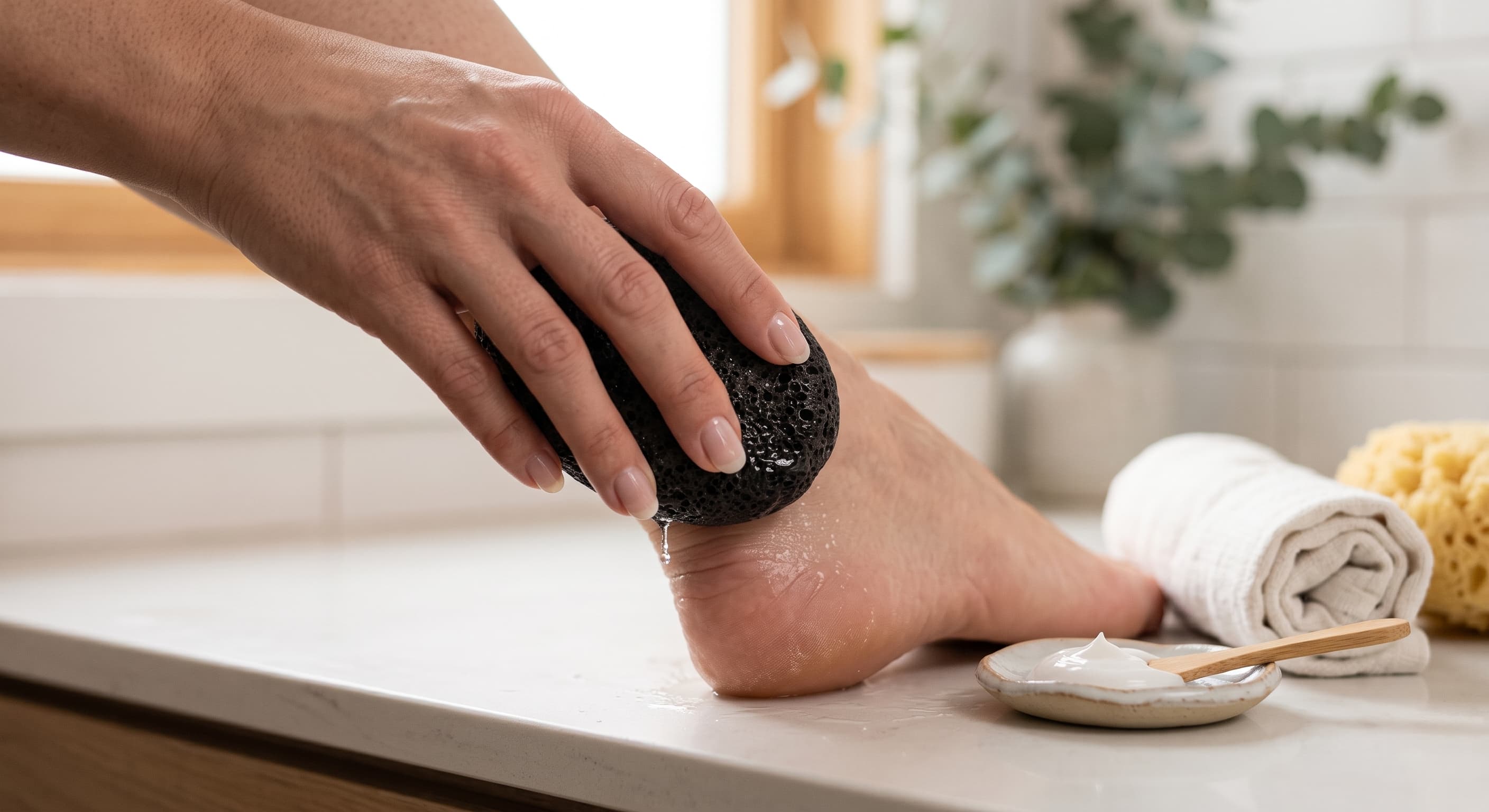
Wet the pumice stone and keep it damp. Start with one small rough area, such as the heel rim or a thickened part of the sole. Hold the stone with a relaxed grip and make short, light passes in one direction or small controlled movements.
Check the skin after a few passes. Stop when the area feels more comfortable and less rough, or sooner if it becomes tender. You are not trying to make the skin perfectly smooth immediately. More pressure can create irritation and may make the area feel rough again later.
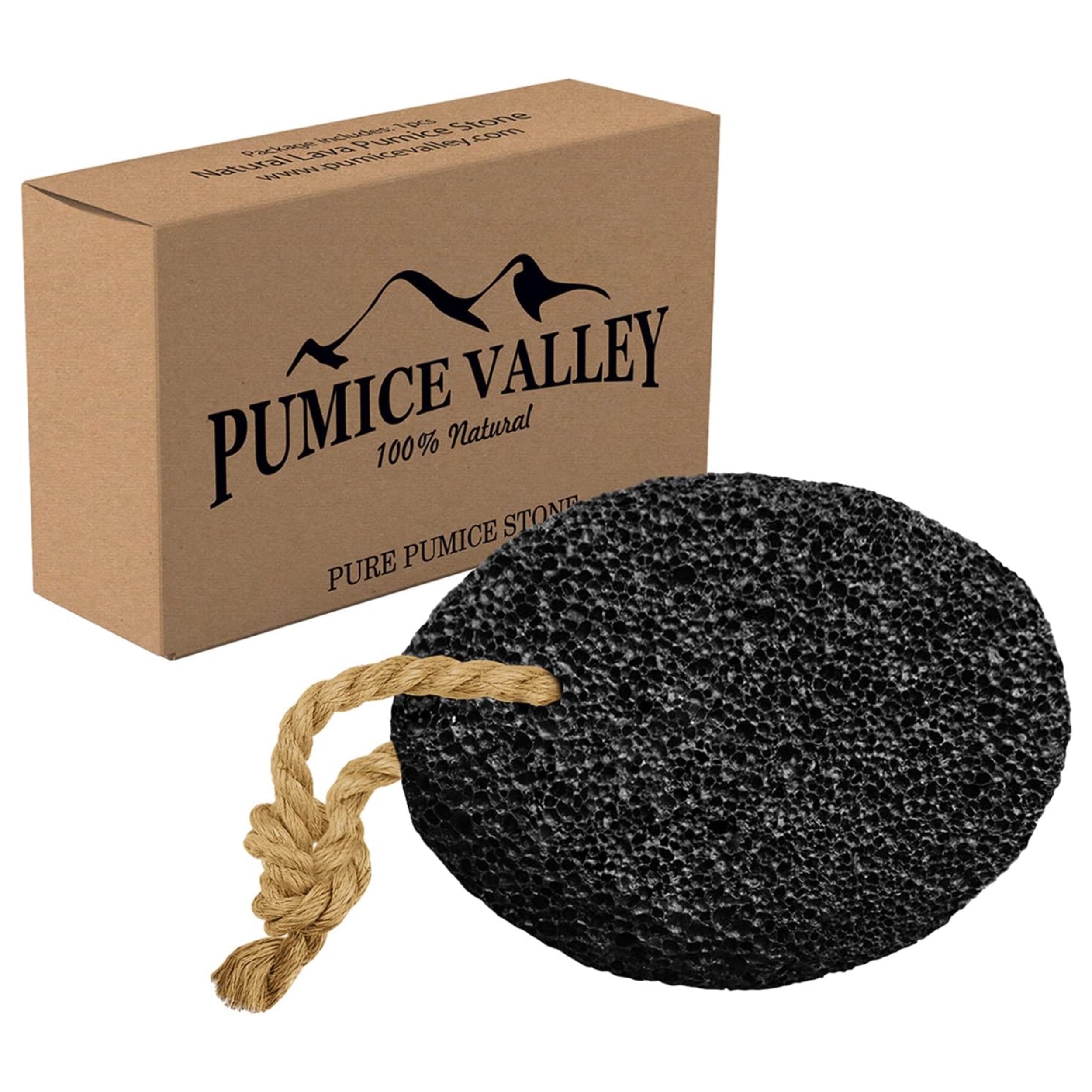
Choose a stone that is easy to hold and has a texture you can control. The Pumice Valley pumice stone for feet page covers the product option, while the best pumice stones for feet guide explains how texture, shape, and grip affect selection.
Step 3: Rinse and Dry Your Feet
Rinse your feet with clean water to remove loosened skin and pumice residue. Pat them dry rather than rubbing vigorously, paying attention to the spaces between the toes. Leave the skin slightly damp if you plan to apply cream right away.
Inspect your feet at this point. If you see bleeding, rawness, increasing redness, or pain, stop. A pumice stone is for ordinary surface roughness, not deep cracks or painful skin changes.
Step 4: Apply Foot Cream
Apply a modest layer of foot cream to the heels, soles, and other dry areas while the skin is still slightly damp. Massage it in gently without rubbing a freshly exfoliated area aggressively. Follow the product’s directions and give it time to absorb.
Different ingredients can fit different routines:
| Ingredient | How it can fit into a routine |
|---|---|
| Glycerin | Often used in moisturizing formulas to help attract and hold water at the skin surface. |
| Shea butter | A rich emollient that can make dry skin feel more comfortable and conditioned. |
| Urea | Common in foot-care products for moisturizing and softening; follow the product instructions, especially on sensitive skin. |
| Vaseline or petrolatum | An occlusive layer that helps reduce moisture loss and can be useful as a final barrier step. |
| Other emollients | Oils and plant butters can add softness without replacing gentle technique. |
These are skincare ingredients, not treatment claims. If a product stings or worsens irritation, stop using it. Compare options in the best ingredients for dry feet and cracked heels and urea vs. shea butter for feet.
Where Vaseline Fits
Vaseline can be used after a moisturizing cream when you want an occlusive layer over dry areas. It does not replace softening the skin, careful pumicing, or a suitable foot cream.
Use a small amount and avoid visibly irritated areas. For more context, see is Vaseline good for cracked heels?.
How Often Should You Combine Pumicing and Cream?
Once a week is a reasonable starting point, but frequency depends on the skin’s response. Leave more time between sessions if your feet remain tender, red, sore, peeling, or increasingly dry. Daily pumicing is not necessary.
Do not use cream to cover warning signs and continue exfoliating. If roughness returns, consider friction, footwear, pressure, or dryness rather than increasing passes.
Clean the Stone Afterward
Rinse the pumice stone, brush away residue, wash it with mild soap, and rinse it thoroughly. Let it dry completely in an open, ventilated place. Do not leave it in standing water or a closed damp container, and do not share it.
Follow how to clean a pumice stone. Replace the stone if it develops a persistent odor, crumbles heavily, or loses an even surface.
Final Takeaway
The practical sequence is simple: soften, wet, use light pressure, rinse, pat dry, and apply foot cream. Glycerin, shea butter, urea, and petrolatum can all appear in a moisturizing routine, but no ingredient makes aggressive exfoliation a good idea.
FAQ
Should I apply foot cream before or after using a pumice stone?^
Apply foot cream after using the pumice stone. Soften the skin first, use the wet stone gently, rinse and pat dry, then apply cream while the skin is slightly damp.
Can I use Vaseline after a pumice stone?^
You can use a small amount of Vaseline after moisturizing if an occlusive layer suits your routine. Do not use it to cover irritated or damaged skin and continue exfoliating.
Is urea or shea butter better after pumicing?^
Neither is automatically better for everyone. Urea and shea butter serve different formulation roles, so choose a product your skin tolerates and follow its directions.
Should my feet be wet when I use a pumice stone?^
Use a wet stone on softened skin as a practical starting method. This can help the stone glide and make light pressure easier to maintain. Stop if the skin feels uncomfortable.
How often should I use foot cream after pumicing?^
Apply it after each comfortable exfoliation session, and use it as often as the product directions and your skin allow between sessions. Cream does not mean you should pumice more frequently.
Can I use a pumice stone on cracked heels and then apply cream?^
Avoid pumicing open, bleeding, deep, painful, or inflamed cracks. Protect damaged skin and seek appropriate advice if cracks are severe, persistent, or accompanied by other concerning changes.