Best Pumice Stone for Feet: How to Choose the Right One
最适合双脚的浮石(为什么大多数效果不佳)
Looking for the best pumice stone for feet? Compare texture, grip, size, material, and cleaning needs to choose a controllable stone for your routine—plus a quick guide for different foot-care needs.
The best pumice stone for feet is not necessarily the roughest one. For most people, it is a stone with a medium texture, a secure grip, and a size that is easy to control on wet skin. The right choice should help you maintain ordinary heel roughness—not encourage you to scrub harder.
Use the guide below to compare texture, shape, material, and cleaning needs before you buy. The aim is gradual smoothing, not removing every trace of hard skin in one session.
Quick Answer
For an all-purpose choice, look for a medium-textured pumice stone that is comfortable to hold, large enough for broad heel areas, and easy to rinse and dry. Choose a smaller, smoother stone when control matters more than speed. If you have sensitive skin, start with less pressure and fewer passes. Do not use a stone on broken, bleeding, infected, or severely painful skin.
Choose at a glance
| If you want to… | Start by looking for… |
|---|---|
| Smooth ordinary heel roughness | A medium-textured stone with a broad, stable surface |
| Work around toes or a small area | A compact stone that is easy to guide |
| Minimize irritation | A smoother texture and a grip that prevents slipping |
| Keep a regular routine | A durable stone that rinses clean and dries fully |
Once you know which features fit your routine, compare individual stones using the criteria below. If you already know you want Pumice Valley’s product, the Pumice Valley pumice stone for feet is the separate commercial next step; this article is focused on choosing, not ranking one product as the answer for everyone.
What Makes a Pumice Stone Good for Feet?
Pumice works by lightly buffing away some of the dry, hardened skin that collects where feet meet pressure and friction. That makes it useful for ordinary roughness on the heels, balls of the feet, and sides of the toes.
The best stone is one you can use with restraint. A useful choice should feel manageable in your hand, glide across wet skin without catching, and be simple to rinse and dry afterward. It should support a regular foot-care ritual rather than turn into a harsh rescue tool.
A stone is usually a better fit for mild to moderate surface buildup than for a painful corn, an open fissure, or a very localized hard spot that keeps returning. Those situations deserve more care than repeated exfoliation.
Choose by Your Skin and Routine
There is no single best shape or texture for every foot. Use the guide below to choose for the job in front of you.
| Concern or use case | What to look for | When to choose a gentler approach |
|---|---|---|
| Mild dryness or light heel roughness | Medium texture, broad surface, easy grip | Start with a few light passes after bathing and stop when skin feels smoother. |
| Sensitive or easily irritated skin | Smaller, controllable stone with a smoother feel | Use less pressure and fewer passes; wait longer between sessions if skin turns pink or sore. |
| Mild to moderate callus buildup | A durable medium-textured stone that reaches broad areas | Work gradually over several sessions instead of trying to remove thick skin at once. |
| Smaller pressure areas near toes | Compact shape that is easy to guide | Do not keep working a painful or sharply defined spot; it may not be a simple callus. |
| Hard skin that returns quickly | A stone that is easy to clean plus a consistent moisturizing routine | Consider whether shoe fit, friction, or pressure is driving the buildup instead of increasing abrasion. |
The choice becomes simpler when you focus on control. Larger stones can make short work of a broad heel, while smaller stones may feel easier to guide around curves. A rope loop or shaped edge can be helpful if it improves your grip, but it is not a substitute for a light hand.
Texture: Why Rougher Is Not Always Better
A stone with very large pores or a sharply abrasive feel can remove more surface buildup quickly, but it also leaves less room for error. That makes it a poor starting point for anyone new to foot exfoliation or prone to dryness.
Medium texture is often the more versatile choice. It can smooth ordinary roughness without encouraging you to press hard. If you have a little more buildup, add consistency before you add force: a brief gentle session, moisture afterward, and time for the skin to settle will usually give a better result than one long session.
Stop when the area feels smoother, not when it looks perfectly polished. Healthy foot skin still needs some natural protection from daily pressure.
Natural vs Synthetic Pumice: What Is the Difference?
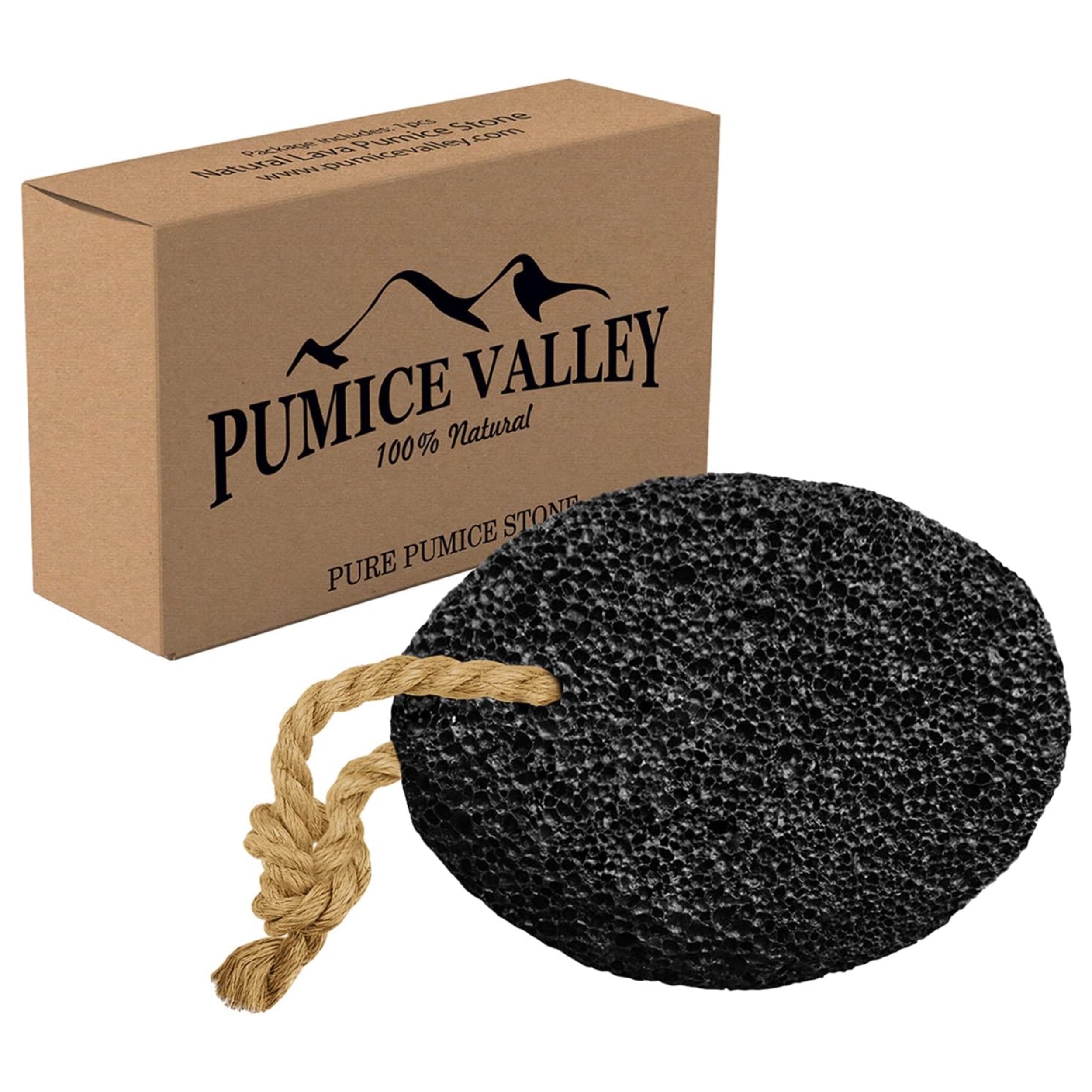
Natural pumice is a lightweight volcanic rock with an irregular porous surface. Because it is a natural material, its texture, size, and shape can vary from stone to stone. Some people prefer that traditional feel.
Synthetic pumice tools are manufactured to provide a more uniform shape and abrasive surface. They may be easier to grip or more predictable from one tool to the next. They are not automatically harsher or gentler simply because they are synthetic; the texture, construction, and the way you use the tool matter more.
Choose natural pumice if you like a simple, porous stone and are comfortable with slight variation. Choose a synthetic option if a consistent shape, handle, or predictable texture makes it easier to use gently. Avoid treating marketing language about purity or materials as proof that one option will work better for every foot.
Shape, Size, and Grip Matter More Than They Seem
The right design makes careful use easier.
- A broad oval or block shape is practical for the heel and other larger areas.
- A compact stone offers more control near the toes or along a smaller rough patch.
- A flatter side can feel steadier for light, even passes.
- A handle or loop may help if it lets you hold the tool securely without squeezing or twisting your wrist.
Before choosing, imagine using the stone on wet skin in a shower or after a bath. If it would be difficult to hold once your hands are damp, it may encourage clumsy pressure. A calm, controlled motion is more valuable than an impressive-looking tool.
How to Use a Pumice Stone Without Overdoing It
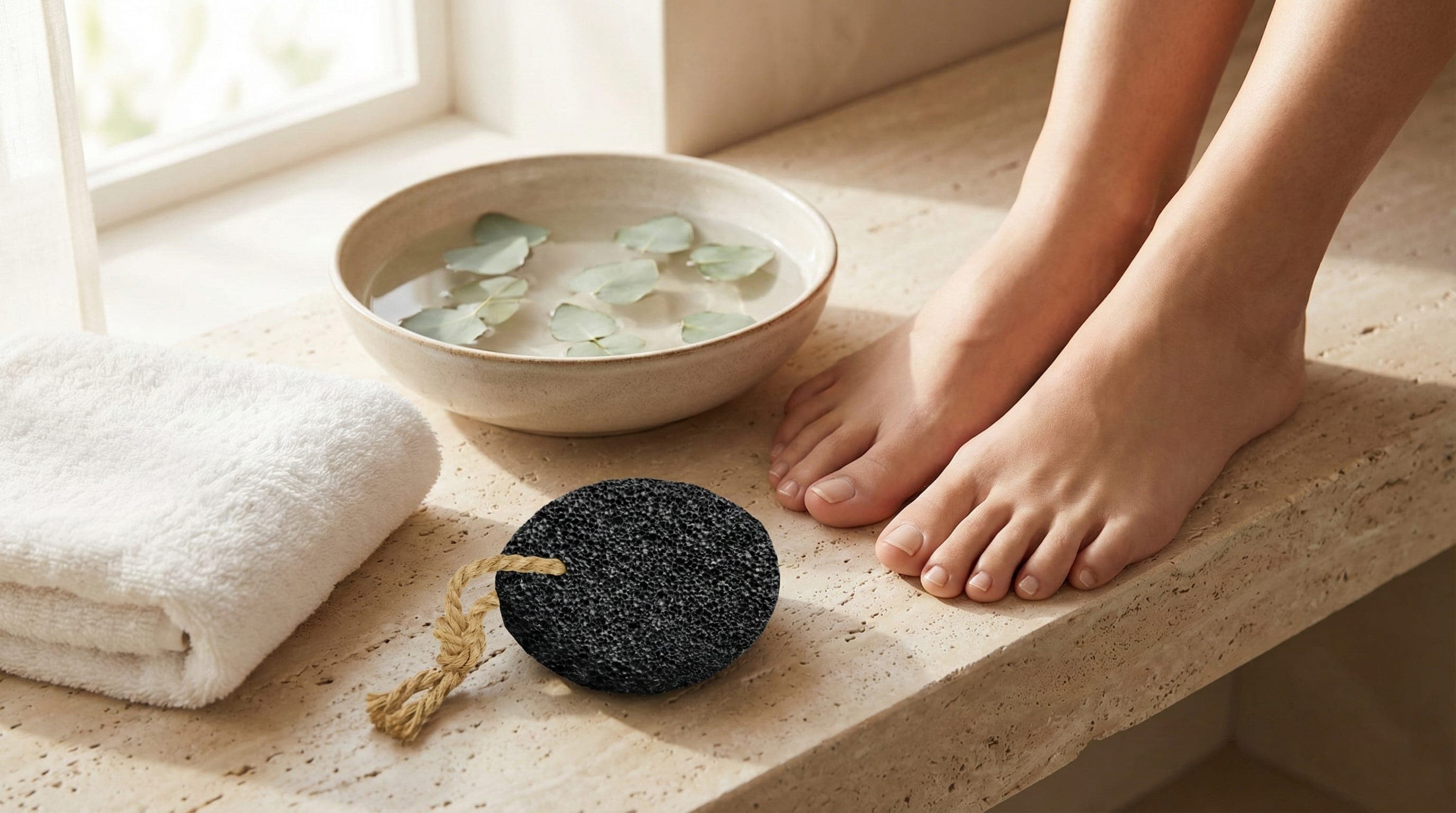
For a gentle routine, soften your feet in a warm shower, bath, or short soak. Wet the stone too. Then use light circular motions or short passes over thickened skin. Keep the session brief and check how the skin feels as you go.
Rinse, pat your feet dry, and apply a cream or ointment while the skin is still slightly damp. Moisture helps keep rough areas from becoming rigid again between sessions. For the product-specific option, see the Pumice Valley pumice stone for feet. For cleaning and general use, follow the guidance in this article rather than assuming any one material or shape is universally best.
Do not use a pumice stone on broken, bleeding, infected, or severely painful skin. Do not try to file away a deep crack or an unexplained painful spot. People with diabetes, neuropathy, poor circulation, reduced sensation, or concerns about healing should ask a clinician before treating foot skin at home.
How Often Should You Use It?
Most people do well with a gentle session once or twice a week, then adjust according to how their skin responds. Mild roughness may need less. If you are also using exfoliating foot products, give your skin more time rather than stacking every method together.
Use the stone less often—or pause—if your feet feel tender, look pink, sting when moisturizer is applied, or begin to peel. Exfoliation should leave feet comfortable, not raw. Our guide to how often to exfoliate your feet explains the signs that your routine is becoming too much.
Keep the Stone Clean
Rinse the stone after every use and brush away visible skin debris with a clean brush. Wash it with mild soap, then let it dry fully in an open, well-ventilated place. Do not share it, and do not leave it damp in a closed container.
Replace the stone when it is difficult to clean, has an odor, crumbles heavily, or no longer feels effective. Good hygiene is part of choosing a good pumice stone; a tool that cannot be kept clean is not a good long-term fit.
Pumice Stone or Foot File?
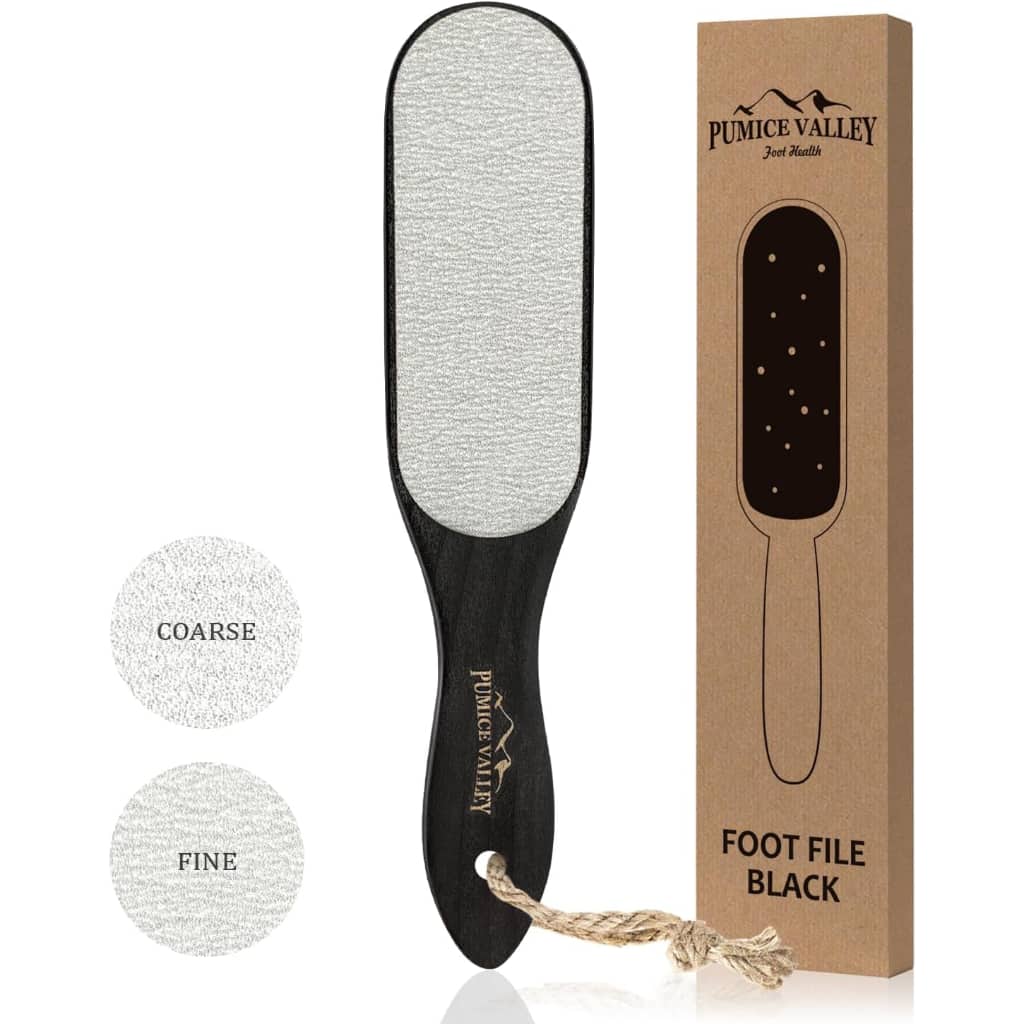
A pumice stone is often the gentler option for regular smoothing, particularly when used wet. A foot file can feel more targeted on thicker buildup, but it also demands more restraint. The best choice depends on how much buildup you have, how sensitive your skin is, and how likely you are to over-file.
If you are deciding between the two, read our focused comparison of pumice stone vs foot file. Start with the tool you can use calmly and consistently—not the one that promises the fastest transformation.
Final Thought
The best pumice stone for feet is a practical, controllable tool that suits your skin and helps you maintain, rather than attack, rough areas. Choose a medium texture, a shape you can hold securely, and a routine that pairs gentle exfoliation with moisture. If skin is damaged, painful, or slow to heal, step back from exfoliation and seek appropriate care.
FAQ
What type of pumice stone is best for feet?
For most people, a medium-textured stone that is easy to hold and clean is the best all-purpose starting point. It offers enough abrasion for mild to moderate roughness without making aggressive scrubbing feel necessary. Compare the texture, grip, size, and cleaning requirements before choosing a specific stone.
Is natural or synthetic pumice better for feet?
Neither is automatically better. Natural pumice has a more varied porous surface, while synthetic options are often more uniform in shape and texture. Choose the one that feels easiest to control and keep clean.
Should I use a pumice stone on wet or dry feet?
Wet, softened skin is the safer starting point for most people. Use the stone after bathing or a short warm soak, with the stone wet as well, to reduce drag and help you use lighter pressure.
Can I use a pumice stone on cracked heels?
It may help with dry, thick skin around shallow, comfortable heel cracks. Do not use it on deep, bleeding, infected, or painful cracks; focus on protecting the skin and seek care if needed.
How do I know if I am using my pumice stone too much?
Pinkness, tenderness, stinging, peeling, or a raw feeling are signs to stop and let the skin recover. A pumice routine should make your feet feel smoother and comfortable, not sore.
FAQ
What type of pumice stone is best for feet?^
For most people, a medium-textured stone that is easy to hold and clean is the best all-purpose choice. It offers enough abrasion for mild to moderate roughness without making aggressive scrubbing feel necessary.
Is natural or synthetic pumice better for feet?^
Neither is automatically better. Natural pumice has a more varied porous surface, while synthetic options are often more uniform in shape and texture. Choose the one that feels easiest to control and keep clean.
Should I use a pumice stone on wet or dry feet?^
Wet, softened skin is the safer starting point for most people. Use the stone after bathing or a short warm soak, with the stone wet as well, to reduce drag and help you use lighter pressure.
Can I use a pumice stone on cracked heels?^
It may help with dry, thick skin around shallow, comfortable heel cracks. Do not use it on deep, bleeding, infected, or painful cracks; focus on protecting the skin and seek care if needed.
How do I know if I am using my pumice stone too much?^
Pinkness, tenderness, stinging, peeling, or a raw feeling are signs to stop and let the skin recover. A pumice routine should make your feet feel smoother and comfortable, not sore.