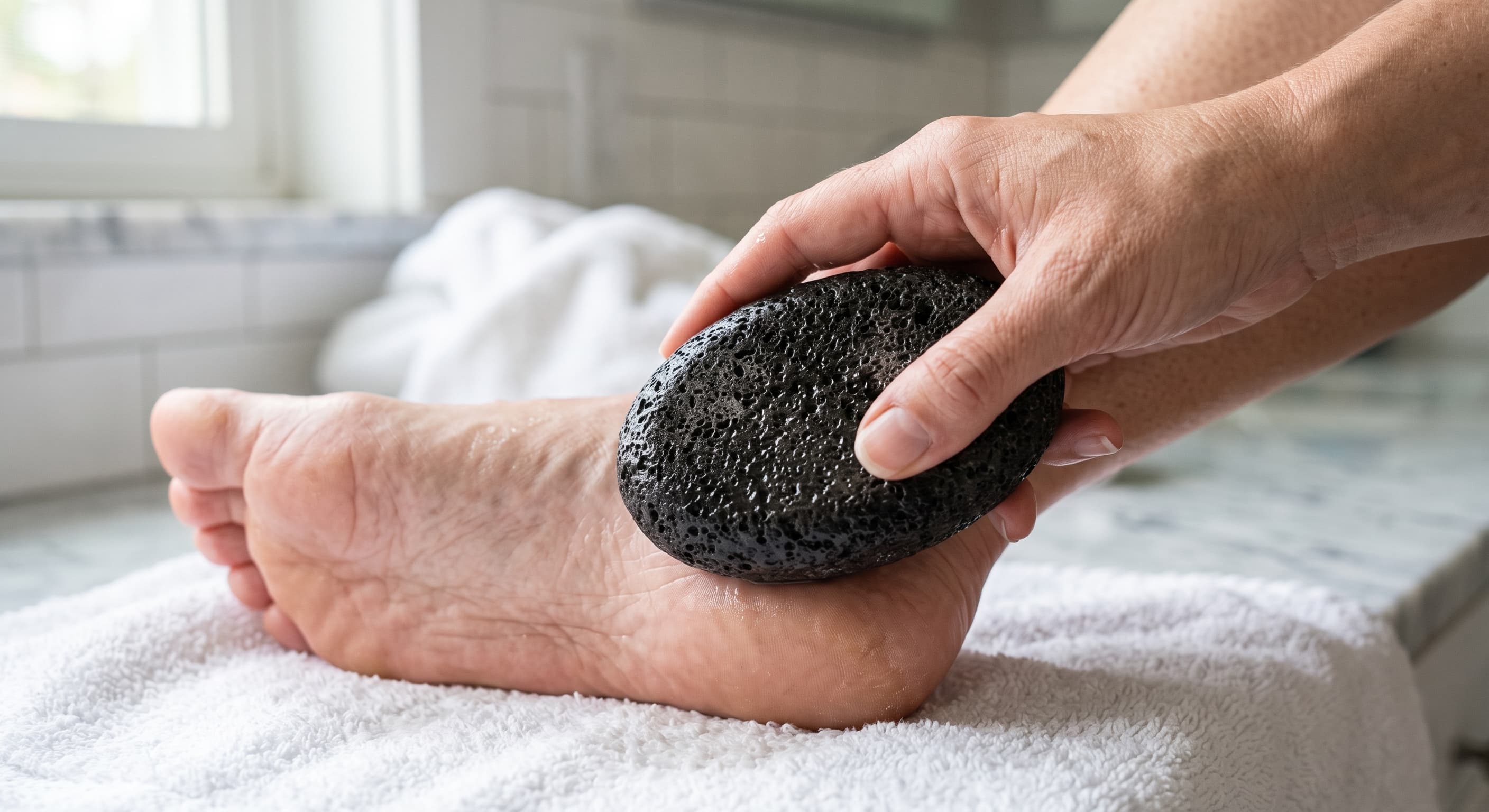
Large Heel Pumice: How to Choose the Right Size, Texture, and Grip
浮石
Choosing a large heel pumice? Learn how size, texture, shape, and grip affect control, plus how to use, clean, and store a larger pumice stone safely.
If you are looking for a large heel pumice, choose one that covers the heel without becoming difficult to control. A medium texture, secure grip, and shape that follows the heel matter as much as size. The goal is to smooth ordinary rough skin with light passes—not remove every bit of hard skin.
This guide explains what to look for in a larger pumice stone, how to use it carefully, and when a compact tool or professional advice is a better choice.
Quick Answer
For a broad heel area, start with a medium-textured pumice stone with a flat or gently curved surface, a grip that stays secure when wet, and enough size to cover the heel in controlled passes. A larger stone can save time, but it should not encourage heavier pressure. Wet and soften the skin first, use the stone wet, and stop when the area feels smoother.
Do not use a pumice stone on open, bleeding, infected, or severely painful skin. If you have diabetes, reduced sensation, poor circulation, or concerns about healing, ask a clinician before exfoliating your feet at home.
Why Choose a Larger Pumice Stone?
A large stone can be useful when roughness covers much of the heel rather than one small spot. Its wider surface lets you make even, short passes across the heel without repeatedly repositioning a small tool. It is not automatically better or faster: choose the largest size you can hold securely without pressing harder.
How to Choose the Right Size and Shape
Look for a stone that matches the area you want to maintain and the way you hold it.
| Feature | What to look for | Why it matters |
|---|---|---|
| Overall size | Broad enough to cover most of the heel, but still easy to hold | Reduces repeated passes without sacrificing control |
| Surface shape | Flat, oval, or gently curved | Helps the stone make even contact with the heel |
| Edges | Rounded or softened edges | Makes it easier to work around the heel without catching nearby skin |
| Thickness | Substantial enough not to flex or crumble easily | Gives you a stable surface when the stone is wet |
| Handle or loop | A grip that remains secure with damp hands | Helps prevent twisting and accidental pressure |
An oval or rounded rectangular shape is often practical for a wide heel. Imagine holding it with wet hands: if it feels awkward or slippery, it is probably too large or poorly shaped for your routine.
Texture: Medium Is a Useful Starting Point
The texture determines how quickly the stone abrades the surface. A very rough stone gives you less room for error and can tempt you to keep going after the skin has had enough friction. A medium texture is a reasonable starting point for ordinary heel roughness. It can provide gradual smoothing while allowing a light touch. If your skin is easily irritated, look for a smoother surface or use a smaller stone for more precise control. If the heel has thicker buildup, consistency is usually a better first adjustment than moving immediately to a much rougher tool.
You can compare texture and other selection factors in the best pumice stones for feet guide. Choose the texture that helps you stop comfortably, not the one that removes the most skin in one pass.
Grip and Handle: Control Comes First
Wet feet and wet hands make grip especially important. A large heel pumice should be easy to hold without clenching your fingers. A hole, rope loop, contoured side, or attached handle can help if it makes the tool steadier, but is not automatically safer than a plain stone.
Before using a new stone, check that:
- You can hold it with a relaxed hand.
- You can turn it without twisting your wrist.
- The surface does not feel sharp at the edges.
- The grip still feels secure when both the stone and your hands are wet.
If you find yourself squeezing tightly or bracing the stone, choose a smaller shape or a more secure grip. Better control is more valuable than a larger abrasive surface.
How to Use a Large Heel Pumice Safely
Start by softening the skin in a warm shower, bath, or brief foot soak. Wet the stone too, support your foot comfortably, and make light, short passes over the roughest part of the heel. Use small circles or one-direction passes; avoid sawing back and forth aggressively.
Check the skin often rather than completing a fixed number of passes. Work gradually and stop when the surface feels smoother. Do not chase a perfectly polished appearance; some natural texture protects the skin from daily pressure.
Rinse the foot, pat it dry, and apply a plain moisturizer while the skin is still slightly damp. For a complete step-by-step routine, read how to use a pumice stone on your feet. Our guide to whether to use a pumice stone wet or dry covers why wet use is the gentler starting point for many people.
Pause if the skin becomes tender, pink, stings, peels, or feels raw. Do not keep working simply because a large stone makes it easy to cover the area quickly.
When a Large Stone Is Not the Right Choice
A larger tool is not ideal for every foot or every problem. Choose a smaller stone when you need to work around toes, a narrow edge, or a limited area. Avoid using any pumice stone over open cracks, bleeding skin, blisters, a rash, or an area that is hot, swollen, or severely painful.
Repeatedly thick or painful skin may be related to pressure, friction, footwear, or a condition that should not be managed by increasing abrasion. Do not try to remove a corn or deep fissure by force. If you have reduced sensation, diabetes, poor circulation, or slow healing, get guidance before using an abrasive foot tool.
Clean and Store the Stone Properly
Rinse the large heel pumice after every use and brush away visible debris with a clean brush. Wash it with mild soap, rinse thoroughly, and leave it in an open, well-ventilated place until completely dry. A larger stone can hold moisture in its pores, so avoid putting it straight into a closed shower caddy, drawer, or container.
Do not share the stone. Replace it if it develops a persistent odor, crumbles heavily, becomes difficult to clean, or no longer feels effective. Follow the detailed steps in how to clean a pumice stone to keep the tool in better condition between uses.
Final Takeaway
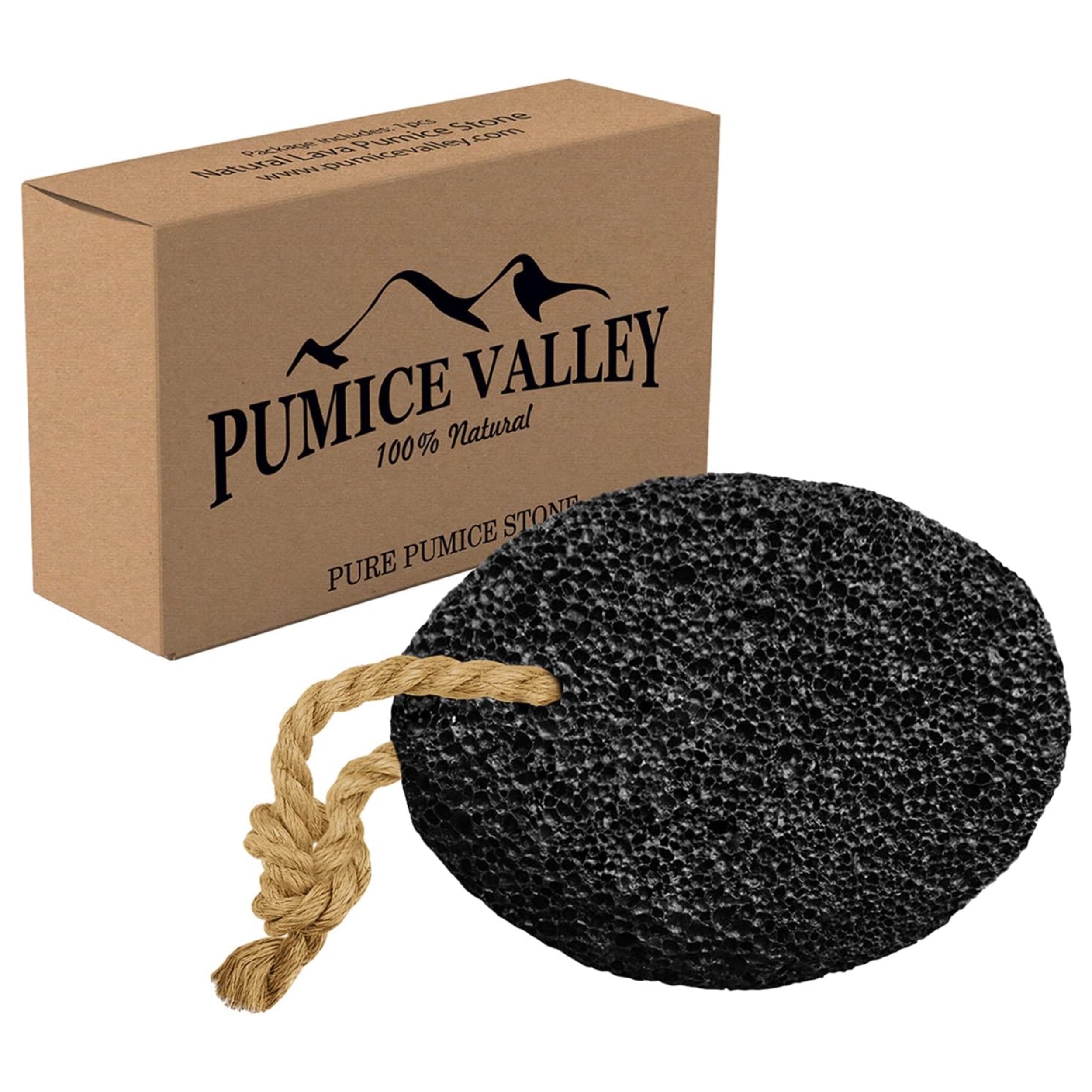
The best large heel pumice is not simply the biggest or roughest option. Choose a broad, stable shape with a medium texture and a grip you can control when wet. Use it on softened skin with light pressure, stop early, moisturize afterward, and keep the stone clean and fully dry. If you are ready to compare a product option, visit the Pumice Valley pumice stone for feet.
FAQ
Is a large pumice stone better for heels?^
A large pumice stone can be convenient for broad heel areas because it covers more surface in each pass. It is only a better choice if you can hold and guide it securely; a smaller stone may be better for narrow areas or limited control.
What texture should I choose for a large heel pumice?^
A medium texture is a practical starting point for ordinary heel roughness. Very rough surfaces can remove buildup quickly but leave less room for overuse, so choose a smoother texture if your skin is easily irritated.
Should I use a large heel pumice wet or dry?^
Wet the stone and use it on softened, wet skin as a gentler starting method. This can help it glide and make it easier to use light pressure. Stop if the skin becomes tender or irritated.
Does a handle make a pumice stone safer?^
A handle can improve control if it fits your hand and stays secure when wet. It does not make aggressive pressure safe; choose the grip that lets you guide the stone with a relaxed hand.
Can I use a large pumice stone on cracked heels?^
Do not use it on deep, open, bleeding, infected, or painful cracks. Abrasion may be inappropriate for damaged skin. Protect the area and seek appropriate advice if the cracks are severe or do not improve.
How do I clean and store a large pumice stone?^
Rinse and brush it after every use, wash it with mild soap, and let it dry completely in an open, ventilated place. Do not store it damp in a closed container, and replace it if it develops a persistent odor or becomes difficult to clean.