Should You Use a Pumice Stone Wet or Dry? The Safer Method
浮石应该湿用还是干用
Should you use a pumice stone wet or dry? For most people, softened damp skin is easier to exfoliate gently than completely dry feet. Learn the safer method, when to pause, and how to care for the stone afterward.
If you are wondering whether to use a pumice stone wet or dry, use it on softened, damp skin for most foot-care routines—not on rigid, completely dry skin. A shower, bath, or short warm soak can make gentle passes easier, but the skin should feel pliable rather than waterlogged.
That usually means after a shower, bath, or short warm soak.
Using a pumice stone dry can feel more aggressive, but that does not mean it works better. In many cases, it simply increases friction on skin that is already stiff and more likely to become irritated.
Quick Answer: Wet or Dry?
For most people, a pumice stone works best:
- after a shower, bath, or short foot soak
- on skin that feels softened, not waterlogged
- with light pressure, not scraping force
- followed by a foot cream on dry areas like heels and soles
Using a pumice stone on dry feet is more likely to feel harsh and less likely to smooth thick rough skin gently.
| Method | What to expect | Best practical approach |
|---|---|---|
| Softened or damp skin | Less resistance and a more controlled pass | Use after a shower, bath, or short soak with light pressure |
| Completely dry skin | More drag and friction, which can feel harsh | Usually avoid; do not compensate by scrubbing harder |
| Over-soaked skin | Skin may feel fragile or overly soft | Stop soaking and wait until the skin feels pliable, not swollen |
The aim is controlled exfoliation, not the most intense scraping. For related guidance, see how often to exfoliate your feet and how to clean a pumice stone.
Why This Question Matters
People usually ask this because they want faster results.
Dry skin feels rougher, so it is easy to assume that scrubbing it dry will remove more buildup.
But harder does not always mean better.
A pumice stone works by helping reduce loose or softened surface buildup. If the skin is rigid and dry, the stone tends to skip, drag, or scratch without improving the texture much.
That is why wet-or-dry is really a question about how to exfoliate without making the skin worse.
Why Wet or Softened Skin Usually Works Better
Softened skin is easier to work on gently.
After bathing, the outer buildup often loosens enough that a pumice stone can smooth it more evenly.
That matters because the goal is not to attack the heel. The goal is to reduce excess roughness with controlled friction.
Using the stone after a shower or soak can help:
- lower resistance from thick dry skin
- reduce the urge to scrub too hard
- create a more even result
- make the routine feel less abrasive
For many people, this is the difference between a maintenance routine and a skin-damaging one.
Why Dry Use Often Backfires
Using a pumice stone on dry feet is one of the most common reasons people say it is not helping.
Dry use can lead to:
- too much friction
- uneven scraping
- tenderness
- redness
- worse-looking roughness afterward
It can also tempt people into long scrubbing sessions because the buildup does not seem to move.
That is usually not a sign that the skin needs more force. It is a sign that the skin is not ready for that kind of exfoliation yet.
What “Wet” Should Actually Mean
Wet does not mean soaking the foot until the skin is fragile.
It usually means one of these:
- after a normal shower
- after a bath
- after a short warm soak
The skin should feel more pliable, not swollen and overworked.
If the area is already very cracked, sore, or irritated, even softened skin may need more caution. Gentle care matters more than pushing through.
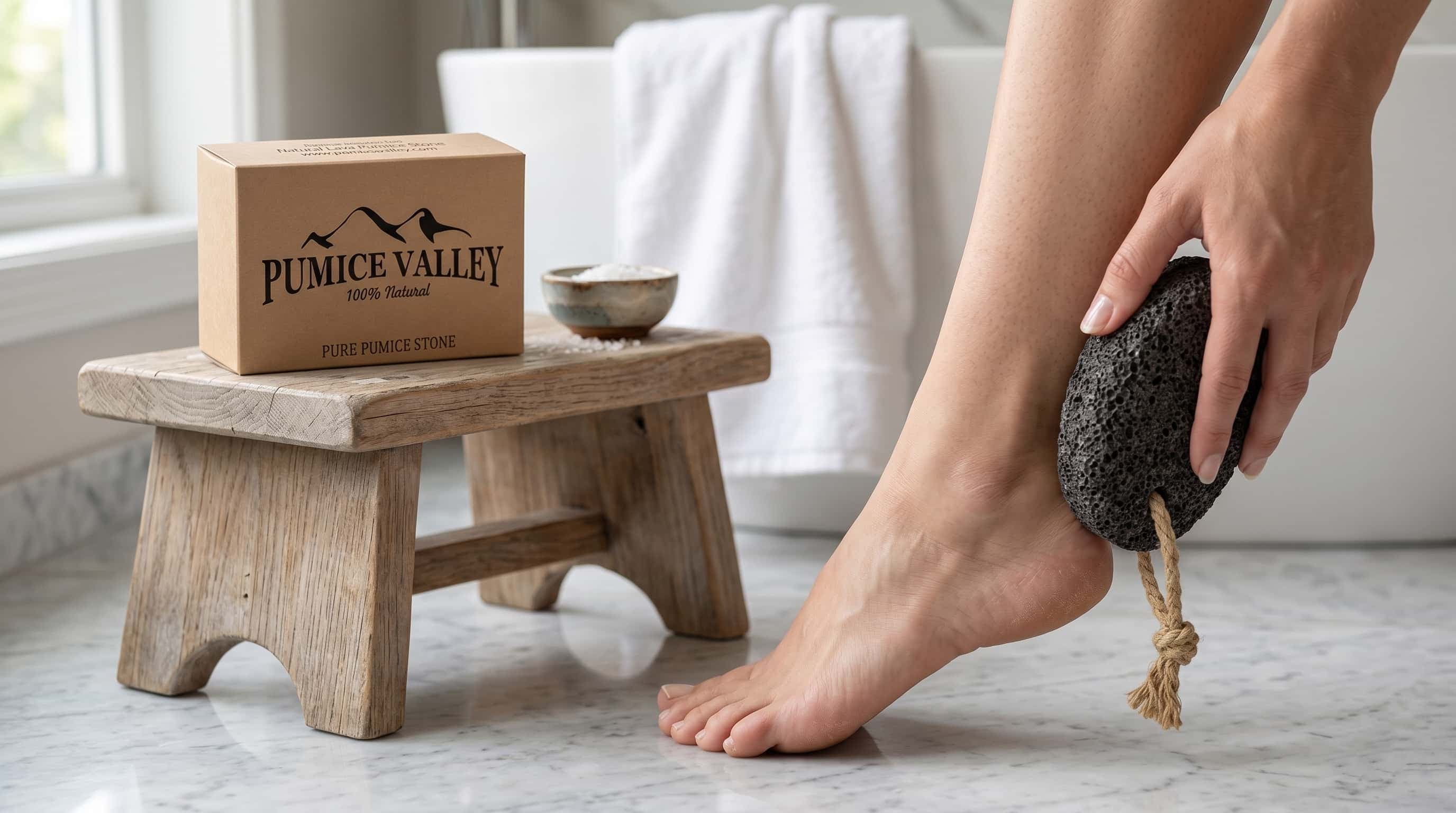
How To Use a Pumice Stone the Safer Way
If you want the routine to work better, keep it simple.
1. Soften the skin first
Shower, bathe, or soak briefly.
2. Use gentle passes
Do not grind at one spot for too long. A few light repeated passes are usually better than hard scraping.
3. Focus on thickened areas
Heels and rough sides of the foot are common targets. Do not keep exfoliating healthy skin just because the stone is in your hand.
4. Stop if the skin feels raw
Pumice should reduce buildup, not create a burning or tender sensation.
5. Moisturize afterward
Apply cream to dry zones after exfoliating so the skin does not harden again immediately.
For a complete routine, read how often to exfoliate your feet. Clean and dry the stone after use with these pumice-stone cleaning steps.
What About Very Thick Callus?
Some people feel that wet use is too gentle because their buildup is very thick.
That can happen.
But even then, dry scraping is often not the smartest solution.
Usually, a better approach is:
- consistent gentle sessions
- post-exfoliation moisture
- reducing friction from shoes or pressure
- using a different tool carefully if the buildup is unusually dense
Pumice is often best for gradual maintenance, not aggressive removal.
When You Should Pause or Stop Exfoliating
Be more careful if the skin is:
- cracked
- bleeding
- inflamed
- burning
- peeling from irritation
And be extra cautious if you have diabetes, neuropathy, or poor circulation.
In those situations, the question is not just wet or dry. It is whether exfoliation is appropriate at all without more guidance.
Pause the routine if the skin becomes painful, raw, unusually tender, or increasingly red. Do not keep working over bleeding, inflamed, or open areas. Let the skin settle instead of trying to remove more roughness in the same session.
So, Wet or Dry?
For most feet, softened skin wins.
That does not mean soaking forever. It means giving the skin enough prep that the pumice stone can work with less force and less irritation.
Dry use may seem tougher, but it is often simply rougher.
Final Verdict
If you want a practical answer, use a pumice stone on softened skin rather than on dry feet.
That usually means after a shower, bath, or short soak, followed by a moisturizer on dry areas.
The best exfoliation routine is not the harshest one. It is the one that smooths buildup without making your skin angrier.
FAQ
Should you use a pumice stone wet or dry?
For most people, use a pumice stone on softened, damp skin rather than completely dry skin. A shower, bath, or short soak is usually enough; avoid leaving the skin waterlogged.
Can you use a pumice stone on dry feet?
It is possible, but dry use is more likely to feel harsh and drag across the skin. It is usually better to soften the skin first instead of applying more pressure.
How long should you soak feet before using a pumice stone?
Many people only need a normal shower or a short soak to soften the skin enough. The goal is gentle pliability, not over-soaked fragile skin.
Why does a pumice stone work better after a shower?
After a shower, thick rough skin is usually softer and easier to reduce with gentle passes. That means less force is needed and the result tends to be more even.
Should you moisturize after using a pumice stone?
Yes. Moisturizing after exfoliating helps support the skin barrier and can keep the rough area from drying out and hardening again so quickly.
FAQ
Should you use a pumice stone wet or dry?^
For most people, use a pumice stone on softened, damp skin rather than completely dry skin. A shower, bath, or short soak is usually enough; avoid leaving the skin waterlogged.
Can you use a pumice stone on dry feet?^
It is possible, but dry use is more likely to feel harsh and drag across the skin. It is usually better to soften the skin first instead of applying more pressure.
How long should you soak feet before using a pumice stone?^
Many people only need a normal shower or a short soak to soften the skin enough. The goal is gentle pliability, not over-soaked fragile skin.
Why does a pumice stone work better after a shower?^
After a shower, thick rough skin is usually softer and easier to reduce with gentle passes. That means less force is needed and the result tends to be more even.
Should you moisturize after using a pumice stone?^
Yes. Moisturizing after exfoliating helps support the skin barrier and can keep the rough area from drying out and hardening again so quickly.