Do Moisturizing Heel Socks Work? How to Use Gel Socks for Dry, Cracked Heels
保湿足跟袜
Gel heel socks do not repair skin on their own, but they help foot cream work harder overnight. Here is how to use them and who benefits most.
Moisturizing heel socks can help, but not in the way the packaging sometimes suggests. They do not repair skin on their own. What they do well is hold moisturizer against the heel, slow down water loss overnight, and protect the skin from friction while you sleep. Used with a good foot cream, that combination can make a noticeable difference to dry, rough heels.
This guide explains how gel heel socks work, who benefits most, how to use them, and when they are not the right choice.
Quick answer: Yes, moisturizing heel socks can help dry or mildly cracked heels, mainly by sealing in the foot cream you apply first. Apply cream to clean, dry heels, put the socks on for the evening or overnight, and wash them regularly. Do not use them over open, bleeding, or infected cracks.
What moisturizing heel socks actually are
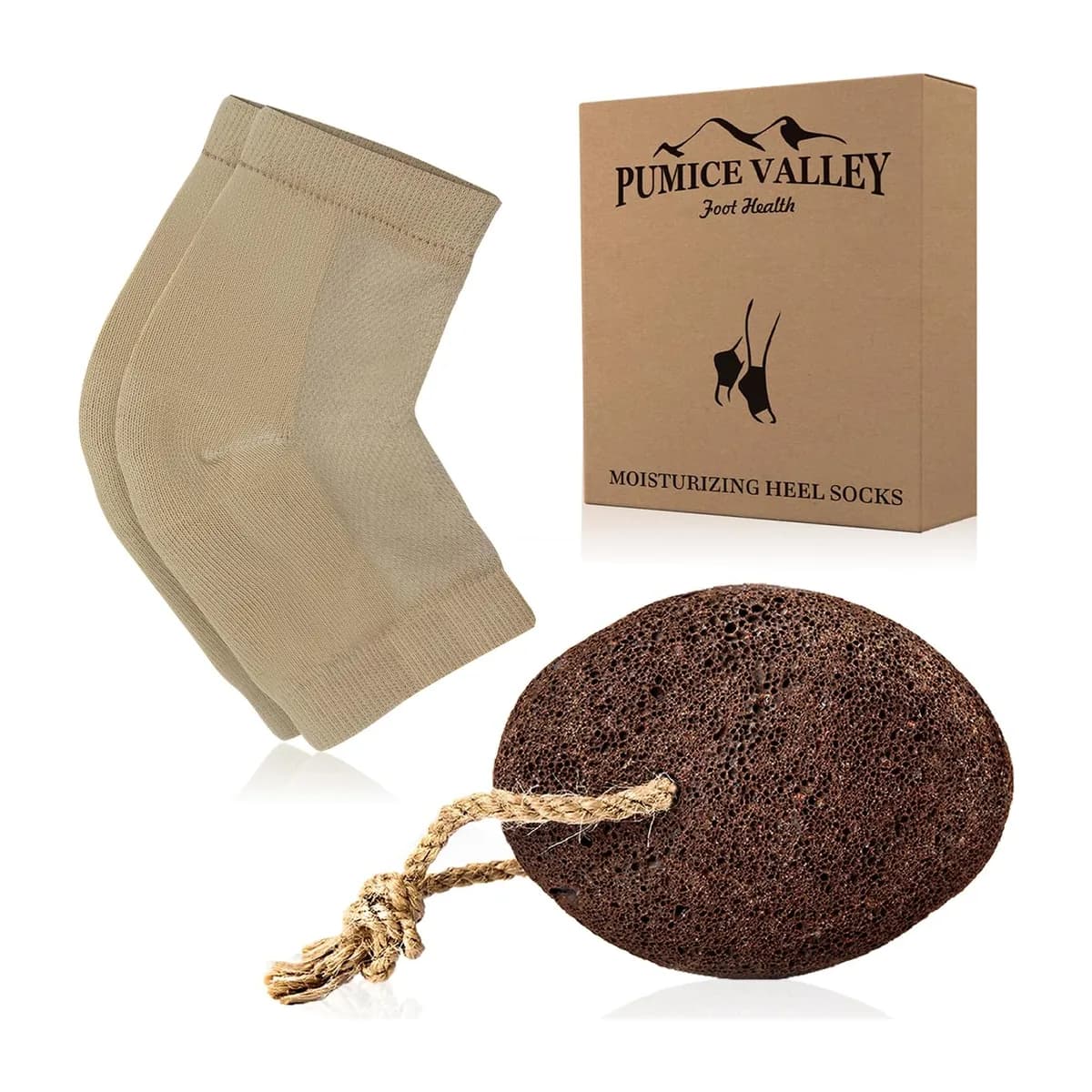
Most moisturizing heel socks are fabric sleeves or socks with a soft gel lining around the heel cup. Some gel linings contain small amounts of oils or vitamins. Others are plain gel designed simply to create a close, cushioned seal.
Either way, the gel is not a substitute for a real moisturizer. The amount of oil a lining can release is small and fades with washing. The main value of the sock is what it does to the cream underneath it.
How heel socks help dry heels
They act as an occlusive layer
Dry heel skin loses water easily. Many effective moisturizers include occlusive ingredients that form a barrier and slow that loss. A gel heel cup adds a second, physical barrier on top. That is why heels often feel noticeably softer in the morning after a night in socks.
They keep the cream where you put it
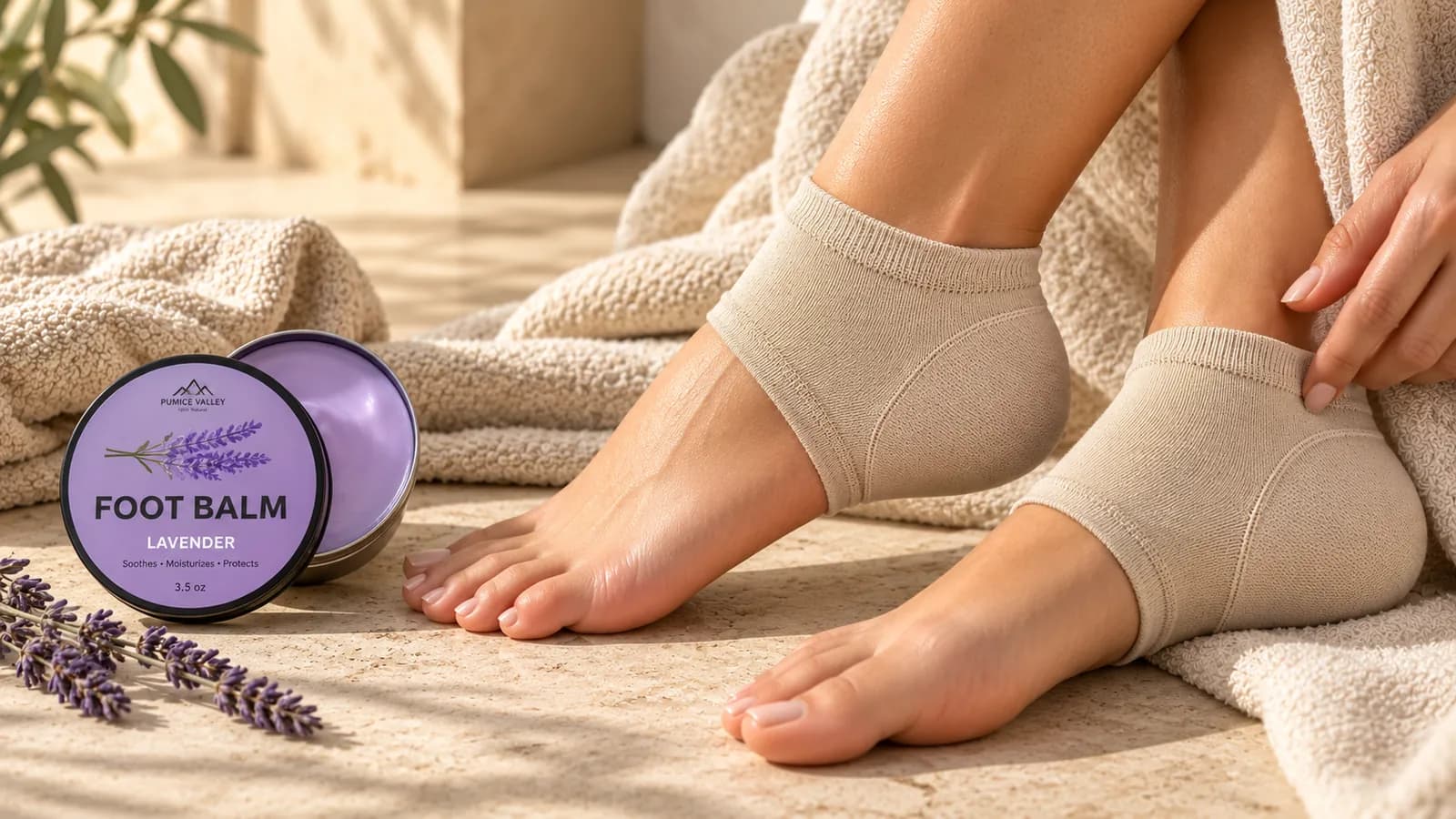
Foot cream applied at bedtime tends to end up on the sheets. A snug heel sleeve keeps it in contact with the skin for hours, which is especially useful for thicker formulas and urea creams.
They cushion and reduce friction
A soft heel cup can make dry, tight heels feel more comfortable, and it protects them from rubbing against bedding.
None of this is dramatic. It is the same logic as wearing cotton socks over foot cream at night, done with a closer fit. Our best night routine for cracked heels explains why the overnight window matters.
Who benefits most
Heel socks are most useful if:
- your heels are dry, tight, or rough, with shallow surface cracks;
- moisturizer seems to disappear before it has time to work;
- your heels look worse after summer sandals or long days on hard floors; or
- you already exfoliate but the softness does not last.
They are less useful if your main problem is a thick, defined callus. In that case gentle exfoliation does more of the work, and the socks support the skin afterward. See pumice stone for thick calluses for that side of the routine.
How to use moisturizing heel socks
1. Start with clean, dry feet
Wash your feet, then pat them dry, especially between the toes. Trapping moisture between the toes under a sock is not helpful.
2. Exfoliate only if needed, and lightly
If you use a pumice stone, do it before the socks and keep it gentle. Exfoliation removes some dry surface skin so cream can reach the heel more evenly. It is not a step for every night. Our guide to how often to exfoliate your feet explains why.
3. Apply a good layer of foot cream
Massage a generous layer into the heel and the edges of the sole. Ingredients such as urea, glycerin, shea butter, and petrolatum are common choices for dry heels. If you are deciding between a cream and a balm, read Foot Cream vs Foot Balm.
4. Put on the socks
Slide the socks on so the gel cup sits squarely over the heel. They should feel snug, not tight. If you notice pressure marks, tingling, or discomfort, take them off.
5. Wear them for a few hours or overnight
Many people start with an evening session of one to two hours and move to overnight wear if the skin likes it. Some manufacturers give a specific time limit; follow it.
6. Rinse and air-dry the socks
Gel socks hold cream, skin cells, and sweat. Wash them by hand in lukewarm water with mild soap, gel side out, and let them air-dry fully before the next use. Do not put them on a radiator or in the dryer unless the instructions say you can. Replace them when the gel tears or the fabric stays stretched.
How often should you wear them?
There is no fixed rule. A practical approach:
- Very dry or cracked heels: most nights for one to two weeks.
- Once the skin improves: two or three nights a week, with moisturizer on the other days.
If your heels look soft, white, or wrinkled in the morning, the skin may be getting too much moisture. Shorten the wear time or skip a night.
What heel socks will not do
- They will not heal deep, painful, or bleeding cracks.
- They will not remove thick callus by themselves.
- They will not fix the cause of dryness, such as backless shoes, long hot showers, standing all day, or a skin condition.
If your heels keep cracking despite daily cream, why your heels still crack even when you use foot cream every day covers the common reasons.
When to skip heel socks
Do not use occlusive socks over:
- open, deep, or bleeding fissures;
- skin that is red, hot, swollen, or oozing;
- an area that might be infected; or
- itchy, peeling skin between the toes, which may need different care. Dry heels or athlete's foot? helps you tell the difference.
If you have diabetes, poor circulation, or reduced sensation in your feet, check with your doctor or a podiatrist before using tight or occlusive socks, and inspect your feet every day.
A simple heel-sock routine
- Wash and dry your feet.
- Lightly smooth rough areas with pumice once or twice a week, not every night.
- Apply foot cream to the heels.
- Put on clean heel socks for the evening or overnight.
- Rinse the socks and let them dry.
- Moisturize on the nights you skip the socks.
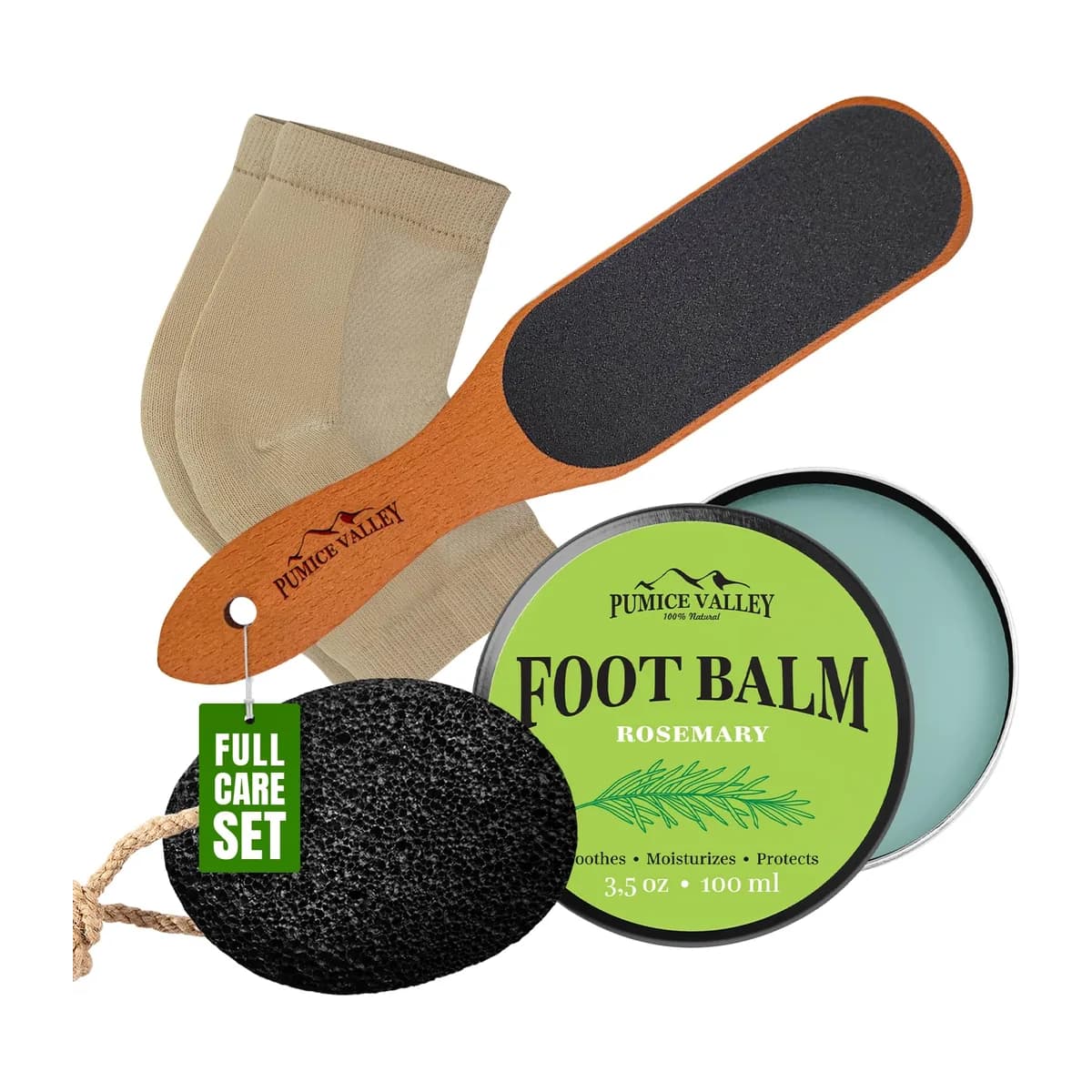
Our Pumice Stone & Moisturizing Heel Socks Set brings the exfoliation and overnight steps together, so the routine is easy to keep going.
The bottom line
Moisturizing heel socks work best as a seal, not a treatment. They help foot cream stay on the skin longer and protect dry heels overnight. Pair them with a good moisturizer and gentle, occasional exfoliation, and they can turn a nightly routine into visibly softer heels within a couple of weeks. If cracks are deep, painful, or not improving, get professional advice rather than adding more layers.
FAQ
Do moisturizing heel socks really work?^
They can help dry or mildly cracked heels, mainly by sealing in the foot cream you apply underneath. The gel lining alone releases very little moisturizer, so the socks work best as part of a cream-based routine.
Should I put lotion on before heel socks?^
Yes. Apply a generous layer of foot cream or balm to clean, dry heels first. The socks help keep it in contact with the skin and slow moisture loss overnight.
How long should I wear gel heel socks?^
Start with one to two hours in the evening and move to overnight wear if your skin tolerates it. Follow any time limit in the product instructions, and shorten wear if the heels look white or wrinkled in the morning.
Can I use heel socks on deeply cracked heels?^
Not on open, bleeding, painful, or possibly infected cracks. Occlusive socks are meant for dry skin with shallow surface cracks. Deep or worsening fissures should be checked by a healthcare professional.
How do I clean moisturizing heel socks?^
Hand-wash them in lukewarm water with mild soap, gel side out, and let them air-dry completely. Replace them when the gel tears or the fabric no longer holds its shape.