Pumice Stone for Thick Calluses: When It Helps and When to Choose Another Tool
厚茧
Learn when a pumice stone may help with thick calluses, when a foot file or electric remover may be a better fit, why harder scraping can backfire, and when to pause exfoliation.
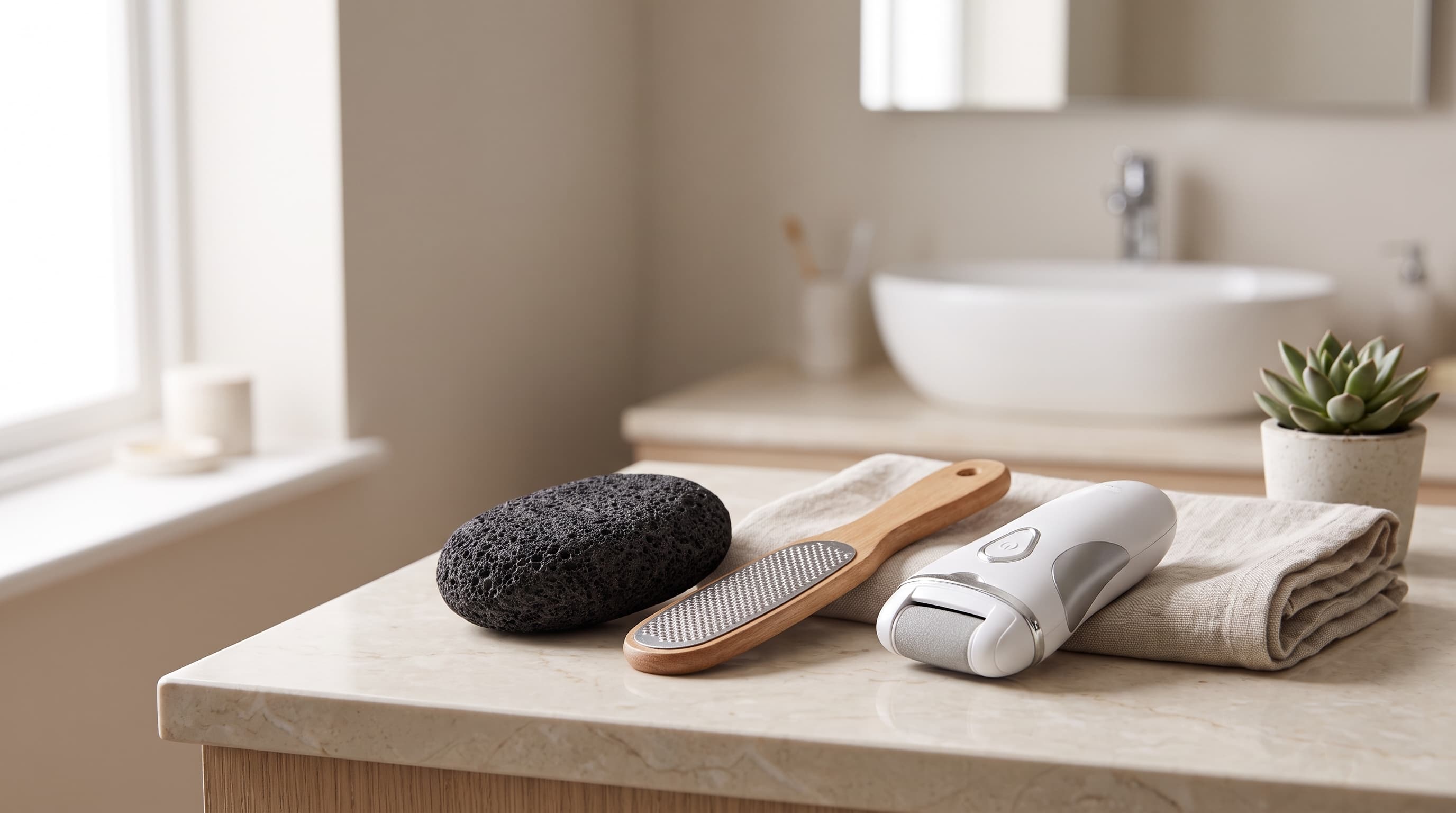
Thick calluses need patience rather than harder scraping. A pumice stone may help smooth dry, intact buildup after the skin has softened. If the callus is dense or localized, a foot file may provide more control. An electric callus remover may suit someone who wants powered contact, but it needs restraint.
The goal is to reduce roughness gradually while keeping the skin comfortable—not to remove every trace of thickened skin in one session.
Quick Answer
Use a pumice stone for a broad area of ordinary, intact callus when you can work with light pressure on softened skin. Use a foot file when one small patch needs more precise attention. An electric remover may be a better fit for extensive, dense buildup, but start on a low setting and follow its instructions.
Do not exfoliate calluses that are painful, open, bleeding, blistered, hot, swollen, or inflamed. If you have diabetes, reduced sensation, poor circulation, or concerns about healing, ask a qualified clinician before using an abrasive tool at home.
When a Pumice Stone May Help
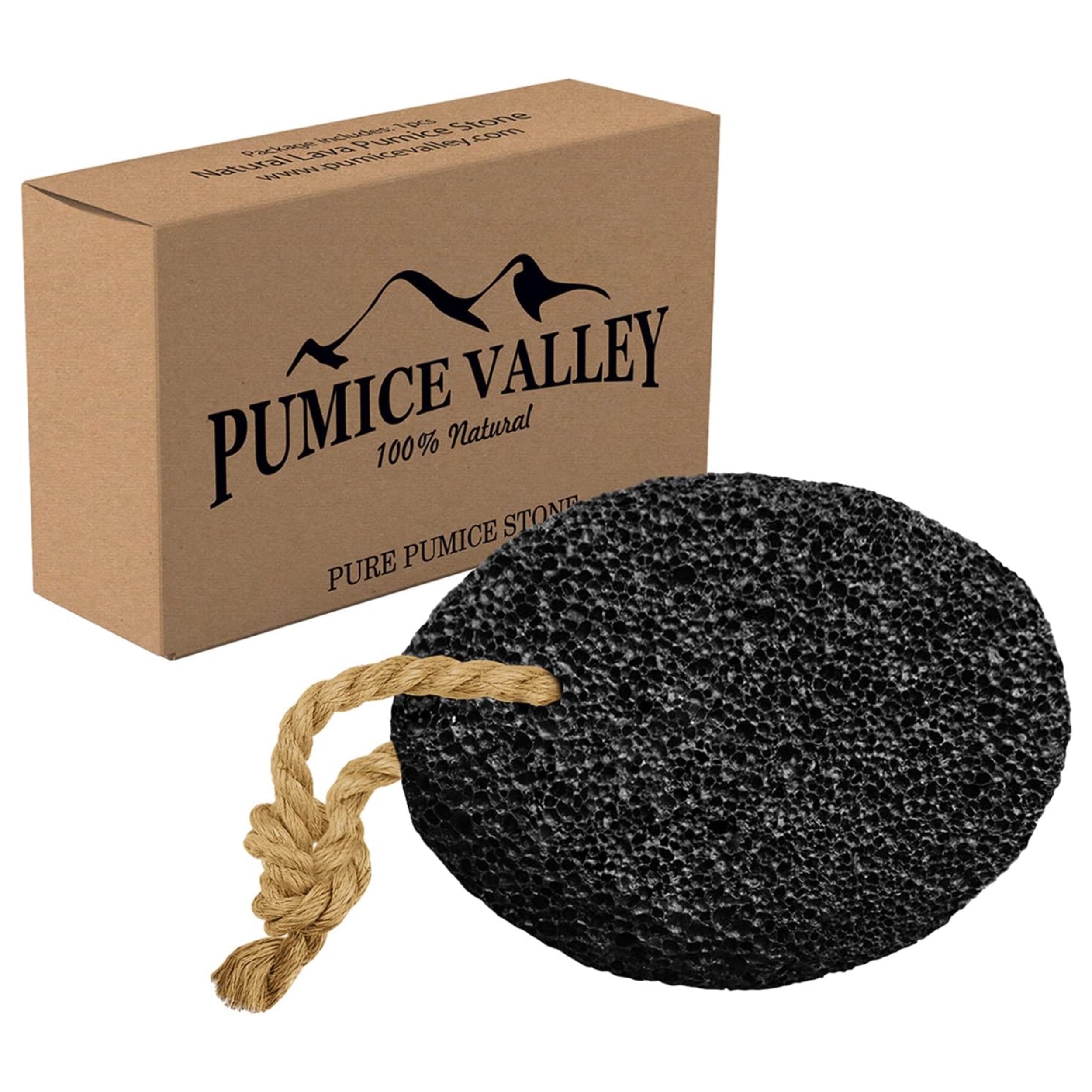
A pumice stone is porous and usually works best as a gradual maintenance tool. It can be useful when the roughness is spread across the heel, ball of the foot, or another area of thick but intact skin.
Consider a pumice stone when:
- the callus is dry, surface-level, and not painful
- the roughness covers a wider area and you prefer wet use
- you can stop after a few light passes instead of pressing harder
Choose a stone that is comfortable to hold and has an even surface. A very coarse stone is not automatically more effective; it may make it easier to remove too much surface skin.
For product-selection criteria, see the best pumice stones for feet guide or the Pumice Valley pumice stone for feet product page. For cracked skin versus callus buildup, see pumice stone for cracked heels vs calluses.
How to Use a Pumice Stone on a Thick Callus
Soften the area first with a shower, bath, or brief foot soak. Wet the stone and support your foot so it does not slide. Use short, light passes over the thickest surface, checking the skin after a few strokes.
Do not keep working until the callus feels perfectly smooth. Some texture is normal, and remaining thickness is preferable to a tender heel. Stop if the skin stings, burns, feels hot, becomes increasingly pink, or starts to feel raw.
Rinse the foot, pat it dry, and apply a plain foot moisturizer. Moisture between sessions is usually more useful than increasing pressure. The how to use a pumice stone on your feet guide covers cleaning and storage.
When a Foot File May Be a Better Fit
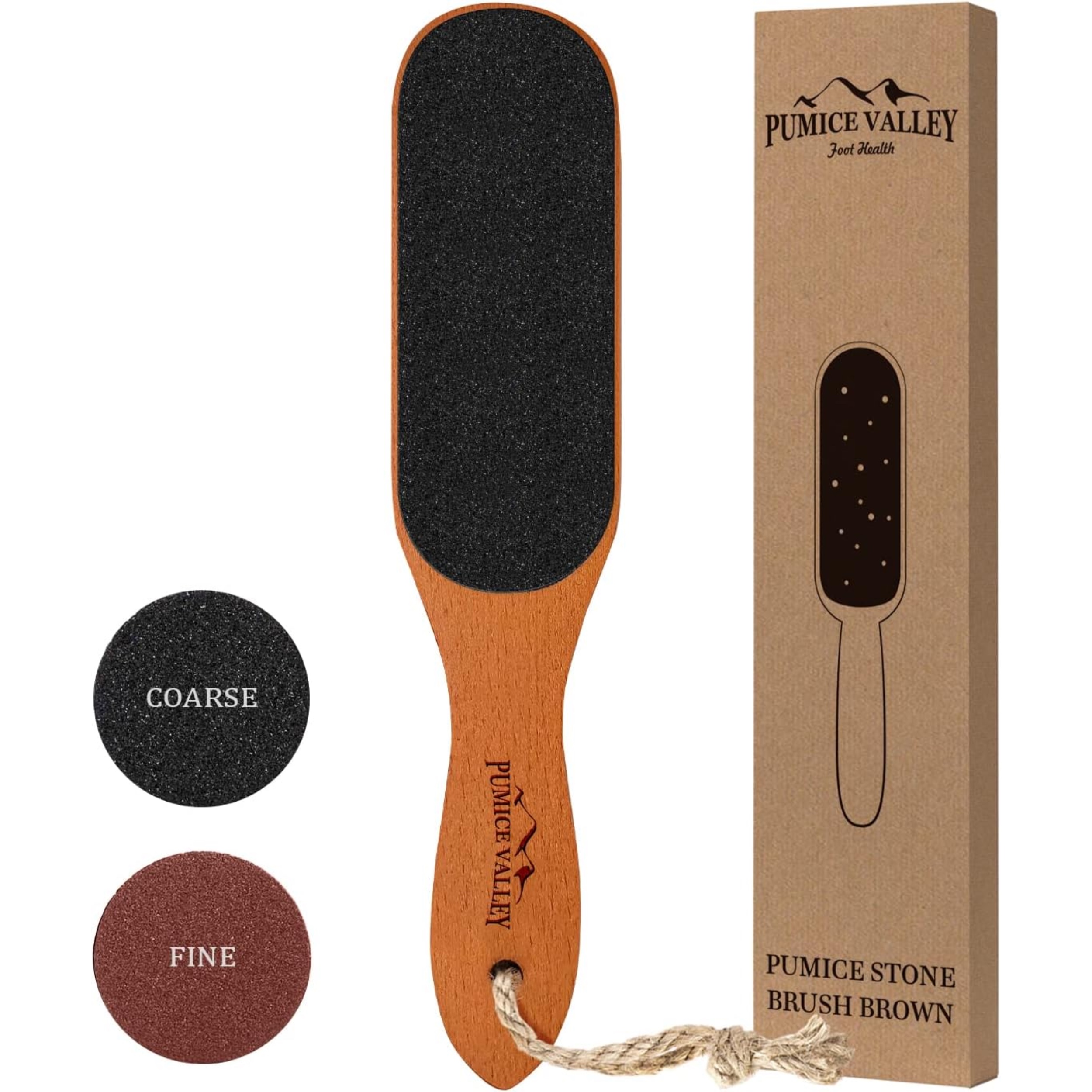
A foot file has a defined abrasive surface that can be easier to aim at one dense patch. It may be a better fit when a pumice stone is too broad or gives you too little control around a callus.
Choose a foot file when:
- one small area is noticeably thicker than the surrounding skin
- the skin is intact, dry, and not sore
- you can use a few gentle strokes without bearing down
- you need targeted contact rather than broad smoothing
A file is not a reason to work more aggressively. Repeatedly filing the same spot can leave the skin tender and may encourage a cycle of over-exfoliation. For a detailed tool comparison, read pumice stone vs foot file.
When an Electric Callus Remover May Be a Better Fit
An electric callus remover can be useful for someone who finds manual tools tiring or has a broader area of dense, intact buildup. Its powered roller may provide more even contact than pressing a hand tool into one spot.
It can also remove too much if you stay in one place, use pressure, or ignore the instructions. Start with the lowest suitable setting, keep it moving, and stop when the surface is more comfortable. Do not use it over damaged, painful, inflamed, or infected-looking skin.
The pumice stone vs electric callus remover comparison explains the differences in control, effort, and use case.
Why Scraping Harder Usually Is Not the Answer
When a thick callus does not change quickly, it is tempting to add pressure or keep exfoliating. That can create soreness without addressing why the buildup formed.
Calluses may return with repeated friction, pressure, or poorly fitting footwear. More scraping may smooth the surface temporarily while leaving that pattern unchanged. Use a modest schedule, moisturize consistently, and consider whether shoes or pressure points contribute.
Leave several days between sessions at first. The how often to exfoliate your feet guide can help you adjust based on next-day comfort.
When Not to Exfoliate
Pause home exfoliation if the area is:
- open, bleeding, cracked deeply, or blistered
- painful at rest or when walking
- hot, swollen, increasingly red, or inflamed
- wet, draining, or infected-looking
- numb or difficult for you to feel normally
Do not cut, shave, or dig out a callus with a blade. If you are unsure whether a spot is a callus, corn, wart, wound, or another concern, get professional advice. People with diabetes, neuropathy, poor circulation, or healing concerns should ask a qualified clinician first.
Keep the Tool Clean and Know When to Replace It
Rinse a pumice stone after use, brush away debris, wash it with mild soap, and let it dry completely in an open, ventilated place. Do not share it or leave it damp in a closed container. Replace it if it develops a persistent odor, crumbles heavily, or loses an even surface.
See how often to replace a pumice stone for practical replacement signs. A clean, intact tool makes it easier to keep the routine controlled.
FAQ
Is a pumice stone good for thick calluses?^
A pumice stone may help smooth a broad area of dry, intact callus gradually. Use it wet on softened skin with light pressure, and stop before the area becomes tender.
Should I use a foot file or pumice stone for a thick callus?^
Use a pumice stone for broader routine maintenance and a foot file for a small, localized patch when the skin is intact. Neither tool should be used aggressively or over painful, open, or bleeding skin.
Is an electric callus remover better for very thick skin?^
It may be more efficient for broad, dense, intact buildup, but it can also remove too much if held in one place or used with pressure. Start low, keep it moving, and follow the device instructions.
Why does my callus stay thick after using a pumice stone?^
The buildup may be dense, or repeated friction and pressure may be causing it to return. Do not respond by scraping harder. Use a modest schedule, moisturize, and review footwear or pressure points.
Can I use a pumice stone on a painful callus?^
Do not exfoliate a painful callus, open crack, blister, bleeding area, or inflamed skin. If pain persists or you are unsure what the spot is, seek professional advice.
How often should I use a pumice stone on thick calluses?^
Start with short sessions separated by several days and adjust based on how the skin feels the next day. Once or twice weekly may be enough for some people, but more frequent or harder scrubbing is not automatically better.