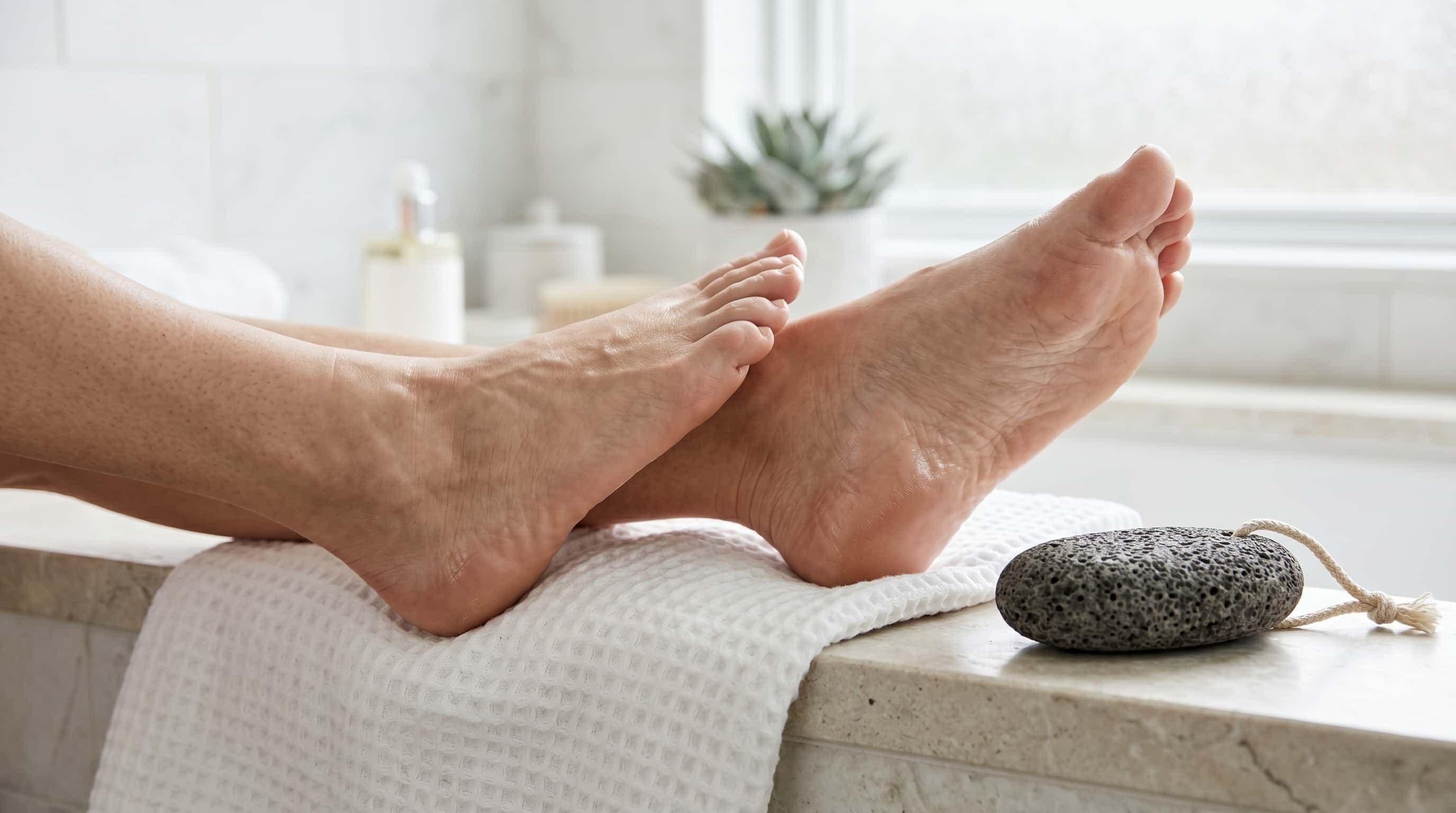
Best Pumice Stone for Cracked Heels vs Calluses: Which Tool Is Safer?
裂跟和老茧该怎么选浮石
Cracked heels and calluses need different care. Learn which pumice texture and routine fit each problem—and when not to exfoliate cracked skin.
If you are looking for the best pumice stone for cracked heels or calluses, the most important thing to understand is that these are not exactly the same problem.
Calluses are usually areas of thickened hardened skin. Cracked heels often involve thickened skin too, but the skin barrier may already be dry, rigid, and split.
That difference changes what “best” should mean.
Quick Answer
The best pumice stone for cracked heels or calluses is usually one that:
- has enough texture to reduce buildup without feeling dangerously harsh
- is comfortable to hold and control
- works well on softened skin
- fits a routine that also includes regular moisture
- is matched to the severity of the buildup
For calluses, slightly stronger exfoliation may be appropriate. For cracked heels, gentler control often matters more than aggressive removal.
Why Cracked Heels and Calluses Need Different Thinking
People often group these together because both involve rough thickened skin.
That is partly true, but not the whole story.
Calluses are usually the skin's response to pressure and friction.
Cracked heels often involve:
- thick buildup
- dryness
- repeated stress on the heel
- loss of flexibility in the skin
So if the heel is already split or tender, the “best” pumice stone is not the roughest one. Do not use a pumice stone directly over an open, bleeding, or painful fissure. For intact skin around a minor dry area, control and a gentle routine matter more than aggressive texture.
What Makes a Pumice Stone Good for Feet
The best pumice stone is usually not about hype words.
It is about practical use.
Look for a tool that feels:
- textured enough to smooth buildup gradually
- easy to grip securely
- consistent across the surface
- comfortable to control on heel contours
Natural volcanic pumice appeals to many people because it offers a traditional exfoliating texture without feeling like a metal scraping tool.
But even a good stone only works well if the routine around it makes sense.
Best for Mild to Moderate Calluses
If your main issue is moderate callus rather than deep cracking, a pumice stone is often a strong option.
It can help:
- reduce hardened buildup gradually
- smooth rough edges
- keep pressure areas from becoming thicker over time
This is especially true when used:
- after a shower
- after a bath
- after a short soak
For callus maintenance, consistency matters more than intensity.
Best for Cracked Heels
Cracked heels need more caution.
If the skin is already split, tender, or inflamed, aggressive exfoliation usually feels logical but can worsen irritation. Do not scrub over open cracks; protect the area and seek professional guidance when pain, bleeding, warmth, swelling, drainage, or worsening redness is present.
In that situation, the best pumice routine is usually:
- soften intact skin first
- if the heel is cracked, avoid the fissure and exfoliate only a small amount of intact surrounding buildup, if comfortable
- stop before the skin feels raw
- follow with a richer moisturizer
The goal is to reduce the rigid buildup that contributes to cracking, not to grind down the heel until it stings.
What Many People Get Wrong
When shopping for the best pumice stone, people often focus on the wrong question.
They ask:
- Which one removes the most?
But the better question is:
- Which one removes enough without causing damage?
That is especially important if:
- your skin is sensitive
- your heels crack easily
- you tend to overdo exfoliation
The best tool is the one that supports a repeatable routine, not the one that pushes the skin too far once.
When a Pumice Stone May Not Be Enough
Some buildup is so thick that people feel disappointed by pumice alone.
That can happen with:
- dense callus
- long-standing heel buildup
- heavy friction from work or exercise
In those cases, the issue is not necessarily that the pumice stone is bad. It may simply be a slower tool than your skin condition requires.
Even then, it is often better to think in stages:
- reduce buildup carefully
- moisturize consistently
- reduce the cause of friction
- maintain the skin before it gets severe again
How To Choose Based on Your Goal
If your goal is callus maintenance:
Choose a pumice stone that feels substantial but not overly aggressive, and use it regularly on softened skin.
If your goal is managing cracked heels:
Choose control over force. A gentler routine with moisture support matters more than dramatic scraping.
If your goal is smoother-looking feet overall:
Look for a stone you can use consistently and comfortably rather than one that feels extreme.
How To Use It So It Actually Helps
No matter which pumice stone you choose, a better result usually comes from:
- softening the skin first
- using gentle controlled passes
- focusing on thickened areas rather than healthy skin
- moisturizing afterward
- repeating the routine instead of trying to do everything at once
That is what makes an average stone more effective than a “better” one used badly.
Final Verdict
The best pumice stone for calluses is one that can reduce thicker buildup gradually and consistently.
The best pumice stone for cracked heels is one you can control gently without pushing damaged skin too far.
In both cases, the real winner is not just the stone. It is the routine that combines softened skin, moderate exfoliation, and regular moisture.
FAQ
What is the best pumice stone for cracked heels?
The best pumice stone for cracked heels is usually one that offers controlled gentle exfoliation rather than very aggressive scraping. Once heels are already cracked, the routine matters as much as the tool.
What is the best pumice stone for calluses?
For calluses, a well-textured pumice stone used regularly on softened skin can work well for maintenance. Thicker buildup may still require more time and consistency.
Are all pumice stones the same?
No. Texture, shape, grip, and feel can vary, which changes how easy the stone is to control and how suitable it feels for different levels of roughness.
Can a pumice stone help cracked heels?
It may help reduce rigid surface buildup on intact skin around a dry heel, but do not use it over open or bleeding cracks. Overdoing exfoliation on irritated skin can make the area more uncomfortable.
Should you use lotion after a pumice stone?
Yes. Moisturizing after exfoliation helps keep skin more flexible and can reduce how quickly thick roughness returns.
FAQ
What is the best pumice stone for cracked heels?^
For intact dry skin around a heel, choose controlled gentle exfoliation rather than aggressive scraping. Do not use a pumice stone directly over open, bleeding, or painful cracks; the routine and the skin’s condition matter as much as the tool.
What is the best pumice stone for calluses?^
For calluses, a well-textured pumice stone used regularly on softened skin can work well for maintenance. Thicker buildup may still require more time and consistency.
Are all pumice stones the same?^
No. Texture, shape, grip, and feel can vary, which changes how easy the stone is to control and how suitable it feels for different levels of roughness.
Can a pumice stone help cracked heels?^
It may help reduce rigid surface buildup on intact skin around a dry heel, but do not use it over open or bleeding cracks. Overdoing exfoliation on irritated skin can make the area more uncomfortable.
Should you use lotion after a pumice stone?^
Yes. Moisturizing after exfoliation helps keep skin more flexible and can reduce how quickly thick roughness returns.
