Black Lava Stone vs Pumice Stone for Feet: What's the Difference?
黑色火山石
Black lava stones and pumice are both volcanic, but they do not exfoliate the same way. Learn which stone suits your heels and how to use it safely.
Black lava stones and pumice stones are both volcanic, and both are sold for smoothing rough heels. They are not quite the same tool. Pumice is very light and full of air pockets, so it exfoliates gradually. A black lava stone is usually denser and feels more abrasive in the hand, so it can remove dry skin faster and needs a lighter touch.
This guide explains how the two stones differ, which one suits which kind of rough skin, and how to use either one without overdoing it.
Quick answer: Choose pumice for regular, gentle maintenance of dry or mildly rough skin. Consider a black lava stone when you have thicker, intact heel callus and want a firmer texture, but use it wet, with light pressure, and less often. Neither stone should be used on cracked, sore, or broken skin.
Where both stones come from
Both stones start as molten rock. What changes is how the lava cools and how much gas is trapped inside it.
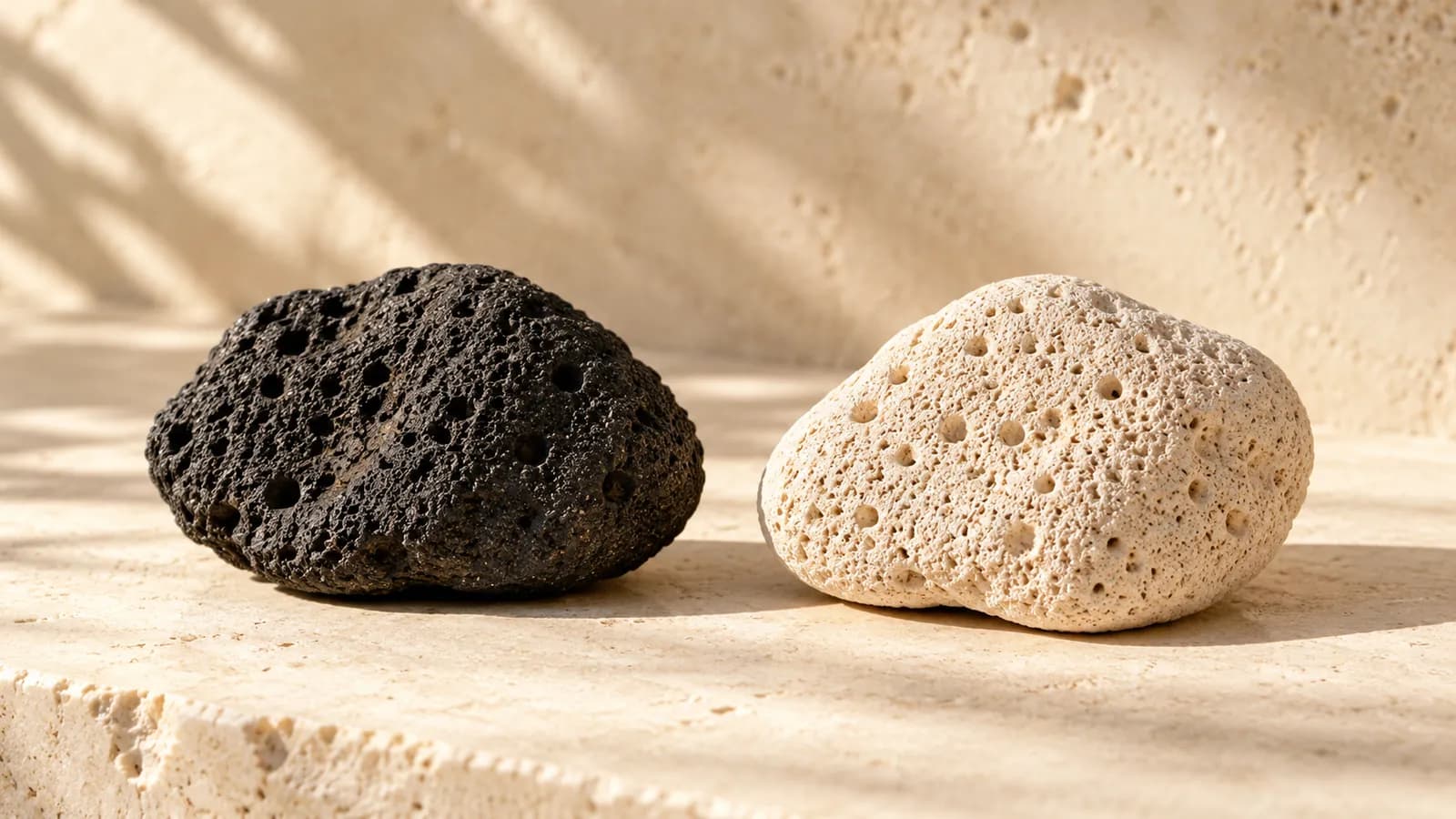
Pumice forms when gas-rich lava cools so quickly that bubbles are frozen in place. The result is a frothy, glassy rock that is mostly empty space. Many natural pumice stones are light enough to float, at least at first, and the open pores give the surface a soft-but-scratchy texture. If you want to go deeper into the geology, our guide to why volcanic pumice is such an effective natural exfoliator covers it.
"Black lava stone" is a broader retail name. In foot care it usually describes a darker volcanic rock with fewer or smaller air pockets than classic pumice. It is often heavier for its size and has a firmer, grittier feel. Some products sold as "black pumice" are genuinely dark volcanic stone, and some are dyed or manufactured. The name on the label is not always a reliable guide.
That last point matters. If you are trying to tell what you actually bought, read Is Your Pumice Stone Actually Natural? and Natural Pumice vs Synthetic Pumice before relying on color alone.
Black lava stone vs pumice: side-by-side
| Pumice stone | Black lava stone | |
|---|---|---|
| Weight | Very light; often floats | Usually heavier for its size |
| Pores | Many open air pockets | Fewer or smaller pores; denser body |
| Feel on skin | Gradual, forgiving | Firmer, faster-acting |
| Best for | Routine maintenance, dry or mildly rough skin | Thicker, intact heel callus |
| Pressure needed | Light | Very light |
| How often | Often 1–2 times a week, depending on skin | Usually less often than pumice |
| Main risk | Overuse and rough re-growth | Removing too much skin too quickly |
| Wet or dry | Wet | Wet |
These are general tendencies, not fixed rules. Two stones with the same name can feel very different, which is why your skin's response matters more than the label.
Which one should you choose?
Choose pumice if…
- your heels feel dry, dull, or slightly rough rather than thick;
- you want a tool you can use regularly as part of a calm routine;
- your skin is on the sensitive side, or you are new to manual exfoliation; or
- you tend to over-scrub and want a stone that forgives that habit.
Our Natural Pumice Stone is the simplest starting point. If you are unsure how much pumice your feet really need, see how often you should exfoliate your feet.
Consider a black lava stone if…
- you have a defined area of thick, yellowish, intact callus on the heel or outer edge of the sole;
- pumice has felt slow on that area even with soaking and correct technique; and
- you are comfortable stopping early and checking your skin often.
Before switching tools because pumice "isn't working," it is worth checking the usual technique problems first. Why your pumice stone isn't working walks through them.
Using both
Some people keep both stones: a black lava stone for the occasional session on a thick callus, and pumice for lighter upkeep in between. That can work well, as long as you count both as exfoliation. Two stones used on the same day, or on back-to-back days, add up quickly.
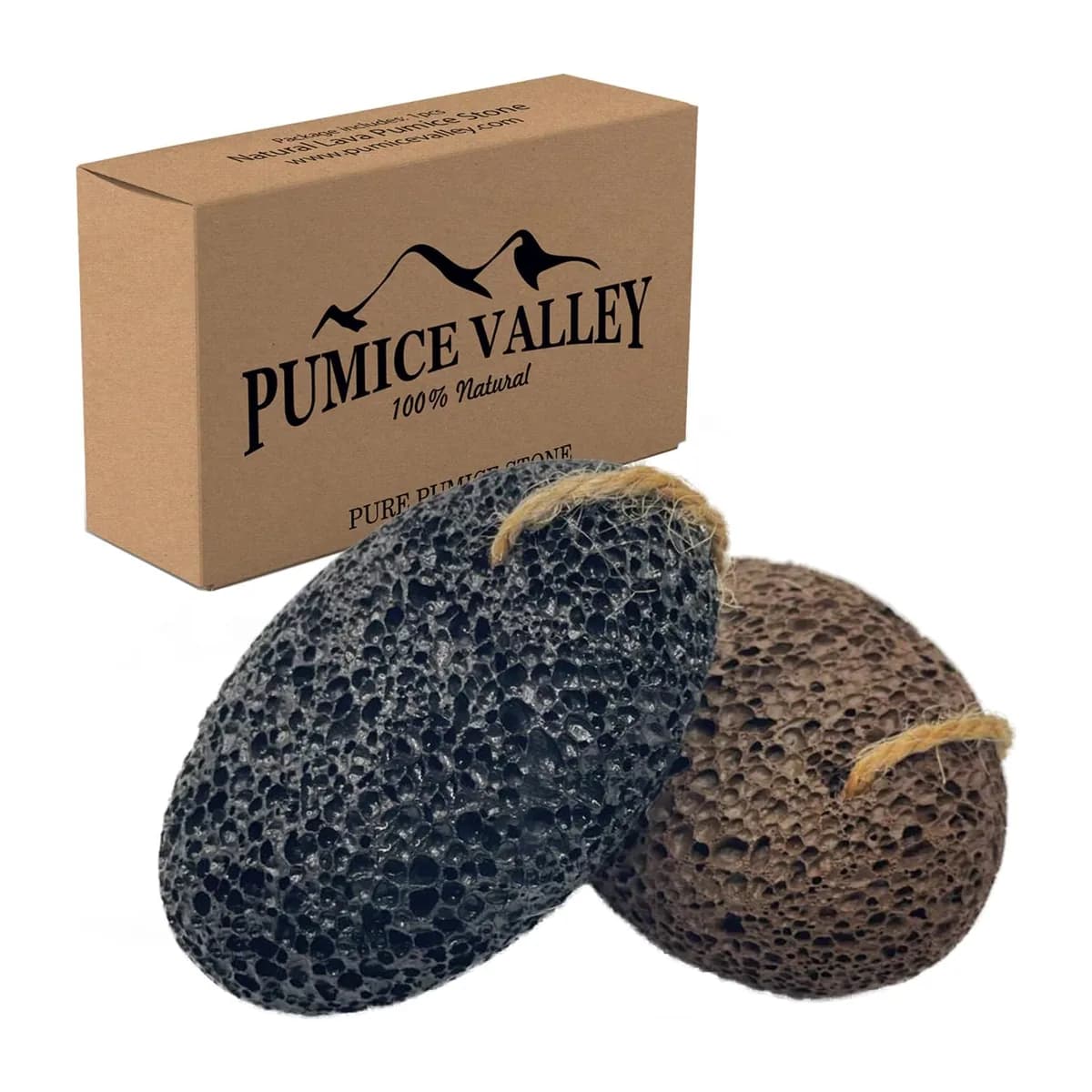
Our Natural Lava Pumice Stones 2-Pack (Black & Brown) pairs a darker and a lighter stone for exactly this kind of two-texture routine.
How to use a black lava stone safely
The technique is close to using pumice, with more caution at every step.
1. Check the skin first
Look at your heels in good light. Skip any area with cracks, cuts, blisters, redness, warmth, or tenderness. A firmer stone is for thick, healthy-looking callus only.
2. Soften with warm water
Soak your feet or let them sit in the shower for 5 to 10 minutes. Wet the stone too. Dry, dense volcanic stone on dry skin is the combination most likely to scratch.
3. Use light, short strokes
Hold the stone flat against the callus and use small circular or back-and-forth strokes. Let the stone's weight and texture do the work. You should not need to press.
4. Check after every few strokes
Rinse, then run your fingertips over the area. Stop when the surface feels smoother but some natural firmness remains. Stop immediately if the skin turns pink, feels warm, or starts to sting.
5. Rinse, dry, and moisturize
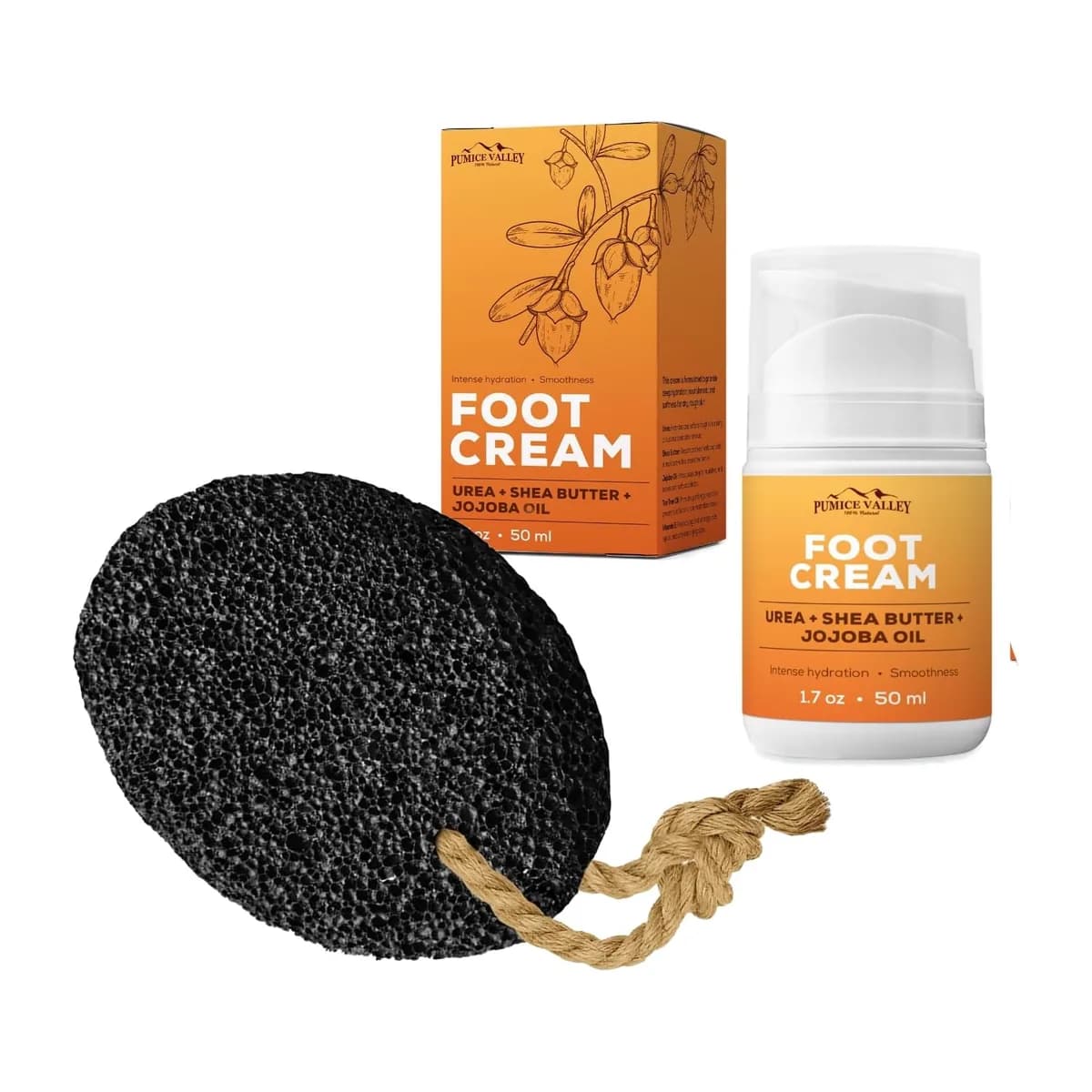
Pat your feet dry, including between the toes, then apply a foot cream or balm to the heel. A urea-based cream such as our Urea + Shea Foot Cream suits thicker, rougher areas. For more on pairing, see how to use a pumice stone with foot cream; the same order applies to a lava stone.
6. Clean and dry the stone
Scrub the stone under running water with a small brush, then let it dry completely in an airy spot. Denser stone can hold moisture in its surface pores just like pumice. Our guide to cleaning a pumice stone works for both.
How often should you use each stone?
There is no universal schedule. As a starting point:
- Pumice: once or twice a week for most people with dry or mildly rough heels.
- Black lava stone: once every week or two on a defined callus, and only while the skin still looks intact and comfortable.
If your heels feel rough again a day after exfoliating, more scrubbing is rarely the fix. Footwear, dryness, and repeated friction are usually driving it. Why your feet feel rough again one day after exfoliating explains the pattern.
Signs you are using too much stone
- The skin looks pink, shiny, or thinner than the area around it.
- The heel feels tender when you walk.
- The callus seems to come back thicker or faster.
- You feel the need to exfoliate almost every day.
Any of these is a reason to pause for a week, moisturize daily, and come back with a gentler stone or lighter pressure.
When neither stone is the right tool
Do not use any exfoliating stone on open or bleeding cracks, broken skin, warts, or an area that might be infected. A corn is also different from a callus; Callus or Corn? explains how to tell them apart.
If you have diabetes, reduced sensation in your feet, poor circulation, or a condition that slows healing, ask a podiatrist or your doctor before using any abrasive foot tool. Small abrasions can be hard to feel and slow to heal. The same applies if a callus is painful, keeps returning in the same spot, or changes your walking.
The bottom line
Pumice and black lava stone are both volcanic exfoliators, but pumice is lighter and more forgiving, while black lava stone is usually denser and works faster. Pumice suits regular maintenance. A black lava stone is best kept for occasional, careful work on thick, intact callus.
Whichever stone you choose, the routine is the same: soften, use light pressure, stop early, and moisturize. A gentle tool used consistently does more for comfortable heels than a harsh one used hard.
FAQ
Is a black lava stone the same as a pumice stone?^
Not exactly. Both are volcanic, but pumice is very light and full of air pockets, while a black lava stone is usually denser and firmer. That makes black lava stone faster-acting and less forgiving on the skin.
Is black lava stone better for thick calluses?^
It can help on thick, intact heel callus because of its firmer texture. Use it wet, with very light pressure, and stop while some natural thickness remains. Do not use it on cracked, sore, or broken skin.
How often should I use a black lava stone on my feet?^
Usually less often than pumice. Once every week or two on a defined callus is a reasonable starting point. If the skin looks pink or feels tender, wait longer between sessions.
Should a lava stone be used wet or dry?^
Wet. Soak or shower for 5 to 10 minutes and wet the stone before use. A dense stone on dry skin is more likely to scratch or over-exfoliate.
Can I use a lava stone and a pumice stone together?^
Yes, as separate steps in a routine rather than on the same day. Some people use a lava stone occasionally on thick callus and pumice for lighter maintenance. Count both as exfoliation so you do not overdo it.