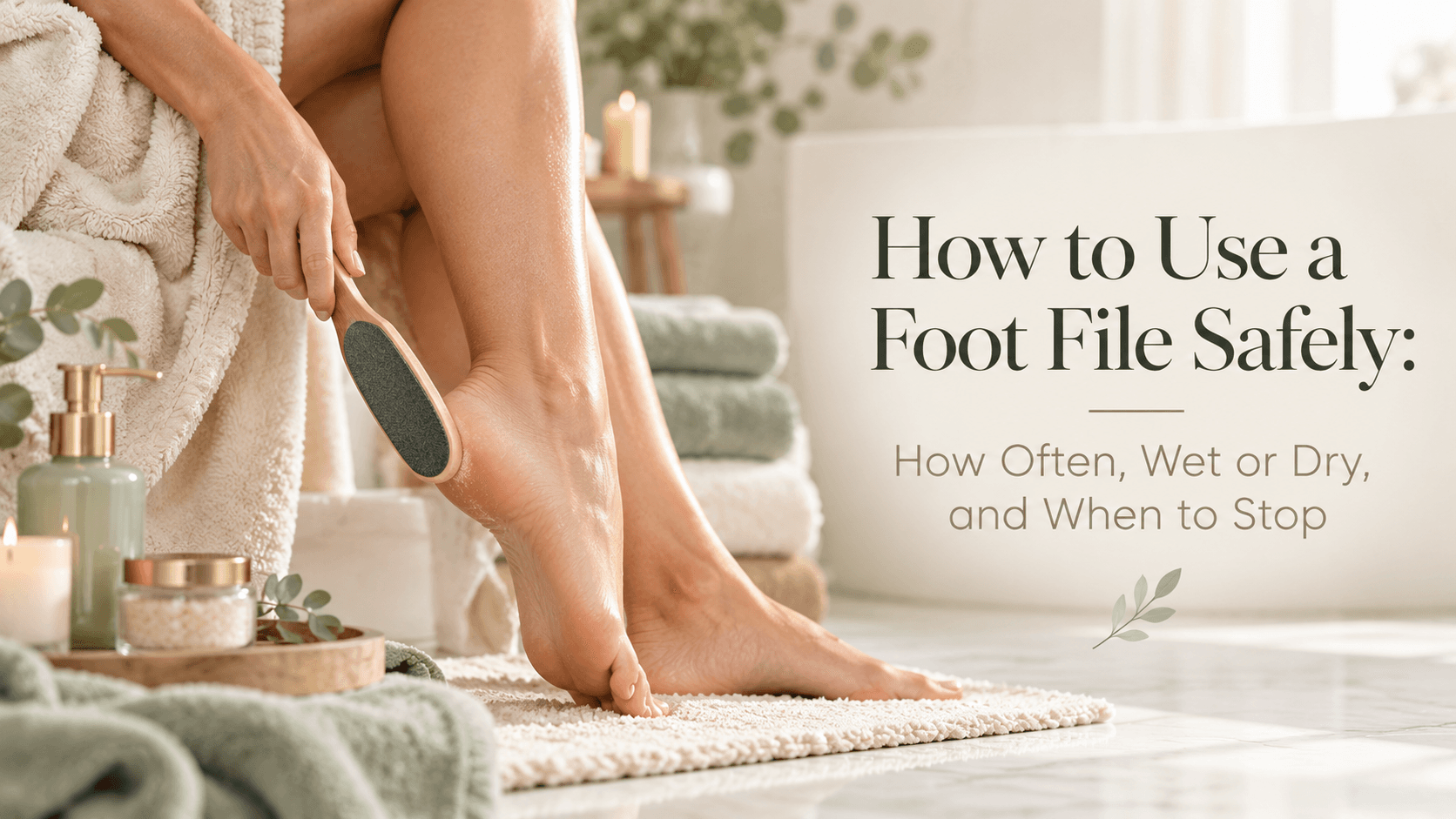
How to Use a Foot File Safely: How Often, Wet or Dry, and When to Stop
足锉指南
Learn the safe way to use a foot file, choose between wet and dry filing, decide how often to file, and recognize when it is time to stop.
A foot file can smooth dry, rough skin and help keep small areas of callus from becoming uncomfortable. The useful part is not filing as hard as possible. It is choosing the right file, using light pressure, and stopping before the skin becomes tender.
This guide explains how to use a foot file, whether to use it wet or dry, how often to file your feet, and the signs that tell you it is time to stop.
Quick answer: Follow the directions for your specific file. In general, use a clean file on intact skin, work with light strokes, check the area often, and stop when the skin feels smoother—not when every trace of thicker skin has disappeared. Apply foot cream afterward.
What a foot file is designed to do
A foot file removes small amounts of dry, hardened surface skin through gentle friction. It can be useful on common rough areas such as the heel or outer edge of the sole.
The goal is to make the surface feel more comfortable and even. A callus is partly a response to repeated pressure and friction, so removing too much at once does not address the cause. Aggressive filing can leave skin sore and may encourage you to repeat the process too frequently.
A foot file is not suitable for every mark or bump. Do not file over cuts, cracks that are bleeding, blisters, rashes, warts, inflamed skin, or an area that may be infected. A corn is also not simply a callus to grind away. If you are unsure what you are looking at, pause and ask a qualified clinician.
Choose the right type of foot file
Foot files differ in material, texture, and shape. The best choice depends on the condition of your skin and how much control you want.
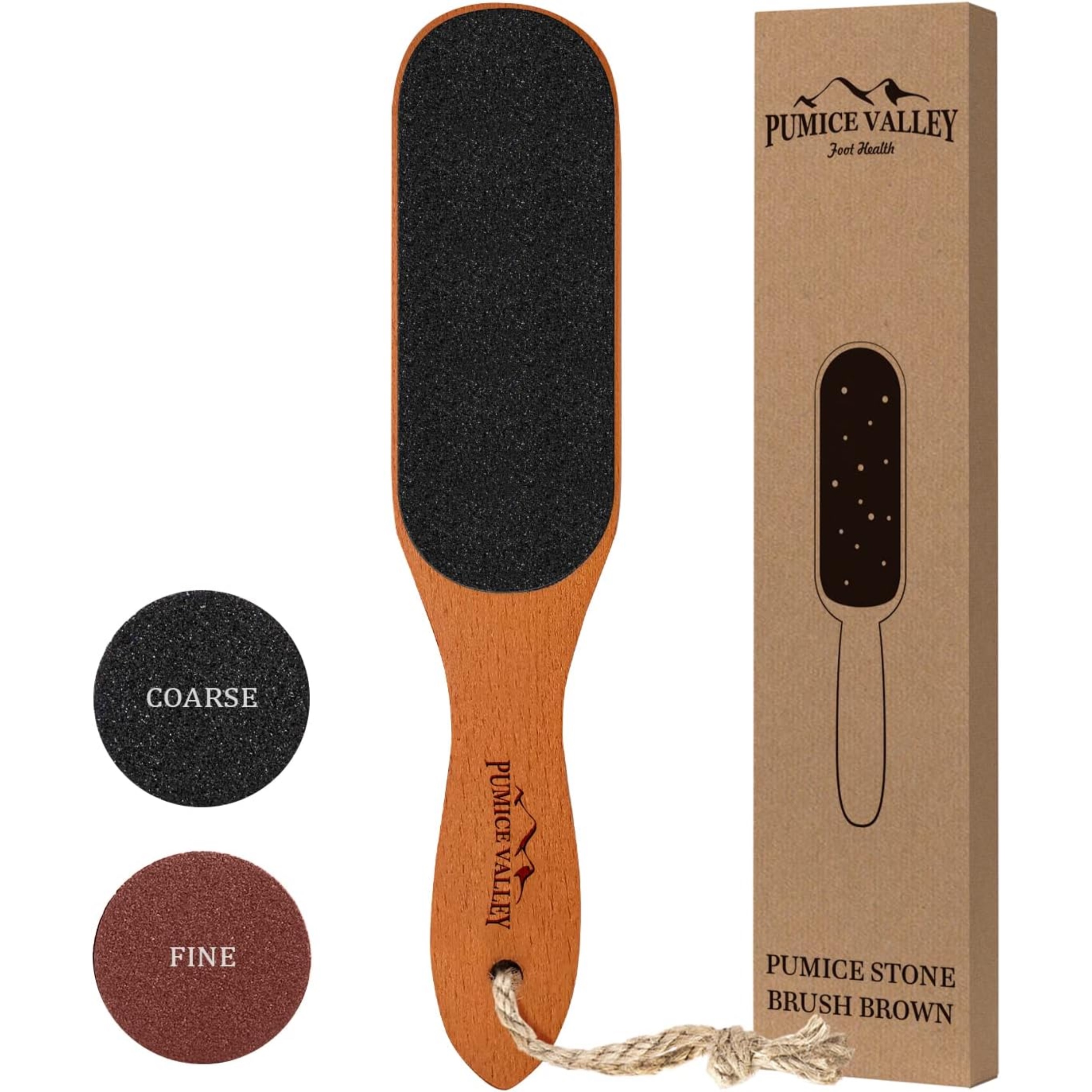
- A medium-texture manual file is a practical starting point for ordinary heel roughness. A handle can make it easier to use gentle, controlled strokes. Our Wooden Handle Foot File is the main manual-file option in the Pumice Valley range.
- A finer ceramic file is better suited to light smoothing or finishing. It should still be used without heavy pressure.
- A coarse rasp removes skin more quickly and is easier to overuse. Reserve it for genuinely thick, intact callus and use extra caution. See our guide to pumice stones, glass files, and foot rasps before choosing the most aggressive tool.
- A pumice stone offers gradual exfoliation and is normally used wet. If you are deciding between tools, read Pumice Stone vs Foot File: Which One Should You Use?.
Start with the gentlest texture that can do the job. A coarse surface is not automatically more effective; it simply removes skin faster and gives you less room for error.
Should you use a foot file wet or dry?
There is no single answer for every foot file. The product instructions come first because some files are made for dry use, some for wet use, and some can be used either way.
Dry filing
Dry filing lets you see the powdery skin being removed and makes it easier to judge progress. It can work well with a file specifically designed for dry skin.
Use very light pressure. Dry skin can abrade quickly, and it is easy to continue for too long because the area may not feel uncomfortable immediately. Avoid breathing in or spreading the skin dust; file over an easy-to-clean surface and wash the tool afterward if its care instructions allow it.
Wet filing
Warm water softens the outer layer of skin and may make filing feel gentler. Soak or shower for about 5 to 10 minutes, then pat the foot so it is damp rather than dripping. Use a file that is approved for wet use.
Softened skin can be deceptive: it may look as though little is happening even while skin is being removed. Keep the strokes light and check the area with your fingertips rather than filing until it looks perfectly smooth.
Which method should you choose?
Use the method stated by the manufacturer. If the file allows both methods, choose the one that gives you better control and comfort. Do not switch a dry-only file into the shower, and do not assume that soaking makes a coarse rasp safe for prolonged use.
How to use a foot file safely
1. Check your feet and your tool
Begin in good light. Look for cuts, open cracks, redness, swelling, blisters, or irritated areas. Skip any questionable spot.
Make sure the file is clean, dry or damp as directed, and not rusted, bent, cracked, or excessively worn. Do not share a foot file with another person.
2. Prepare the skin
For a wet-use file, soak the feet in comfortably warm water for 5 to 10 minutes and pat them damp. Hot water is unnecessary and can leave dry skin feeling worse.
For a dry-use file, wash and fully dry the feet first. This removes grit that could scratch the skin and helps you see the area clearly.
3. File the thick area with light strokes
Hold the file securely and use short, controlled strokes over the rough area. Let the texture of the file do the work. Avoid sawing rapidly back and forth or pressing hard.
Concentrate on the thickest intact skin. Do not file normal soft skin around it, and never use the tool on the top of the foot or between the toes.
4. Stop and check often
After several strokes, brush or rinse away loosened skin and feel the area. You are looking for a modest improvement in roughness, not a perfectly flat heel in one session.
Stop immediately if you notice pain, stinging, warmth, redness, or increasing sensitivity. Also stop if the skin begins to look pinker than the surrounding area. Those are signs that you have reached living, more sensitive skin or are getting too close to it.
5. Rinse, dry, and moisturize
Rinse away loose skin, then pat the feet completely dry, especially between the toes. Apply a foot cream or balm to the heel and sole. Moisturizer supports softness between filing sessions and can reduce the urge to keep removing skin mechanically.
Do not apply a heavy occlusive product between the toes, where trapped moisture may be unwelcome.
6. Clean and dry the file
Follow the tool's care directions. For a washable manual file, rinse away debris, clean it with mild soap, and allow it to air-dry fully in a ventilated place. Do not leave it sitting wet in the shower.
Replace the file if the surface becomes damaged, cannot be cleaned properly, or no longer performs evenly.
How often should you file your feet?
There is no universal schedule. Skin thickness, footwear, activity, and the texture of the tool all matter.
For many people, one light session every one to two weeks is a sensible starting point. Fine maintenance may be needed less often. A coarse rasp should not become a daily habit.
Let your skin—not the calendar—decide. Wait until the area is no longer sensitive and there is enough rough surface skin to justify another session. If your feet feel rough again the next day, more filing is usually not the answer. Repeated friction, dry skin, footwear, or an overly aggressive routine may be contributing. Our guide to why feet feel rough again after exfoliating explains these patterns.
If you also use scrubs, peels, acids, or a pumice stone, count them as exfoliation too. Stacking several methods can irritate the skin even when each one seems mild by itself. Read How Often Should You Exfoliate Your Feet? for help spacing out your routine.
When should you stop filing?
Stop the session when:
- the rough surface feels smoother but some protective thickness remains;
- the skin starts to look pink;
- you feel heat, tenderness, stinging, or pain;
- the file begins catching rather than gliding evenly;
- a crack, blister, spot, or area of irritation becomes visible; or
- you have been filing long enough that you are no longer sure whether the texture is changing.
The last point matters. After several minutes, it becomes easy to chase tiny imperfections. Put the file down, moisturize, and reassess on another day.
When a foot file is not the right tool
Avoid filing and seek individual advice if you have diabetes, reduced sensation, poor circulation, a history of slow-healing wounds, or another condition that affects foot health. Small injuries may be harder to feel or may need specialist care.
Stop self-treatment and contact a healthcare professional if you have a deep or bleeding crack, persistent pain, spreading redness, swelling, warmth, drainage, or skin that does not heal. Repeated callus in the same place can reflect pressure from footwear, gait, or foot structure; a podiatrist can help identify the cause.
A simple maintenance routine
Most feet do not need a complicated rotation of tools. A restrained routine is easier to maintain:
- Check the skin before every session.
- Use one appropriate exfoliating tool with light pressure.
- Stop while the skin still feels comfortable.
- Moisturize after filing and on non-filing days.
- Reduce repeated friction with well-fitting footwear and socks.
- Clean and fully dry the tool after use.
Consistency matters more than intensity. A foot file should be an occasional smoothing tool, not a way to remove every bit of naturally thicker skin.
The bottom line
Use a foot file only on intact, rough skin and follow the wet-or-dry directions for that specific tool. Work slowly, check often, and stop at the first sign of sensitivity or pinkness. For most people, light maintenance every one to two weeks is a better starting point than frequent aggressive filing.
Pair the file with regular moisturizer and attention to footwear. If the callus is painful, keeps returning quickly, or appears alongside numbness, poor circulation, or broken skin, get professional advice instead of filing more deeply.
FAQ
Should you use a foot file on wet or dry feet?^
Follow the instructions for your specific file. Some are designed for dry skin, some for wet skin, and some allow both. Whichever method you use, work with light pressure and check the skin often.
How often should you use a foot file?^
There is no universal schedule, but one light session every one to two weeks is a reasonable starting point for many people. Wait longer if the skin is sensitive, and count scrubs, peels, acids, and pumice use as exfoliation too.
How do you know when to stop filing your feet?^
Stop when the rough area feels smoother while some natural thickness remains. Stop immediately if the skin looks pink or feels warm, tender, painful, or starts stinging.
Can you use a foot file on cracked heels?^
Do not file over open, deep, bleeding, painful, or inflamed cracks. Mild dry skin around an intact area may be treated cautiously, but persistent or worsening cracks should be assessed by a qualified healthcare professional.
What should you apply after using a foot file?^
Rinse or brush away loose skin, dry the feet well, and apply a foot cream or balm to the heel and sole. Avoid placing heavy occlusive products between the toes.