Tea Tree Oil and Menthol Foot Cream: What It Can (and Can't) Do for Dry, Tired Feet
茶树薄荷护
Cooling foot creams feel great after a long day, but what do tea tree oil, menthol, and panthenol actually do for dry feet? A clear, realistic guide.
A foot cream with tea tree oil and menthol feels different from a plain moisturizer. It smells fresh, it cools on contact, and it can make tired feet feel lighter at the end of a long day. But the cooling and the scent are not what soften dry heels. That job belongs to the moisturizing base and ingredients such as panthenol.
This guide explains what each ingredient contributes, who a cooling foot cream suits, and where its limits are, especially around odor and athlete's foot.
Quick answer: A tea tree and menthol foot cream is a good choice if you want everyday moisture plus a fresh, cooling feel, particularly after long days on your feet or in warm weather. It moisturizes dry skin through its base and humectants like panthenol. It is not a treatment for fungal infections, deep cracks, or persistent foot odor.
What each ingredient does
Panthenol
Panthenol (provitamin B5) is a humectant, meaning it helps skin attract and hold water. It is widely used in creams for dry, rough, or irritated-feeling skin and is generally well tolerated. In a foot cream, it supports the moisturizing work that softens rough heels over time.
Tea tree oil
Tea tree oil is an essential oil from the Australian Melaleuca alternifolia plant. It gives the cream its clean, herbal scent. Laboratory and small clinical studies have explored tea tree oil's antimicrobial properties, which is why it often appears in foot products. That research does not mean a cosmetic foot cream can treat an infection, and the concentration in a moisturizer is usually low.
Menthol
Menthol activates the skin's cold-sensing receptors, which is why it feels cooling even though it does not lower skin temperature much. That sensation is the main reason people enjoy menthol creams after standing, walking, or wearing closed shoes all day.
The moisturizing base
Oils, butters, and emollients do much of the actual softening. For deeply rough, thick heels, a urea-based cream is usually more effective. Our guide to the best ingredients for dry feet and cracked heels compares the main options.
Who a cooling foot cream suits
A tea tree and menthol cream fits well if you:
- have dry or slightly rough feet and want a lighter, fresher-feeling cream;
- spend long days standing, walking, or in closed shoes;
- live somewhere warm, or find rich balms too heavy in summer; or
- want a pleasant end-of-day ritual that makes moisturizing easier to keep up.
It is less suited to very thick callus or deep fissures, where a heavier urea cream or balm does more. If you are weighing those textures, read Foot Cream vs Foot Balm and Urea vs Shea Butter for Feet.
How to use it
- Wash and dry your feet, including between the toes.
- Apply a small amount to the heels, soles, and any rough edges. Massage until mostly absorbed.
- Keep it off broken skin. Menthol and essential oils can sting on cracks, cuts, or freshly exfoliated skin.
- Wash your hands afterward, so menthol does not reach your eyes.
- Use once or twice a day. Evening use after a shower is the easiest habit to keep.
If you exfoliate, give the skin a little time before applying a menthol cream, or use a plainer moisturizer that evening. Freshly filed skin is more likely to tingle. Our guide to how often to use foot cream covers timing in more detail.
Does tea tree foot cream help with foot odor?
It can make feet smell fresher for a while, mainly through its scent. Foot odor usually comes from sweat and bacteria in shoes and socks, so it responds best to daily washing, thorough drying, breathable socks, and rotating shoes so they dry out. A cream can be a pleasant part of that routine, not a replacement for it.
Does it treat athlete's foot?
No. Athlete's foot is a fungal infection, and it needs an appropriate antifungal treatment. Signs include itching, peeling, or cracking between the toes, sometimes with a burning feel or a scaly rim on the sole. These can look a lot like dry skin. Dry heels or athlete's foot? explains how to tell them apart.
If you think you have athlete's foot, use a product made to treat it or ask a pharmacist. Do not rely on a moisturizer that contains tea tree oil.
Patch test first
Essential oils and menthol are common causes of skin sensitivity. Before regular use, try a small amount on the inner ankle for a day or two. Stop using the cream if you notice redness, itching, burning, or a rash.
Avoid it or ask a clinician first if you:
- have eczema, very sensitive skin, or known fragrance or essential-oil allergies;
- want to use it on a young child; or
- have diabetes, poor circulation, or reduced sensation in your feet.
Seek medical advice for deep or bleeding cracks, signs of infection, or skin that does not improve.
Where it fits in a routine
A simple weekly rhythm might look like this:
- Most evenings: wash, dry, and apply the cooling cream.
- Once or twice a week: gently smooth rough areas with a foot file or pumice, then use a plain moisturizer that night.
- When heels are very dry: switch to a richer cream or balm for a few nights.
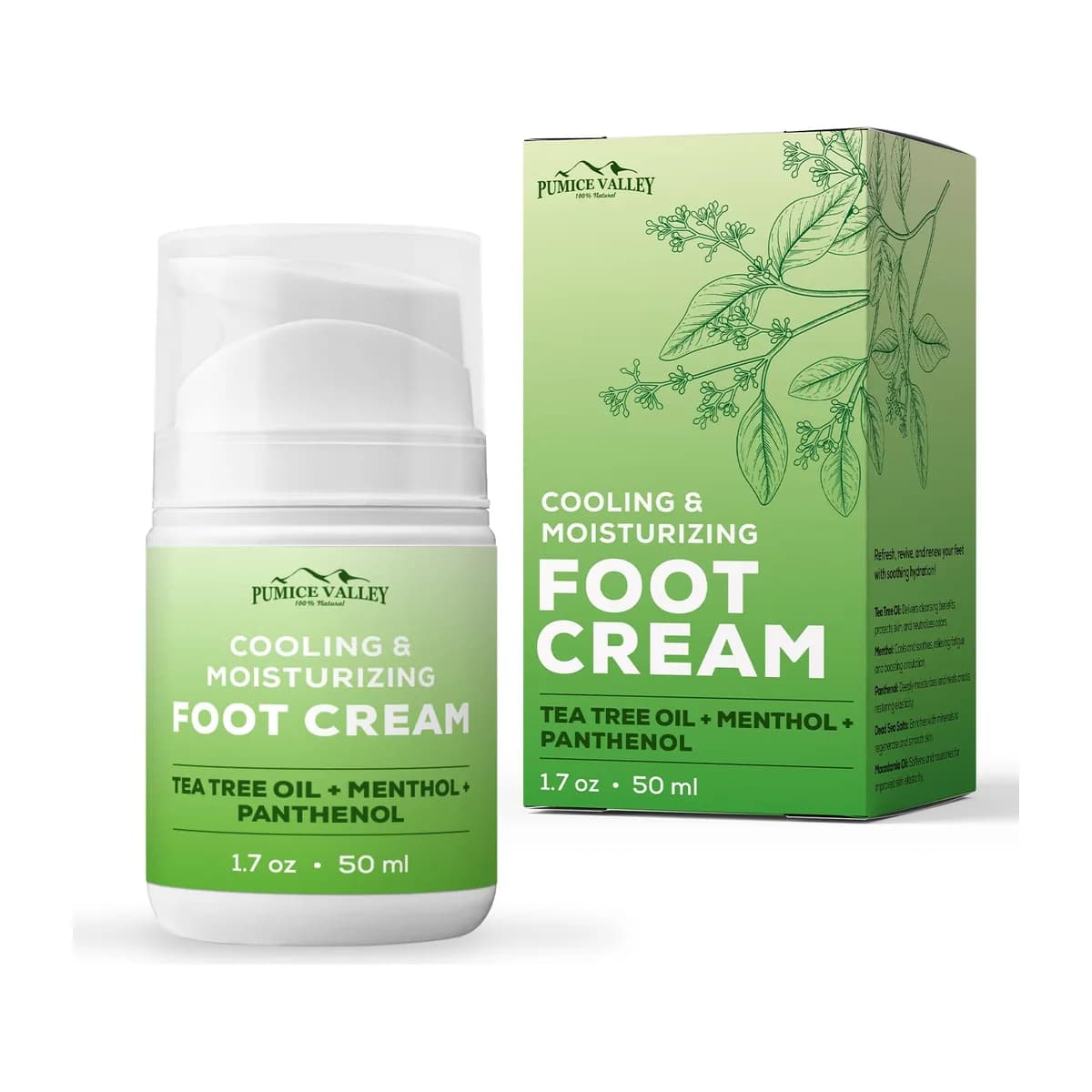
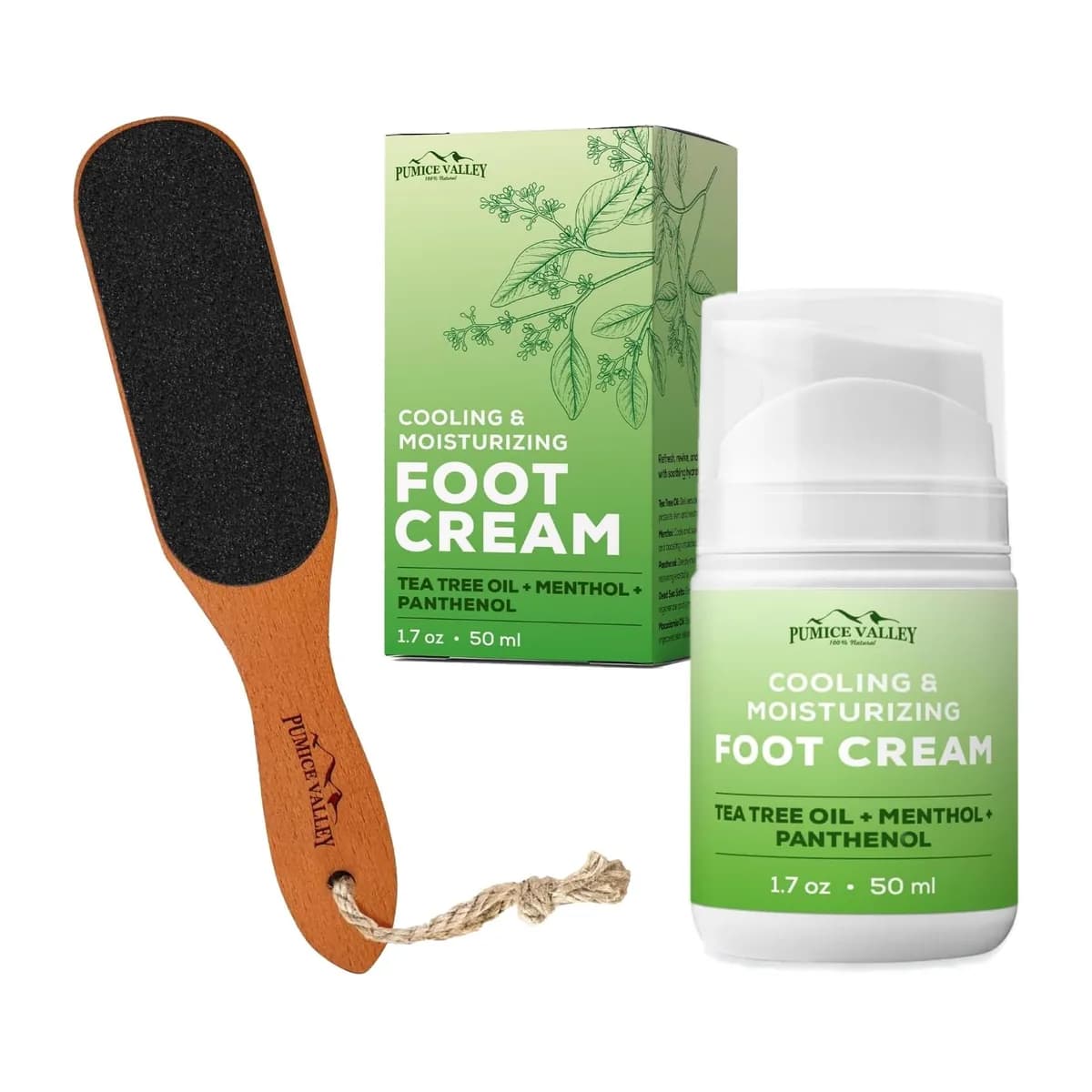
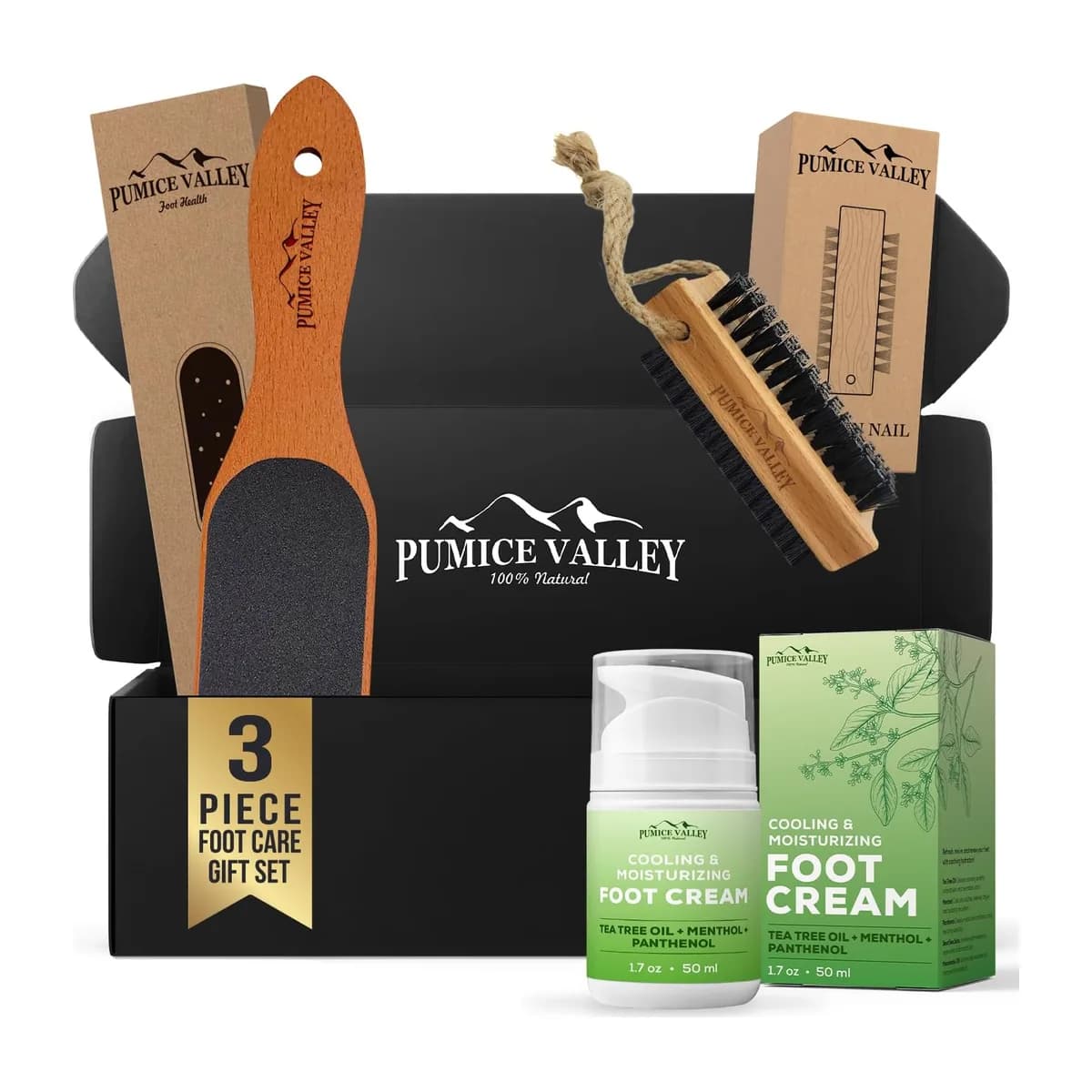
Our Panthenol, Tea Tree Oil & Menthol Foot Cream comes in a pump bottle that is easy to keep by the bed or in a gym bag. If you want the file and cream together, the Wooden Foot File & Panthenol Foot Cream Set pairs them.
The bottom line
Tea tree oil and menthol give a foot cream its fresh scent and cooling feel. Panthenol and the moisturizing base do the softening. That makes a cooling cream a pleasant everyday choice for dry, tired feet, particularly in warm weather or after long days on your feet.
Keep expectations realistic. It is a moisturizer, not an antifungal, and it is not the strongest option for thick callus or deep cracks. Patch test first, keep it off broken skin, and use it consistently.
FAQ
What does menthol do in foot cream?^
Menthol activates the skin's cold-sensing receptors, creating a cooling, refreshing feel. It does not moisturize by itself. The softening comes from the cream's base and humectants such as panthenol.
Is tea tree oil good for dry feet?^
Tea tree oil mainly adds a fresh, herbal scent and is not a moisturizer on its own. Dry feet are softened by the cream's emollients and humectants. Patch test first, because essential oils can irritate sensitive skin.
Can tea tree foot cream treat athlete's foot?^
No. Athlete's foot is a fungal infection that needs an appropriate antifungal treatment. A moisturizing cream with tea tree oil is not a substitute. Ask a pharmacist or clinician if you think you have it.
Can I use a menthol foot cream on cracked heels?^
Use it only on intact skin. Menthol and essential oils can sting on open cracks or freshly exfoliated skin. For deep or painful fissures, use a gentle, fragrance-free option and seek professional advice.
How often should I use a cooling foot cream?^
Once or twice a day on clean, dry feet is typical. Evening use after a shower is the easiest habit to keep. Stop if you notice redness, itching, or burning.