The Two-Minute Habit That Makes Feet Look Healthier
护足
Healthy-looking feet usually come from daily maintenance, not expensive rescue sessions. This two-minute habit helps feet stay cleaner, smoother, and more cared for.
Healthy-looking feet usually do not come from occasional rescue sessions.
They come from small repeatable habits that keep dryness, dullness, and rough buildup from piling up in the first place.
That is why expensive pedicures often create a temporary reset without changing what happens the other twenty-nine days of the month.
If you want feet to look cleaner, smoother, and more cared for, the most useful habit is often much simpler.
Quick Answer
The two-minute habit that makes feet look healthier is this: after bathing, dry your feet well, apply foot cream to the dry areas, and pay quick attention to early rough spots instead of waiting for them to become a bigger problem.
This works better than occasional rescue care because healthy-looking feet usually come from consistency, not intensity.
Why Small Daily Care Beats Rare Pedicure Rescue
People often think foot care has to be dramatic to matter.
It does not.
Most visible foot problems start small:
- heels begin looking chalky
- the edges of the heel feel slightly rough
- skin starts catching on socks
- the tops of the feet look dry
- neglected areas slowly look less polished
When those signs are ignored for days or weeks, people end up needing a longer, more aggressive session just to get back to baseline.
That is why rare rescue care often feels frustrating. It asks one big session to fix what daily neglect kept rebuilding.
The Two-Minute Habit
The habit is not complicated:
Step 1
After a shower, bath, or foot wash, dry your feet thoroughly.
Do not rush the areas around the heel, sides of the foot, and between the toes.
Step 2
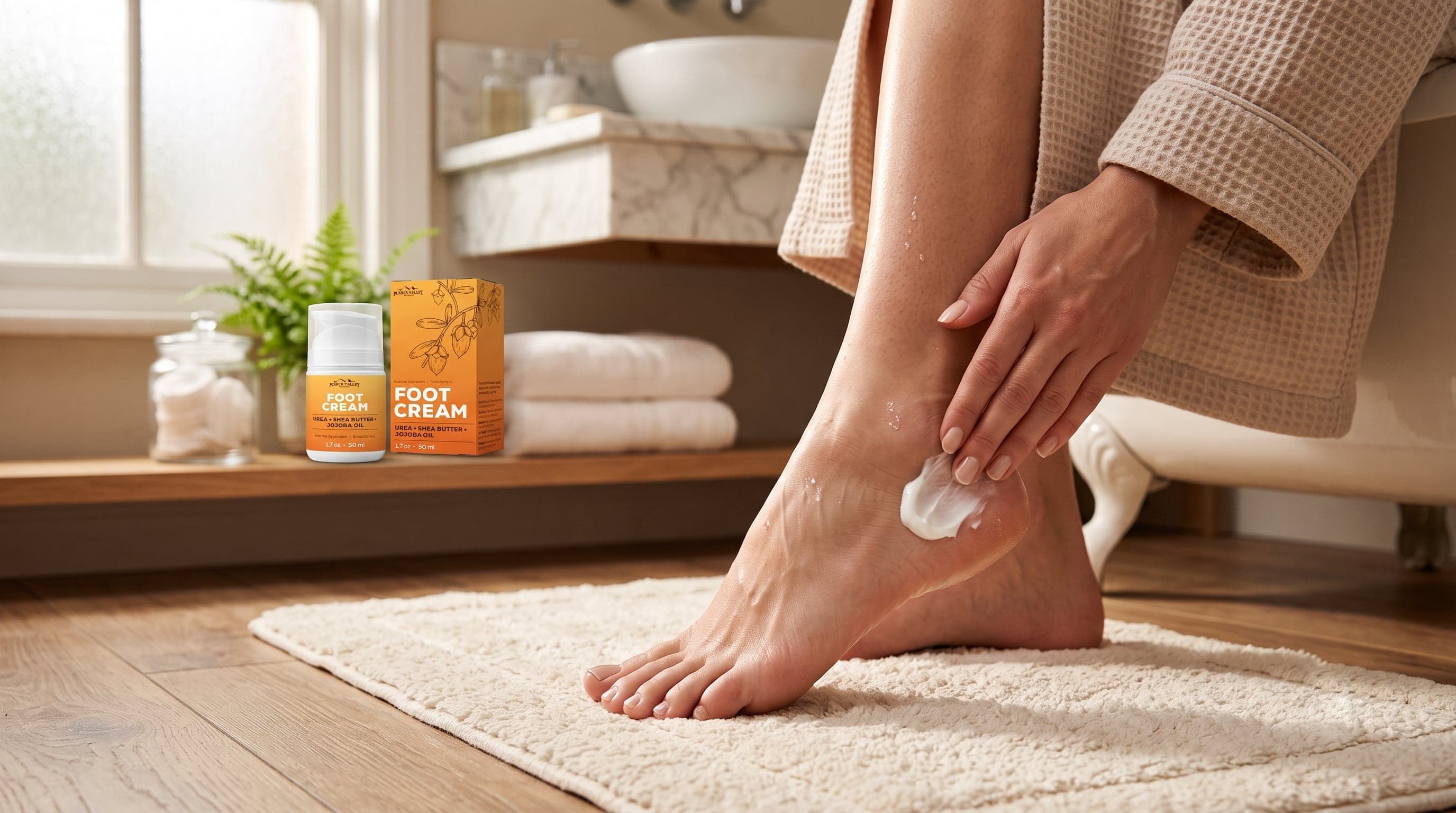
Apply foot cream to the parts that actually get dry, usually the heels, soles, and any flaky areas on the sides.
You do not need a huge amount. You need regularity.
Step 3
Take a quick look at the skin.
If you notice early roughness, respond while it is still mild instead of waiting until the feet feel hard, dull, or cracked.
That is the full routine.
For many people, it takes less time than choosing nail polish or booking a salon appointment.
Why This Habit Changes How Feet Look
Feet often look healthier when they are:
- clean
- well dried
- moisturized consistently
- not covered in thick rough buildup
This short habit supports all four.
Drying well helps the feet feel fresher and reduces the neglected just-got-out-of-the-shower-but-still-somehow-not-finished feeling. Moisturizing helps the skin stay more flexible and less ashy. Catching roughness early reduces the chance that the heels will reach the stiff, thick stage that makes feet look more worn.
None of this is glamorous.
That is exactly why it works.
What Most People Get Wrong
The common mistake is waiting until the feet already look bad.
At that point, people often jump to:
- harsh scrubbing
- overly long soaking
- random one-off treatments
- expensive appointments used as a reset button
Those things can create short-term improvement, but they do not replace a stable routine.
If the skin goes back to being ignored right after, the same dryness and roughness usually return.
Healthy-looking feet are usually maintained, not rescued.
Where Pedicures Fit In
Pedicures are not the enemy.
They can make feet look polished and feel refreshed.
The problem is using them as the entire plan.
If there is no simple at-home maintenance between appointments, a pedicure often becomes a temporary cosmetic improvement rather than a lasting change in how the feet look day to day.
A basic two-minute routine does more for ongoing appearance than relying on occasional correction.
How to Keep the Habit Realistic
The easiest habits are the ones attached to something you already do.
This routine works well because it fits right after bathing, when:
- the feet are already clean
- the skin is more receptive to moisturizer
- you are already standing still for a moment
If you are trying to make the habit stick, keep the routine simple enough that you do it even on ordinary days.
That matters more than building a perfect routine you only follow once in a while.
When to Add More Than Two Minutes
Sometimes the feet need more than baseline maintenance.
A longer session may make sense if:
- the heels already have thick buildup
- the skin is catching painfully
- you need gentle exfoliation on softened skin
- sandals, dry weather, or long walks are making roughness worse
But even then, the longer session works best when the daily habit continues before and after it.
The small routine is what keeps the bigger fix from being constantly necessary.
A Better Standard for Healthy-Looking Feet
Healthy-looking feet do not have to look salon-perfect every day.
Usually, they just need to look:
- clean
- comfortable
- smooth enough
- free from obvious neglect
That is a much more realistic goal, and it is usually easier to reach with daily care than with occasional overcorrection.
Final Thought
If your feet only get attention when they start looking rough, dry, or embarrassing, the cycle is going to keep repeating.
The two-minute habit that changes that pattern is simple: dry them well, moisturize the dry areas, and respond early to roughness.
That routine is less exciting than a rescue session, but it is usually what makes feet look healthier more consistently.
FAQ
Is it really enough to spend only two minutes on foot care?^
For many people, yes. Two minutes of daily drying and moisturizing usually does more for appearance than a much longer routine done inconsistently.
When is the best time to do this habit?^
Right after bathing is usually the easiest and most effective time because the feet are already clean and the skin is ready for moisturizer.
Do healthy-looking feet require regular pedicures?^
No. Pedicures can be enjoyable, but healthy-looking feet usually depend more on consistent home care than on occasional salon visits.
Should you moisturize between the toes too?^
Usually the drier areas like the heels and soles need moisturizer most. Areas between the toes often need careful drying more than richer cream.
What if my heels are already cracked or painful?^
Use more caution. Deep cracks, pain, redness, drainage, or bleeding need a safer approach than aggressive cosmetic care, and some situations warrant professional advice.