Why Tiny Daily Habits Beat Monthly Pedicures
每日护足
Monthly pedicures can refresh feet, but tiny daily habits usually do more to prevent dryness, roughness, and buildup from returning. Two minutes of regular care beats one big reset.
Most feet do not get rough, dry, or neglected all at once.
They slowly drift in that direction through small missed moments:
- moisturizer skipped for a few nights
- rough skin ignored until it thickens
- toenail edges washed past instead of cleaned well
- one salon appointment expected to undo a month of buildup
That is why foot care often works better when it is ordinary.
Two quiet minutes a day usually do more for how feet look and feel than one longer reset every few weeks.
Quick Answer
Tiny daily foot-care habits beat monthly pedicures because regular maintenance prevents dryness, buildup, and roughness from piling up in the first place. A short routine after bathing, like drying well, moisturizing dry areas, and giving rough spots or nail edges a little attention, usually creates more lasting results than relying on one occasional salon reset.
Why Regularity Matters More Than Intensity
People often assume better results come from doing more at once.
In reality, feet usually respond better to steady care than to occasional overcorrection.
That is because the main problems most people notice are gradual:
- heels start feeling slightly dry
- skin gets a little chalky
- callus thickens week by week
- toenails look less clean around the edges
- roughness keeps rebuilding between bigger treatments
When those small changes are handled early, they stay manageable.
When they are ignored, the routine has to become bigger, harsher, and harder to maintain.
What Monthly Pedicures Do Well and What They Cannot Do
Pedicures are not useless.
They can make feet look polished, smoother, and more refreshed in the short term.
They can also be relaxing, which matters.
But a monthly pedicure usually cannot protect the feet from twenty-nine days of friction, dryness, pressure, and neglected maintenance.
If nothing happens between appointments, the same issues often return:
- dry heel edges
- thickening callus
- dull-looking skin
- buildup around the nails
- that familiar feeling that feet looked good for a few days and then slid backward
The problem is not the pedicure.
The problem is expecting one intense session to do the work of a small daily habit.
The Two-Minute Habit That Changes the Baseline
The good news is that the maintenance habit is simple.
Step 1
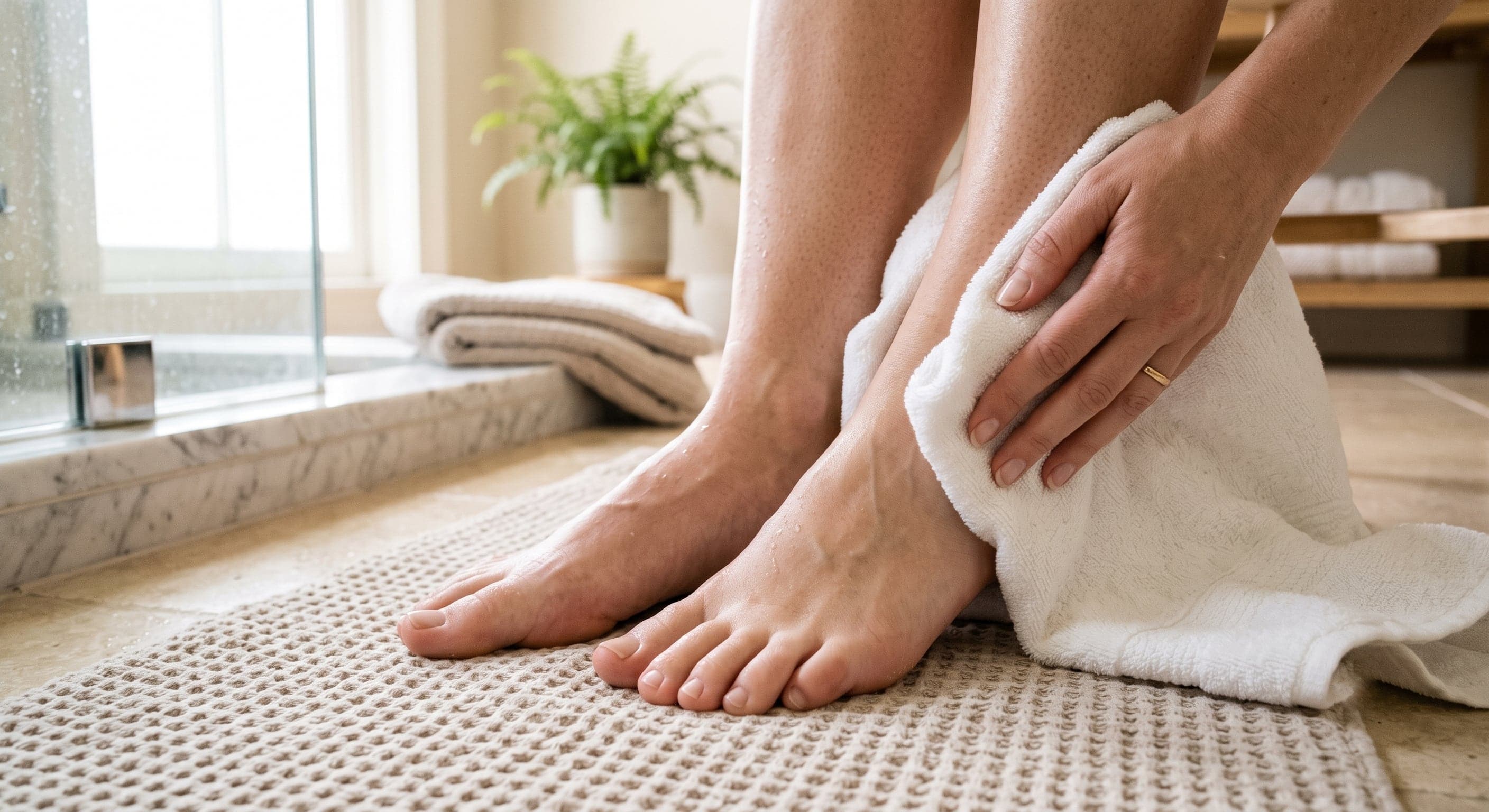
After bathing, dry your feet thoroughly.
Pay attention to the heel, the sides of the foot, the spaces between the toes, and the area around the nails.
Step 2
Apply foot cream to the parts that actually get dry.
For most people, that means the heels, soles, and any flaky or rough edges.
Step 3
Take a quick look before moving on.
If a patch is starting to feel rough, respond while it is still mild instead of waiting for a bigger fix later.
That is the habit.
It does not need to be dramatic to be effective.
Why Two Minutes a Day Works So Well
Daily care works because it keeps small problems from becoming visible problems.
It helps feet stay:
- cleaner
- softer
- more flexible
- less rough
- less obviously neglected
This is also why a simple nail brush can matter.
Not because it has to become a whole ritual or a hard sell, but because it represents the kind of small repeatable action that keeps feet looking more finished. A quick pass around the nail area is often more useful than another month of ignoring the detail completely.
What Most People Get Wrong
The common mistake is treating foot care like emergency cleanup.
People wait until their feet:
- look dry in sandals
- catch on socks
- feel thick at the heel
- seem dull even after a shower
Then they try to fix everything at once with:
- aggressive scrubbing
- long soaking sessions
- random products
- a salon appointment used as a reset button
That approach can create temporary improvement, but it usually does not change the pattern that caused the problem.
A Better Way To Think About Pedicures
Pedicures work best as support, not as the full plan.
If you enjoy them, they can sit on top of a stable home routine.
That means the appointment becomes a polish-and-refresh moment rather than the only time your feet get proper attention.
In practice, this usually leads to better-looking feet overall because:
- dryness stays under better control
- roughness never gets as severe
- nails and skin look more consistently maintained
- appointments do not have to rescue so much at once
How To Make the Habit Stick
The easiest routines are attached to something you already do.
For most people, the best moment is right after:
- a shower
- a bath
- washing the feet at night
Keep the routine visible and simple.
A towel, cream, and even a small brush nearby can act as reminders that the goal is not a perfect spa ritual.
The goal is to avoid starting from zero over and over.
When You Need More Than a Tiny Habit
Sometimes daily maintenance is not enough on its own.
You may need extra care if:
- the heel skin is already deeply cracked
- callus has become thick or painful
- there is redness, bleeding, or drainage
- the skin problem may be more than simple dryness
In those cases, small habits still matter, but they may need to be paired with a safer treatment plan or professional advice.
Final Thought
The reason tiny daily habits beat monthly pedicures is simple: feet change a little every day.
So the routine that helps most is usually the one that meets them there.
Two minutes of drying, moisturizing, and noticing early changes will usually do more for long-term comfort and appearance than relying on one bigger reset after weeks of buildup.
Pedicures can still have a place.
They just work better when they are not carrying the entire routine by themselves.
FAQ
Are daily foot habits really better than regular pedicures?^
For long-term maintenance, usually yes. A pedicure can improve appearance temporarily, but daily habits do more to stop dryness and roughness from rebuilding.
What is the best tiny daily habit for feet?^
For many people, the best habit is a short post-shower routine: dry the feet well, moisturize the dry areas, and notice rough spots before they get worse.
Do you have to exfoliate every day for this to work?^
No. Daily care is more about drying well, moisturizing consistently, and paying attention early. Aggressive daily exfoliation often backfires.
Where does a nail brush fit into the routine?^
It can be a simple tool for cleaning around the nails as part of regular maintenance. Think of it as a symbol of consistency, not a complicated extra step.
What if my feet only look bad right before sandal season?^
That usually means the problem has been building quietly for a while. Starting a small daily routine earlier tends to work better than trying to fix everything at once when feet are suddenly more visible.