If Your Pumice Stone Hurts, Stop: What Your Feet Are Telling You
磨脚痛
A pumice stone should feel gently abrasive, never painful. If it stings, burns, leaves your skin tender, or makes you feel you have to push through discomfort, stop. That pain is usually a signal of too much pressure, sk...
A pumice stone should feel gently abrasive, never painful. If it stings, burns, leaves your skin tender, or makes you feel you have to push through discomfort, stop. That pain is usually a signal of too much pressure, skin that is already irritated, or a tool being used at the wrong time.
The most common reason: too much force
Pumice is meant to smooth superficial roughness gradually. It is easy to keep going because a heel feels thick, but hard pressure can take the routine from useful to irritating quickly. The goal is a light pass over softened skin, not a vigorous sanding session.
Your skin may not be ready
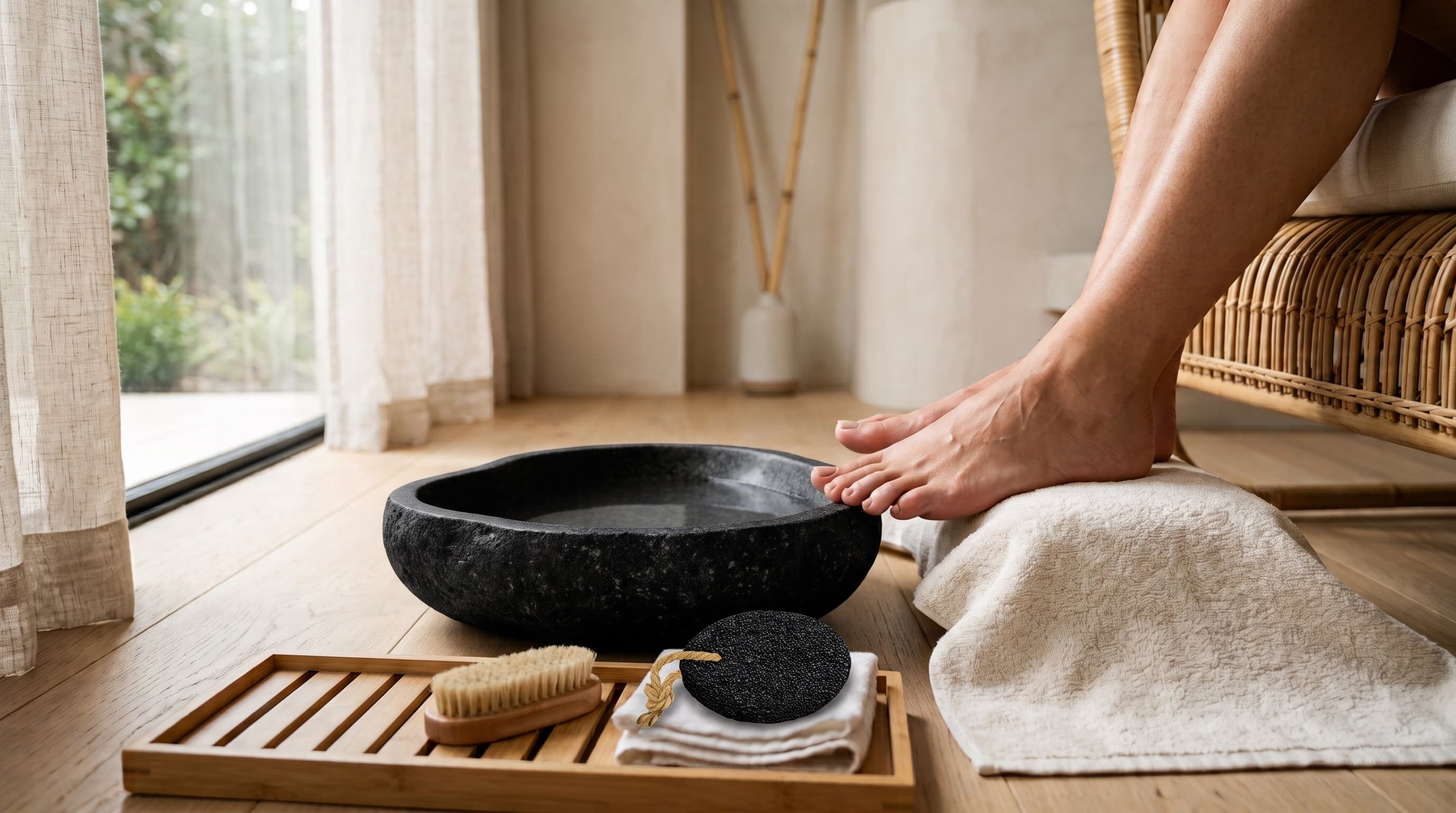
Using a stone on dry, rigid heels increases drag. For uncomplicated roughness, it is generally gentler to use a pumice stone after bathing or a short warm rinse, when the outer skin is softened. Even then, stop if the area is sore.
Avoid a pumice stone altogether on skin that is cracked open, bleeding, red, swollen, itchy, or blistered. Those situations need a different response than exfoliation.
The stone itself may be the problem
A stone that is chipped, uneven, dirty, or worn in one sharp-feeling area can make use uncomfortable. Rinse it after each use, let it dry fully, and replace it when it breaks down or can no longer be cleaned well.
A better way to use it
- Use it only on intact skin.
- Soften the skin first.
- Use light pressure and a few controlled passes.
- Rinse away residue and apply foot cream afterward.
- Wait before the next session if the skin feels sensitive.
If roughness returns, do not answer it with more force. Look at moisture, friction from shoes, and whether the area is actually callus rather than ordinary dryness.
Who should be especially cautious
People with diabetes, neuropathy, poor circulation, reduced sensation, or healing concerns should get individual advice before using a pumice stone. Small injuries can be easy to miss and harder to heal in these situations.
Final thought
Pain is not proof that a pumice stone is working. It is a clear signal to stop, let the skin recover, and choose a gentler routine—or get help identifying what is causing the roughness.
FAQ
Is it normal for a pumice stone to hurt?^
No. Mild abrasion is expected, but stinging, burning, or tenderness means you should stop.
Should I use a pumice stone on dry feet?^
It is usually gentler to use it on softened skin rather than hard, dry skin.
Can pumice make heels worse?^
Over-scrubbing can irritate skin and make it feel rough or tender. Use light pressure and avoid frequent aggressive sessions.
Can I use pumice on cracked heels?^
Do not use it on open, bleeding, painful, or inflamed cracks.
What should I use after a pumice stone?^
Apply a foot cream to support moisture after you rinse and dry the skin.