How to Dry Brush Your Body: A Gentle Routine for Smoother Skin
干刷身体指
Dry brushing is a quick way to exfoliate rough body skin, if you keep it gentle. Here is a step-by-step routine, realistic expectations, and who should skip it.
Dry brushing is simple: a firm, natural-bristle brush swept over dry skin before you shower. Done gently, it removes loose, flaky surface skin and leaves the body feeling smoother and more awake. Done too hard or too often, it irritates skin.
This guide covers how to dry brush step by step, how often to do it, what it can realistically do, and who should skip it.
Quick answer: Brush dry skin with light, sweeping strokes, usually toward the heart, for about 3 to 5 minutes before a shower. Start once or twice a week. Moisturize afterward, avoid the face and any irritated or broken skin, and stop if your skin turns red or sore.
What dry brushing can and can't do
What it can do: Dry brushing is a form of physical exfoliation. It lifts dull, dead surface cells, especially on rougher areas like the elbows, knees, upper arms, and shins. Many people also enjoy the brisk, massage-like feel, and skin often feels softer afterward, particularly once moisturizer goes on.
What it can't do: You will see claims that dry brushing "detoxes" the body, removes cellulite, or drains the lymphatic system. There is no good evidence for any of these. Your liver and kidneys handle detoxification, and any change in cellulite after brushing is temporary swelling from increased surface blood flow. Treat dry brushing as an exfoliation and self-care habit, not a medical treatment.
Choosing a dry brush
- Firm, natural bristles. Bristles should feel firm but not scratchy. If a brush leaves marks after a gentle test stroke on your forearm, it is too stiff for you.
- Comfortable size. A palm-sized brush gives control. A long handle helps with the back and shoulders.
- Dry use only. A dry brush is meant for dry skin. Wetting the bristles regularly softens them and makes the brush harder to keep clean.
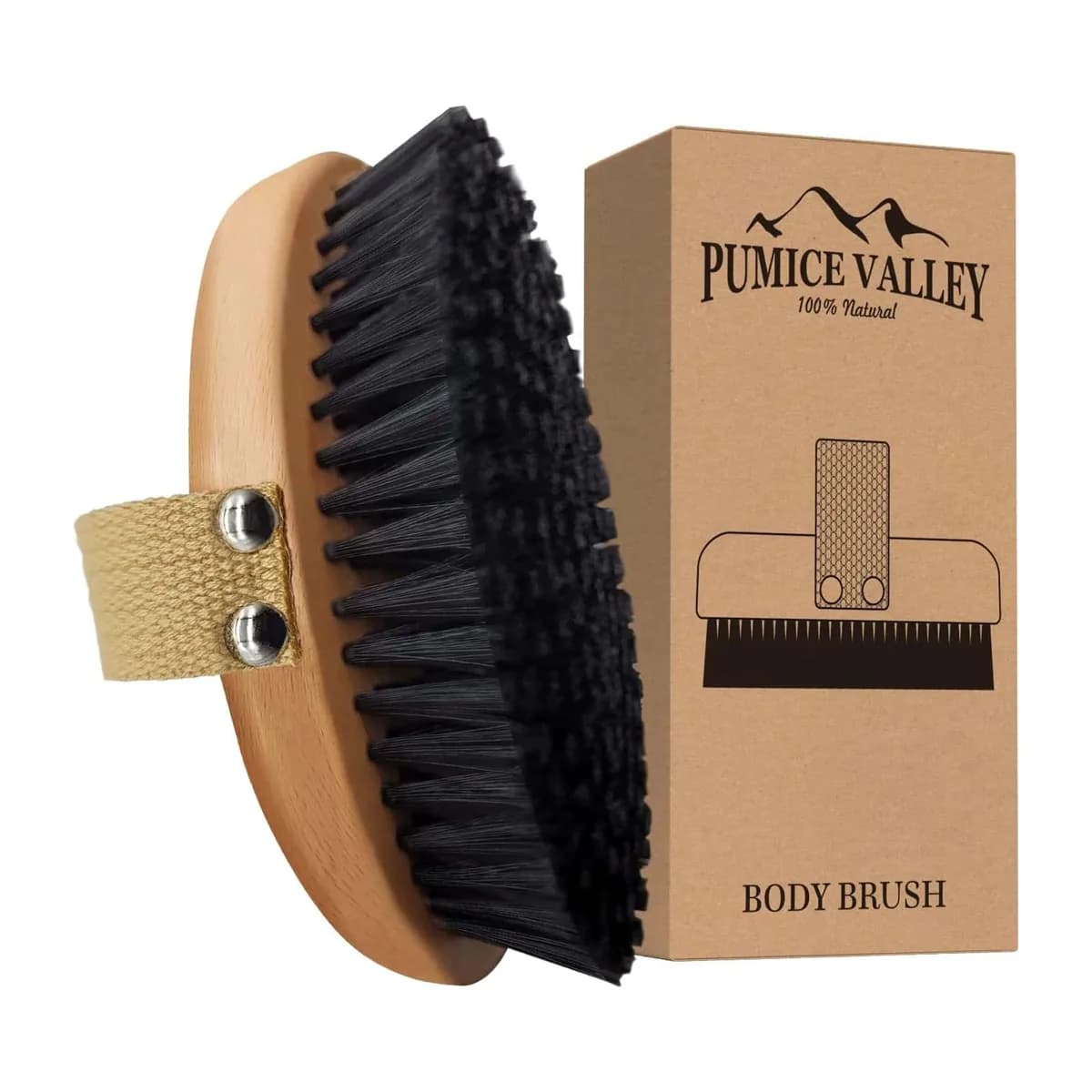
Our Dry Body Brush uses natural bristles on a wooden base, sized to use with a light grip.
How to dry brush, step by step
1. Start with dry skin and a dry brush
Brush before your shower or bath, not after. Skin should be clean and completely dry, with no lotion or oil on it.
2. Begin at the feet
Use long, light strokes up the tops of the feet and the legs. Many routines brush toward the heart. There is no strong evidence that direction matters for health, but working upward gives the routine a natural order and keeps strokes consistent.
3. Work up the body
Brush the legs, then the hips and stomach (gentle, circular strokes work well here), then the arms from the hands toward the shoulders. Use a long-handled brush or a back scrubber for the back.
4. Go lighter on delicate areas
Use only the lightest touch on the chest, inner arms, and inner thighs. Skip the face, neck, breasts, and any area with broken skin, rashes, sunburn, varicose veins, or active acne.
5. Keep it short
Three to five minutes for the whole body is enough. Each area needs only a few strokes. Skin should look slightly pink at most, never red, scratched, or sore.
6. Shower, then moisturize
Shower as usual to rinse off loosened skin. Pat dry, then apply a body lotion or oil while the skin is still slightly damp. Exfoliated skin dries out more easily, so this step matters.
How often should you dry brush?
Start with once or twice a week. If your skin stays comfortable, some people work up to every other day. Daily dry brushing is too much for most skin types, especially in winter.
Count it as exfoliation. If you also use scrubs, exfoliating mitts, acids, or retinoids on the body, space them out so your skin is not taking several abrasive or exfoliating hits a week.
Can you dry brush your feet?
Yes, gently, on the tops of the feet and the softer parts of the soles. A dry brush is not designed for thick heel callus, though. For hardened skin, a pumice stone or foot file, used wet or as directed, is the right tool. Pumice Stone vs Foot File explains the difference.
Keeping your brush clean
Dead skin and oil build up in the bristles over time.
- Tap the brush out after each session.
- Once a week, wash the bristles in warm water with a little mild soap, keeping the wooden back as dry as possible.
- Rinse, shake off excess water, and dry bristle-side down in an airy spot, not in a steamy bathroom.
- Replace the brush when bristles flatten, shed, or the wood cracks.
Do not share your brush. Like a pumice stone, it is a personal skin tool.
Who should skip dry brushing
Avoid dry brushing, or ask a dermatologist first, if you have:
- eczema, psoriasis, rosacea, or very sensitive skin;
- a current rash, sunburn, wound, or skin infection;
- diabetes, reduced sensation, or a condition that slows healing; or
- skin that marks, bruises, or bleeds easily.
If brushing leaves lingering redness, itching, or soreness, stop and let your skin recover.
The bottom line
Dry brushing is a quick, low-cost way to exfoliate rough body skin and build a few mindful minutes into your shower routine. Keep the pressure light, the session short, and the frequency modest, then moisturize. Skip the detox promises. Smoother, softer skin is a good enough reason on its own.
FAQ
How often should you dry brush?^
Start with once or twice a week. If your skin stays comfortable, some people move up to every other day. Daily brushing is too much for most skin, especially in dry or cold weather.
Do you dry brush before or after a shower?^
Before. Skin and brush should both be dry. Shower afterward to rinse off loosened skin, then moisturize while the skin is still slightly damp.
Does dry brushing help cellulite or detox?^
There is no good evidence that it does. Any change in the look of cellulite is temporary. Dry brushing is best understood as gentle physical exfoliation and a pleasant self-care habit.
Which direction should you dry brush?^
Many routines brush upward toward the heart, starting at the feet. Direction is mostly about consistency. Light pressure and short sessions matter more than the exact pattern.
Who should avoid dry brushing?^
Skip it on broken, sunburned, or irritated skin, and ask a dermatologist first if you have eczema, psoriasis, rosacea, very sensitive skin, diabetes, or skin that bruises or bleeds easily.