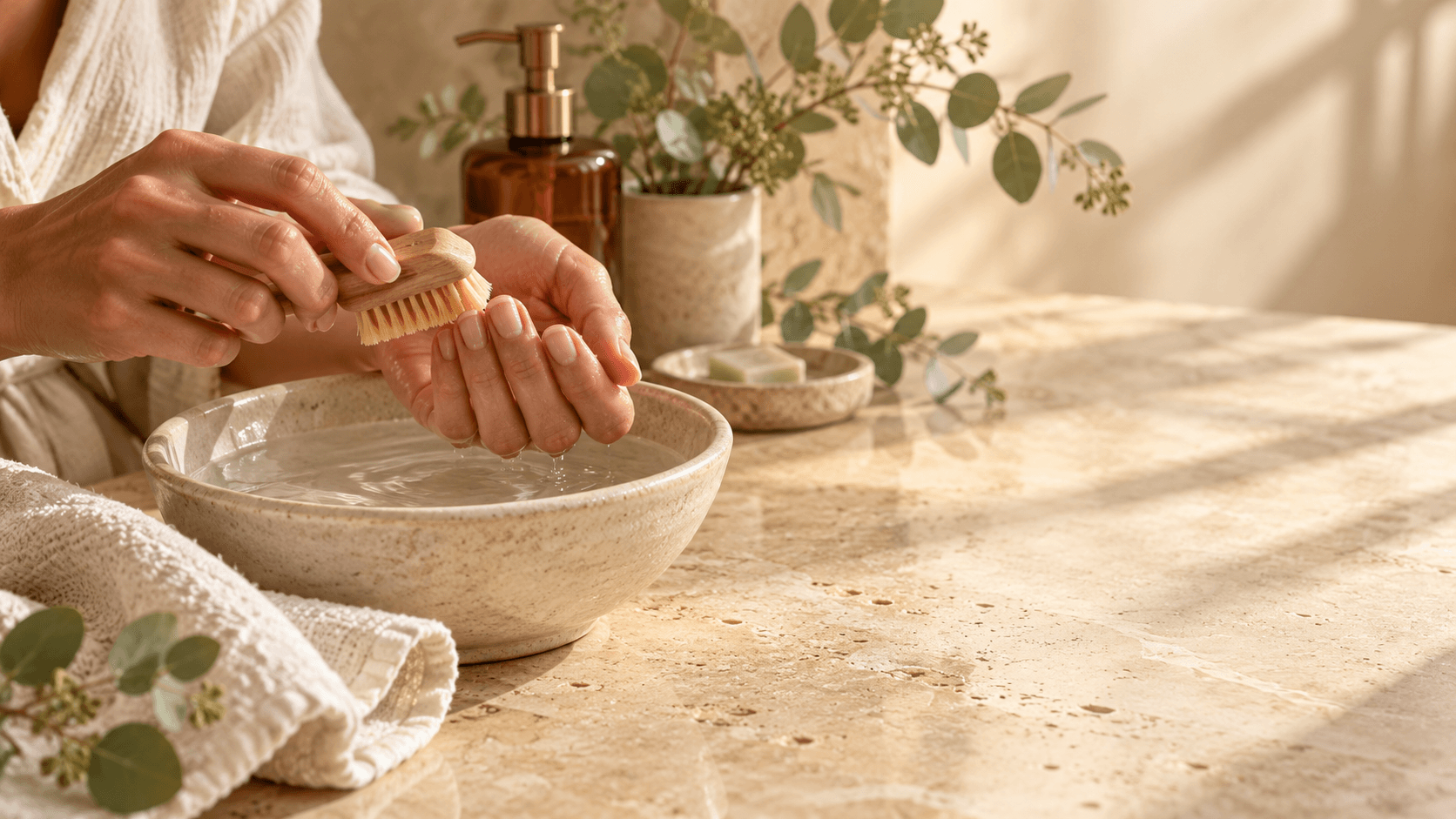
How to Use a Nail Brush for Fingernails and Toenails—and Keep It Clean
指甲刷
Use a nail brush with water, mild soap, and light pressure to clean around fingernails and toenails. Learn the right technique and how to keep the brush clean and dry between uses.
A nail brush can loosen visible dirt around fingernails and toenails without turning a simple wash into an aggressive scrub. The useful part is not maximum pressure. It is choosing a comfortable brush, wetting the bristles, cleaning briefly, rinsing well, and letting the brush dry fully before storing it.
The same basic technique works for hands and feet, but toenails need a little more care. They are harder to reach, the surrounding skin may be more sensitive, and a damp brush is easy to forget in the shower. This guide explains a controlled routine for both.
Quick Answer
Wet your hands or feet and the nail brush. Add a small amount of mild soap, then move the bristles gently across the nail surface, around the nail edges, and beneath the free edge where it is easy to reach. Do not force the brush deep under the nail or scrub sore skin. Rinse your nails and the brush, dry your hands or feet carefully, and leave the brush in an open, ventilated place until it is completely dry.
Use a nail brush as a personal grooming tool rather than a treatment for nail changes or irritated skin. If an area is painful, swollen, bleeding, inflamed, or appears infected, skip brushing and seek appropriate advice.
What a Nail Brush Is—and What It Is Not
A nail brush is a small hand-held brush designed to clean the nail surface, the skin immediately around the nails, and the accessible area beneath the nail tip. A double-sided design may provide a broader bristle bed for general cleaning and a narrower row for more precise work around the nail edge.
It is not a scraper, cuticle remover, or heel exfoliator. Pushing stiff bristles beneath the attached part of the nail can be uncomfortable and may irritate delicate skin. Scrubbing harder also does not make a brush more hygienic.
If your routine also includes smoothing rough heels, keep that as a separate step with a tool intended for thicker skin. Our guide to using a pumice stone on your feet explains that process. A nail brush should stay focused on nails and nearby intact skin.
How to Use a Nail Brush on Fingernails
1. Remove jewelry and rinse your hands
Take off rings that could trap soap or make the brush awkward to hold. Rinse your hands with comfortably warm water. A brief rinse is normally enough to soften visible residue; there is no need for a long soak.
2. Wet the brush
Run the bristles under clean water and add a small amount of mild soap. The brush should be wet enough to move comfortably without dripping soap everywhere.
3. Clean the nail surface
Hold the brush securely and use short, light strokes across the top of each nail. Work one hand at a time so you can control the angle and pressure.
4. Clean around the edges
Angle the bristles toward the sides of the nail and around the cuticle line without digging into the skin. If dirt is visible beneath the free edge—the white portion extending beyond the fingertip—brush gently from a reachable angle. Do not force bristles beneath the attached nail.
5. Rinse and check
Rinse your hands and look at the nails before repeating anything. One careful pass is usually more sensible than repeated hard scrubbing. If residue remains, another brief, light pass is enough.
6. Dry your hands
Pat the hands dry, including around the nails. Apply hand cream afterward if washing leaves the skin feeling dry, but do not coat the brush with cream or oil.
How to Use a Nail Brush on Toenails
Toenails are less convenient to reach, so good positioning matters more than pressure.
1. Choose a stable position
Sit somewhere secure rather than balancing on one foot in a wet shower. Bring the foot toward you only as far as is comfortable. If reaching your toes is difficult, ask for appropriate assistance instead of twisting or straining.
2. Rinse the feet and brush
Use comfortably warm water and wet the bristles. You can clean toenails during a normal foot wash or after a shower, but avoid leaving the skin soaking until it feels fragile.
3. Brush gently across each toenail
Use short strokes over the nail plate and around the accessible edges. Pay attention to what you can see and reach without forcing the bristles beneath the nail.
4. Keep the brush away from broken skin
Skip cuts, blisters, irritated nail folds, painful corners, and any area that is bleeding or inflamed. A nail brush is for routine cleaning of intact skin and nails, not for working on an injury or suspected infection.
5. Rinse and dry carefully
Rinse away soap and loosened residue. Dry the toes and the spaces between them rather than putting socks or shoes onto damp feet. For a broader warm-weather routine, see our guide to keeping feet soft, dry, and comfortable in summer.
People with diabetes, reduced sensation, circulation concerns, or a history of slow-healing foot problems should follow guidance from a qualified clinician before adding a new foot-care tool.
How Much Pressure Should You Use?
Use only enough pressure for the bristles to make contact and move across the nail. The surrounding skin should not feel raw, hot, or sore afterward.
Pressure is too strong if:
- the bristles bend sharply against the skin
- the nail folds become red or tender
- the skin stings during rinsing
- you feel tempted to scrape beneath the nail
- the routine leaves scratches or bleeding
A firmer-feeling bristle is not an invitation to press harder. Let the shape of the brush help with reach and control.
How Often Should You Use a Nail Brush?
There is no universal schedule. Use it when there is visible dirt to remove or when a nail-cleaning step makes sense in your routine. People whose hands regularly contact soil, grease, paint, or other debris may reach for a brush more often than someone whose nails stay clean with ordinary handwashing.
Daily use is not automatically necessary. If the skin around your nails becomes dry or tender, reduce the frequency and pressure. A nail brush also should not be used as a substitute for normal handwashing.
For feet, avoid combining vigorous nail brushing with an aggressive exfoliation session. If you also file or pumice your feet, our guide to how often to exfoliate your feet can help you keep the overall routine measured.
How to Clean a Nail Brush After Use
Cleaning the brush is simple when it happens immediately rather than after soap and residue have dried between the bristles.
- Rinse the bristles thoroughly under running water.
- Work a small amount of mild soap through the bristle bed with clean fingers.
- Rinse again until no visible residue or soap remains.
- Shake off excess water without striking the wooden handle against a hard surface.
- Place or hang the brush where air can reach the bristles and handle.
- Store it only after it has dried completely.
Follow the manufacturer's care instructions when they differ. Avoid assuming that bleach, boiling water, a dishwasher, or prolonged soaking is suitable for a wooden brush. Those methods may affect the handle, finish, adhesive, or bristles.
The Wooden Nail & Toe Brush with Charcoal Bristles uses charcoal-infused nylon bristles and a wooden handle. “Charcoal” describes the bristle material; it does not remove the need to rinse and dry the brush after use.
Where to Let the Brush Dry
The edge of a wet sink or the floor of a shower is not an ideal long-term storage place. Choose an open spot with airflow where water can drain away. If the brush has a hanging loop, hang it without letting the bristles rest against a damp wall.
When several people share a bathroom, keep personal grooming tools separate and easy to identify. Do not share the same nail brush between users.
When to Replace a Nail Brush
Replace the brush when it is no longer easy to use or clean. Practical signs include:
- bristles that are heavily bent, splayed, or falling out
- cracks, splinters, or rough damage in the handle
- residue that remains trapped after careful washing
- an odor that remains after the brush has been cleaned and dried
- a loose bristle bed or other structural damage
There is no useful reason to wait for a personal-care tool to fail completely. Condition matters more than a fixed replacement date.
Common Nail-Brush Mistakes
Scrubbing under the nail too aggressively
Clean only the area beneath the free edge that is easy to reach. Do not try to separate the nail from the skin below it.
Using the same brush as a household scrubber
Keep a personal nail brush separate from brushes used on sinks, grout, shoes, or other surfaces.
Leaving it wet in a closed container
A travel case can be useful after the brush is dry. Closing a wet brush inside one keeps moisture against the handle and bristles.
Assuming charcoal replaces cleaning
Charcoal-infused bristles still need the same rinse-and-dry routine as other bristles. Avoid treating the material as an antimicrobial or self-cleaning feature unless a specific, supported product instruction says so.
Brushing a painful or changed nail
Do not use harder scrubbing to address persistent discoloration, thickening, separation, swelling, drainage, or pain. Those changes need appropriate assessment rather than more abrasion.
A Simple Routine to Remember
Wet the nails and brush, add mild soap, use short gentle strokes, rinse both thoroughly, then dry the skin and brush separately. Keep the tool personal, store it only when dry, and replace it when the bristles or handle can no longer be maintained comfortably.
That is enough. A nail brush works best as a small, controlled part of ordinary hand and foot care—not as a tool for scraping, treating nail problems, or scrubbing until the skin feels sore.
FAQ
Can I use the same nail brush for fingernails and toenails?^
You can use one personal brush for both if the nails and surrounding skin are intact and you rinse and dry the brush after use. Use it on hands first, then feet, and do not share it with another person.
How often should I use a nail brush?^
Use it when visible dirt needs more attention than ordinary washing provides. Reduce the frequency or pressure if the skin around your nails becomes dry, red, or tender.
Should I use soap with a nail brush?^
A small amount of mild soap can help loosen visible residue. Wet the nails and bristles first, brush gently, and rinse both the nails and brush thoroughly afterward.
How do I clean and dry a wooden nail brush?^
Rinse away visible residue, work mild soap through the bristles, rinse again, shake off excess water, and leave the brush in an open ventilated place until fully dry. Avoid prolonged soaking unless the manufacturer specifically permits it.
Do charcoal bristles make a nail brush self-cleaning?^
No. Charcoal describes the bristle material and should not be treated as proof that the brush is antimicrobial or self-cleaning. Rinse, wash, and dry the brush after use.
