Can You Use a Pumice Stone in the Shower? A Safer Foot-Care Routine
淋浴
Yes, you can use a pumice stone in the shower when your feet are softened but supported. Learn when to use it, how to avoid slippery floors, and how to clean and store the stone afterward.
Yes, you can use a pumice stone in the shower, but the safest routine is not to scrub while your feet are slippery, waterlogged, or difficult to support. A shower can soften rough skin and make a short session convenient. The key is to use the stone on softened—not overly wet—skin, keep your footing stable, apply light pressure, and let the stone dry fully afterward.
Quick Answer
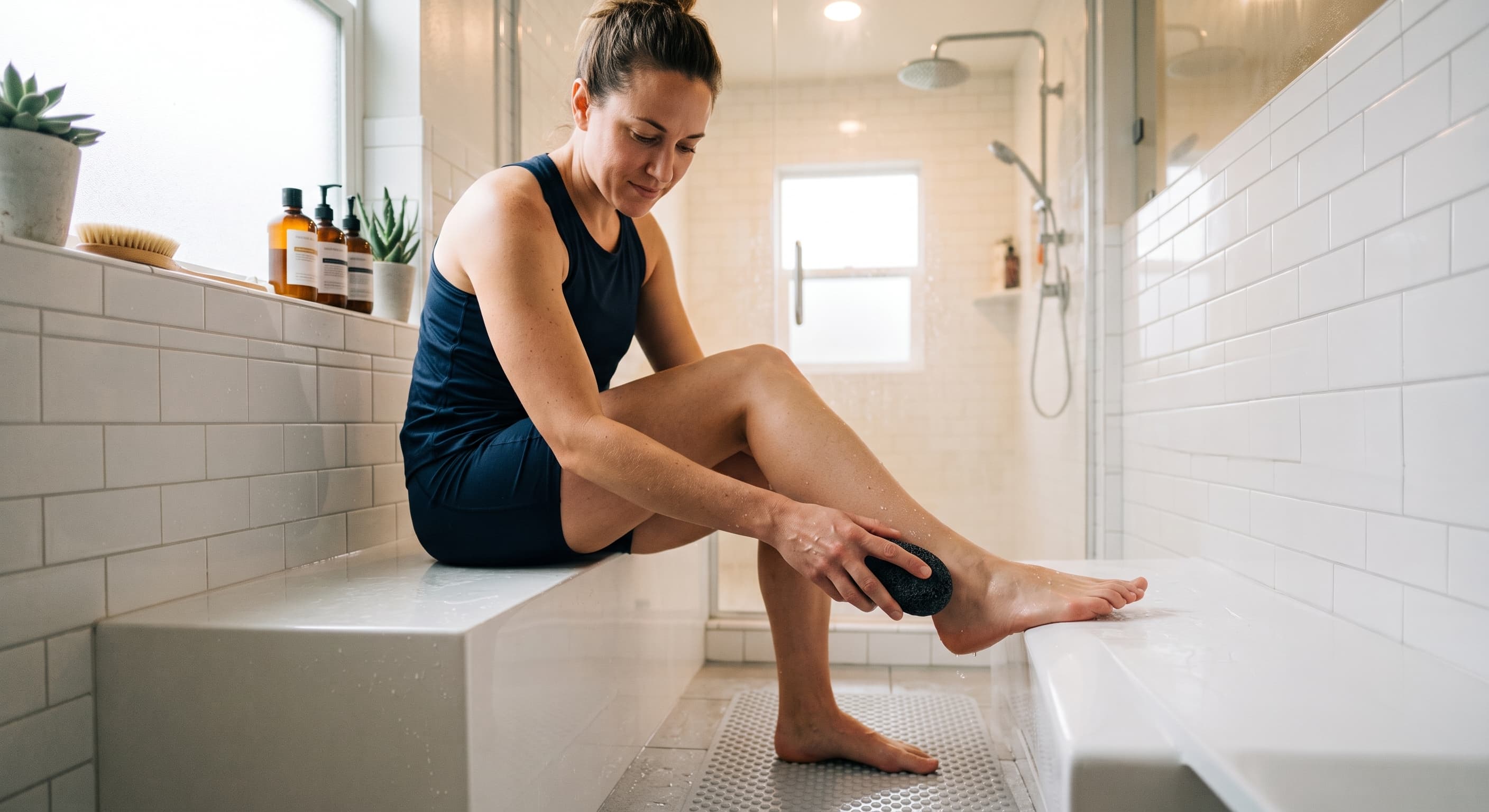
Use a pumice stone near the end of a shower, after warm water has softened the outer surface of your feet. Step away from the direct spray, place one foot securely on a stable surface, wet the stone, and make a few gentle passes over intact rough skin. Rinse the foot and stone, then dry and store the stone somewhere ventilated.
Do not use it while standing on a slippery shower floor, balance on one leg, or keep scrubbing until the skin feels tender. The wet-versus-dry pumice stone guide covers the broader choice between softened wet use and dry use; this guide focuses on making a shower routine practical and controlled.
When to Use the Pumice Stone in the Shower
The end of the shower is usually the most practical time. Warm water softens surface roughness, but overly wet, pale, wrinkled skin can be harder to judge. Wash first, rinse away cleanser, allow the feet to soften, then move out of the direct stream and use the stone briefly on rough areas.
You can also use the stone after the shower. Pat your feet so they are damp rather than dripping, sit down, and support the foot comfortably. This may be better if the shower floor is smooth, your balance is limited, or you cannot reach your feet safely while standing.
The important distinction is not a strict number of minutes. It is whether the skin feels softened and the foot can be supported without slipping. If you are unsure how to structure the whole session, follow the step-by-step guide to using a pumice stone on your feet.
A Safer Shower Routine
- Wash first. Clean your feet and rinse away soap, conditioner, and other slippery residue.
- Move away from the spray. Stand or sit where water is not hitting the stone and foot directly.
- Secure your position. Sit if possible. If standing, keep both feet supported and use a stable grab point rather than balancing on one leg.
- Wet the stone. A damp stone can move more smoothly over softened skin. Do not add soap to make it slide faster.
- Use light, short passes. Work over broad areas of intact roughness and check the skin after a few strokes.
- Stop early. Aim for a more comfortable surface, not complete removal of every rough patch.
- Rinse and moisturize. Rinse away loose residue, pat the feet dry, and apply a plain foot moisturizer if your skin tolerates it.
If you feel stinging, burning, heat, tenderness, or a raw sensation, stop. More pressure or more time is not a better result. The foot-exfoliation frequency guide can help you choose a modest schedule and assess how your skin feels the next day.
Shower-Floor Safety Matters
A pumice stone routine should not make you more likely to slip. Avoid using it while standing on a wet, soapy floor with one foot lifted. Do not place the stone where you could step on it or leave it near the drain.
If the shower has a smooth floor, use an appropriate non-slip mat, sit on a stable shower seat, or use the stone after washing while seated elsewhere. Keep the routine simple enough that you can stop without reaching, twisting, or losing your balance.
Never use the pumice stone to scrape calluses while the floor is covered with soap or conditioner. Rinse the area first and choose control over convenience.
Cleaning and Storing the Stone
Shower use makes rinsing easy, but the stone should not stay damp in a closed caddy. After use, rinse away debris, brush the surface if needed, and wash it with mild soap. Rinse again and place it somewhere open and ventilated until completely dry.
Avoid storing it on a constantly wet ledge, inside a sealed plastic container, or in a puddle of shower water. Do not share a personal pumice stone. If it develops a persistent odor, crumbles heavily, or no longer has an even surface, replace it. See how to clean a pumice stone and how often to replace a pumice stone for more detailed maintenance guidance.
When Not to Exfoliate in the Shower
Skip the pumice stone if the skin is open, bleeding, deeply cracked, blistered, painful, hot, swollen, increasingly red, or draining. Do not use it over a rash or an area you cannot identify confidently. Shower water may soften a problem area, but it does not make exfoliating damaged skin appropriate.
If you have diabetes, reduced sensation, poor circulation, or a history of slow healing, ask a qualified clinician before using an abrasive tool at home. If a rough or painful area does not improve, seek professional advice rather than repeatedly scrubbing it.
Choosing a Shower-Friendly Stone
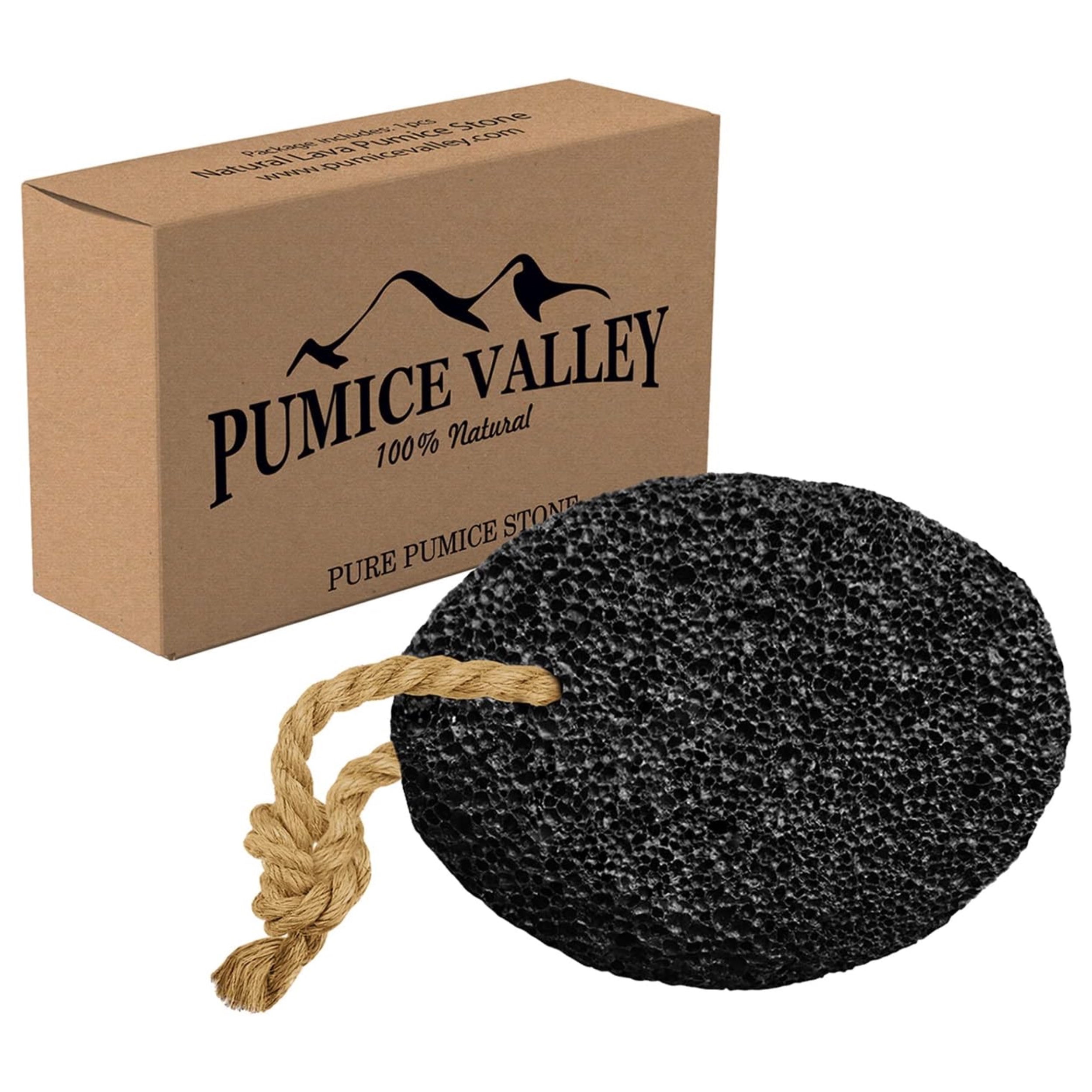
Choose an even-surfaced stone that is comfortable to hold, easy to rinse, and easy to dry. A secure grip can matter more than a very coarse surface in a compact shower. See the best pumice stones for feet guide or Pumice Valley pumice stone for feet. Keep the routine brief and supported.
FAQ
Can you use a pumice stone while standing in the shower?^
It is safer to sit or keep both feet supported. Do not balance on one leg on a wet, soapy floor. Move away from the direct spray and use a stable position.
Should I use a pumice stone before or after washing?^
Use it near the end of washing, after the feet have softened and soap has been rinsed away. You can also use it after the shower on damp skin if that gives you better control.
Can I use soap with a pumice stone?^
You do not need soap on the stone. Soap or conditioner can make the foot and shower floor more slippery, so rinse the area before exfoliating.
How wet should my feet be?^
Feet should be softened and damp, not so waterlogged or slippery that you cannot control the stone. Pat them partly dry if necessary.
How do I store a pumice stone after a shower?^
Rinse it, remove debris, and let it dry completely in an open, ventilated place. Do not leave it in standing water or a sealed container.
Can I use a pumice stone on cracked heels in the shower?^
Do not exfoliate open, bleeding, painful, or deeply cracked skin. Wait until the area is intact and comfortable, or seek professional advice if you are unsure.