Pumice Stone for Sensitive Feet: How to Choose a Gentler Texture
敏感足部
Choosing a pumice stone for sensitive feet? Learn how texture, wet use, pressure, session length, and grip affect comfort, plus when to choose a foot file instead.
If your feet become irritated easily, choose a pumice stone that gives you control rather than the roughest surface. A fine texture, wet use, light pressure, and short sessions help smooth ordinary rough skin gradually. Care should feel comfortable—not raw, hot, or stinging.
This guide explains how to choose a gentler stone, use it cautiously, and decide when a foot file may be a better fit.
Quick Answer
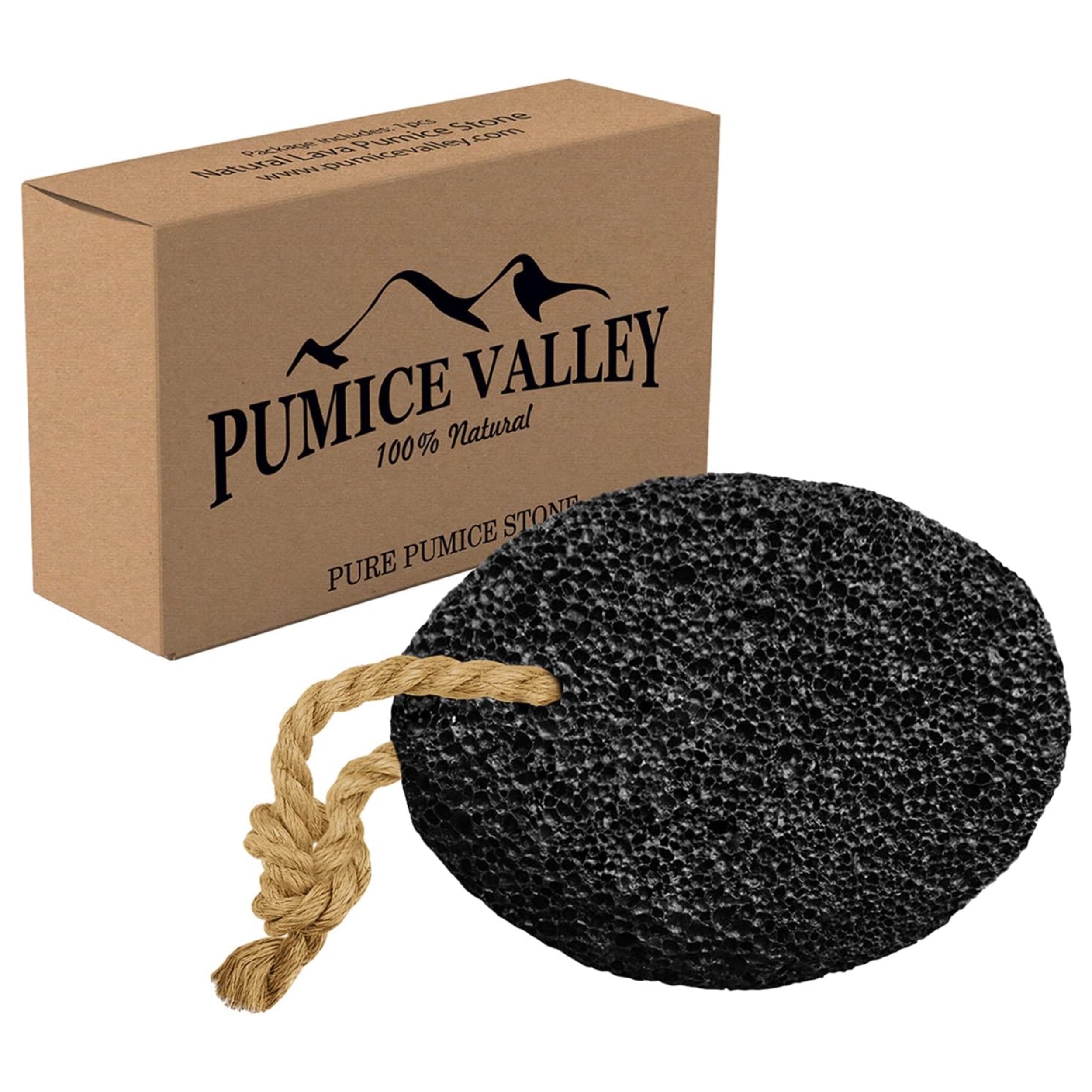
For sensitive or easily irritated feet, start with a small-to-medium pumice stone with a fine texture and rounded edges. Wet the stone and soften the skin first, then use a few light passes on limited areas. Keep the session brief, check the skin, and moisturize afterward.
Do not exfoliate open, bleeding, blistered, infected, inflamed, numb, or severely painful skin. If you have diabetes, reduced sensation, poor circulation, or concerns about healing, ask a clinician before using an abrasive foot tool at home.
What Makes a Pumice Stone Gentler?
Texture matters, but pressure and dry use can also make a stone feel too aggressive. Look for a tool that allows controlled, gradual passes.
| Feature | Gentler choice | Why it helps |
|---|---|---|
| Texture | Fine or medium-fine | Gives you more control over how much surface is smoothed |
| Shape | Rounded or softly curved | Reduces catching at the edges of the heel |
| Size | Small or medium, easy to hold | Makes it easier to avoid nearby healthy skin |
| Grip | Stable when wet | Helps prevent squeezing or accidental pressure |
| Surface | Even, without sharp points | Makes contact more predictable |
Compare textures, shapes, and grips in the best pumice stones for feet guide.
Wet Use Is a Good Starting Point
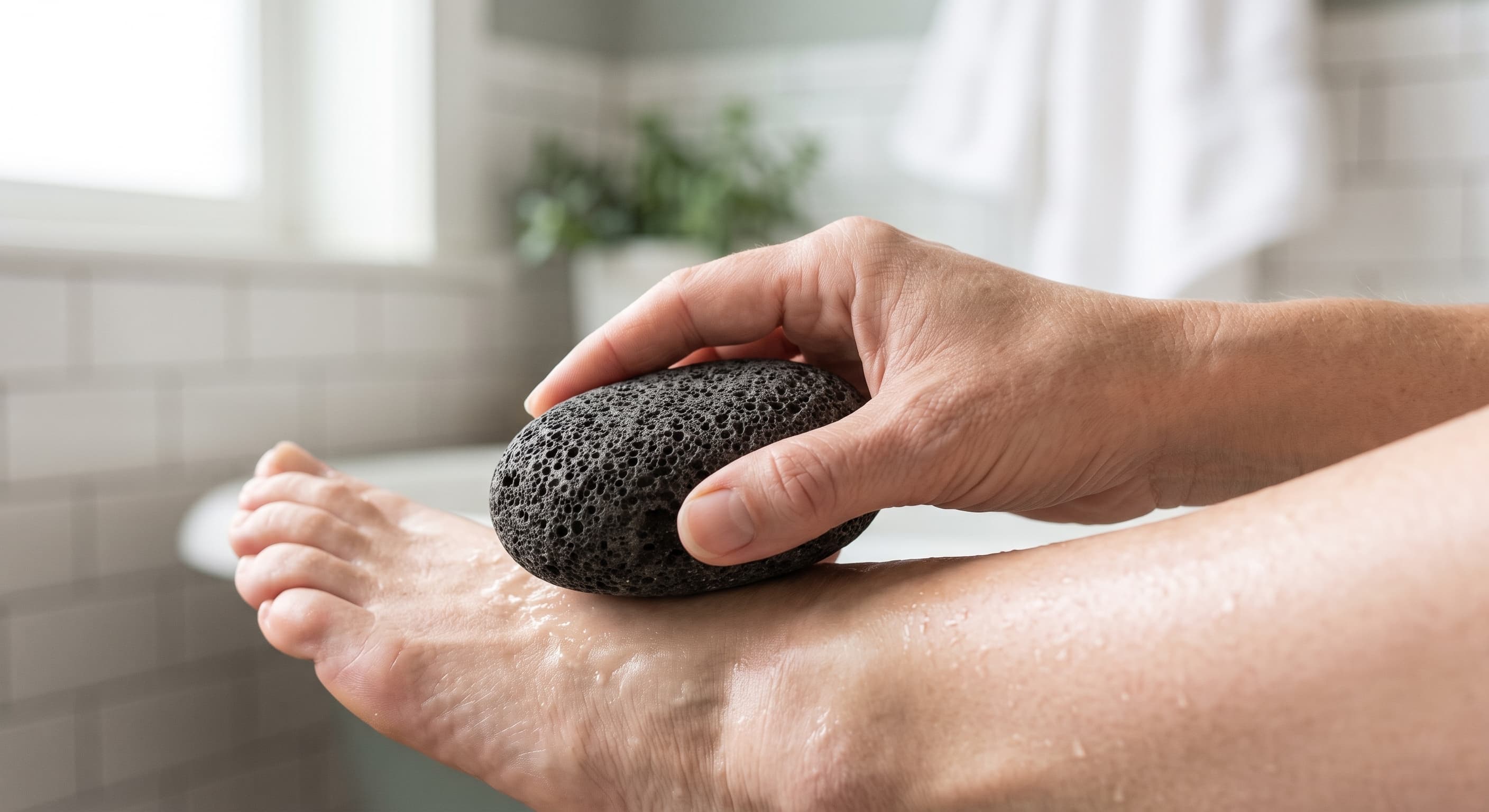
Soften the skin first with a warm shower, bath, or brief foot soak. Wet the pumice stone before using it. Damp skin and a damp stone can help the tool glide, which makes it easier to use light pressure than when scrubbing dry skin.
Wet use does not mean soaking for a long time or scrubbing until the skin feels completely smooth. Read should you use a pumice stone wet or dry for a fuller comparison.
How to Use a Pumice Stone on Sensitive Feet
Start with one small area, such as the outer edge of a heel. Support your foot so it does not slide, hold the stone with a relaxed grip, and make short, gentle passes over ordinary rough skin. Use little or no added force.
Check the skin after a few passes. If it feels smoother and comfortable, stop there. Some natural texture is normal; more friction is not necessarily better.
Afterward, rinse the foot, pat it dry, and apply a plain moisturizer while the skin is slightly damp. See the step-by-step how to use a pumice stone on your feet guide.
Keep the First Session Short
If your feet are easily irritated, begin with a short session focused only on the roughest small area. Let the skin’s response guide the next session rather than following a fixed number of passes.
As a general starting point, leave several days between sessions and avoid exfoliating again while the skin is tender, unusually pink, peeling, or uncomfortable. The how often should you exfoliate your feet guide explains how to adjust frequency based on comfort and next-day response.
Signs to Stop Immediately
Stop if you notice:
- Stinging, burning, or increasing tenderness
- Rawness, bleeding, or a scraped feeling
- Persistent redness or warmth
- Peeling that goes beyond ordinary dryness
- Pain when walking or putting pressure on the area
Rinse the skin and leave it alone rather than trying to smooth the area further. If discomfort is severe, persistent, or accompanied by swelling or drainage, seek appropriate medical advice.
What Not to Exfoliate
Do not use a pumice stone over open cracks, bleeding skin, blisters, a rash, a wound, or skin that is hot, swollen, infected-looking, or severely painful. Avoid using it over a corn or deep area of thickened skin as a way to force the problem away.
Do not pair pumicing with aggressive scrubbing, harsh acids, or repeated filing in the same session. If a rough or painful area keeps returning, consider friction, footwear, or pressure instead of increasing abrasion.
Pumice Stone or Foot File?
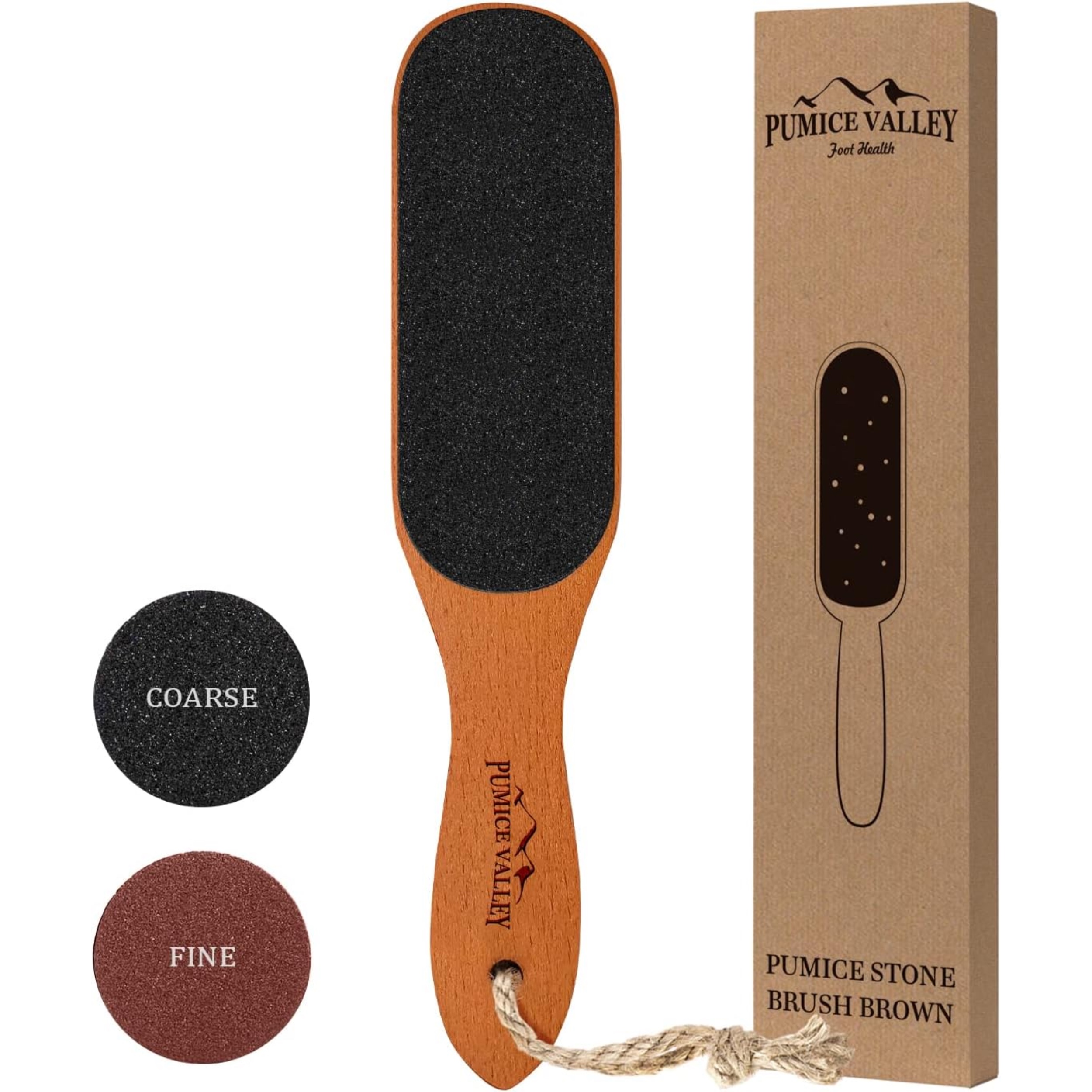
Both tools can remove surface roughness, but control and feel differ. A pumice stone may suit someone who prefers gradual smoothing on softened skin. A foot file can provide a defined surface for precise strokes, but a coarse file can also be too aggressive.
| If you prefer… | Consider… |
|---|---|
| A porous, gradual tool used wet | A fine or medium-fine pumice stone |
| A defined working surface and precise strokes | A fine-grit foot file with light pressure |
| Less friction and more control | The tool that lets you stop comfortably after a few passes |
Choose the tool you can hold steadily, use lightly, and clean properly. See pumice stone vs foot file for a broader comparison.
Clean the Stone After Every Use
Rinse the pumice stone after use and brush away visible debris. Wash it with mild soap, rinse thoroughly, and let it dry completely in an open, ventilated place. Do not leave it damp in a closed container.
Do not share a personal foot-care tool. Replace the stone if it develops a persistent odor, becomes difficult to clean, crumbles heavily, or no longer has an even surface. Follow the full routine in how to clean a pumice stone.
FAQ
What is the best pumice stone texture for sensitive feet?^
A fine or medium-fine texture is a practical starting point because it gives you more control than a very coarse stone. Choose the surface that lets you make a few light passes without stinging or tenderness.
Should I use a pumice stone wet or dry if my feet are sensitive?^
Wet the stone and use it on softened, wet skin as a gentler starting method. This can help the stone glide and make light pressure easier to maintain. Stop if the skin becomes uncomfortable.
How long should I use a pumice stone on sensitive feet?^
Begin with a short session on a limited area and check the skin after a few passes. Stop once the area feels smoother. Do not continue until the skin feels raw or completely polished.
Can I use a pumice stone on cracked heels?^
Do not use it on open, bleeding, deep, infected-looking, or painful cracks. Abrasion may be inappropriate for damaged skin. Protect the area and seek appropriate advice if the cracks are severe or persistent.
Is a foot file better than a pumice stone for sensitive feet?^
Neither is automatically better. A fine foot file may offer precise strokes, while a fine pumice stone can provide gradual smoothing on softened skin. Choose the tool you can control with the least pressure.
How do I clean a pumice stone for sensitive feet?^
Rinse and brush it after every use, wash it with mild soap, and let it dry completely in an open, ventilated place. Do not share it or store it damp in a closed container.